English


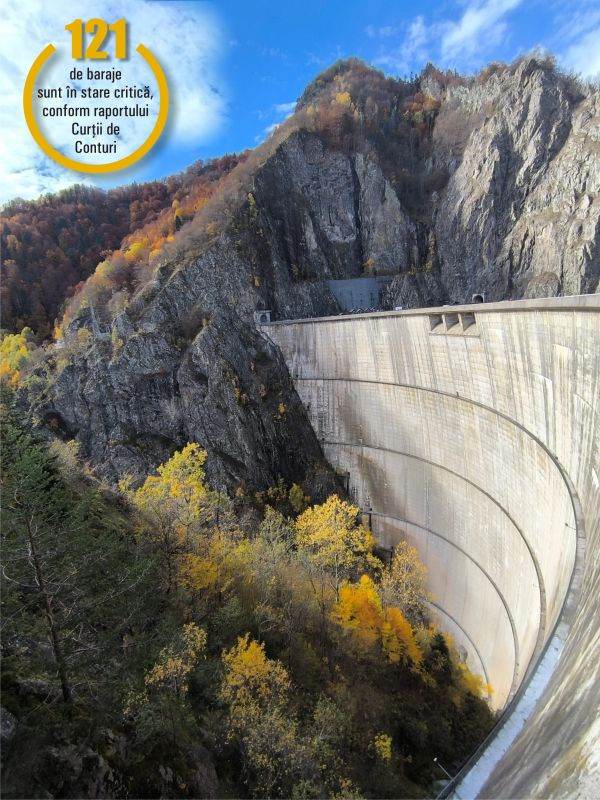
The lack of communication and non-transparency of the National Administration "Apele Române" regarding the maintenance of the dams it manages is transforming, in the midst of the Paltinu dam crisis, from a simple administrative deficiency into a serious national vulnerability. Apele Române officially boasts that it operates "the most important 40 reservoirs with complex use", but the reality is much broader and more dangerous: the total number of reservoirs in Romania exceeds 2,000, partially or fully managed by ANAR or other entities, many of them in critical condition. The situation of these dams and levees in the country, now highlighted by the Paltinu disaster, shows an essential hydrotechnical infrastructure that is practically unauthorized, poorly maintained and insufficiently supervised, exposing the population, the environment and property to major risks in the event of floods or accidents.
The Court of Auditors reports are mind-boggling in their figures: out of 2,013 existing dams in 2021, only 983 had a safe operating permit; 221 had their permit expired; and 809 were never authorized. In 2023, a number of 121 dams at risk of accidents were practically in the same critical situation. In addition, ANAR manages over 9,391 kilometers of dams without an operating permit, for the simple reason that Romania does not have certified specialists to assess the safety status of dams and levees.
The Court of Auditors clearly notes: hydrotechnical works, many of which are in a state of severe degradation or abandonment, can represent a real danger in floods, depending on their condition, and the capacity of the flood protection infrastructure is significantly affected. Bucharest itself is at risk: lakes that should protect the capital, such as Lake Morii, Dragomireşti, Pantelimon, Fundeni or Buftea, have been reported to have serious maintenance or licensing problems, some without a functional drainage system or exposed to major earthquakes and historical floods.
Almost two years have passed since the Court of Auditors' most recent report on the state of dams in our country, and the situation does not seem to have changed, with the exception of the works started by Apele Române at Vidraru, Paltinu and Siriu.
In this fragile context, the Paltinu case, where poor maintenance and faulty communication led, in November 2025, to the cessation of the supply of drinking water to dozens of localities, an incident that left over 100,000 people in Prahova and Dâmboviţa counties without drinking water at the tap, is not an isolated accident, but the concrete precedent of a crisis that, as the authorities themselves admit, "can be repeated anytime, anywhere" in the country.
This is also noted by the president of the Smart Energy Association, Dumitru Chisăliţă, who, in a press release sent to the Editorial Office yesterday, states: "The events at the Paltinu Dam are more than a regrettable incident. They are yet another clear proof that the Romanian state operates with serious syncopes, with incomplete or ignored procedures and with institutional reflexes that endanger the safety of citizens instead of protecting them. (...) Citizens are fed up with sterile promises and reactive strategies. They do not demand cosmetic explanations or politically chosen culprits. They demand professionalism, integrity and a minimal capacity to learn from mistakes. The fact that, after years of similar incidents, state institutions behave as if they were taken by surprise each time shows not only a lack of preparation, but also institutionalized indifference and a failure to learn from the lessons that have ended the lives of some of our fellow citizens. The ministries, the Government, the Parliament and the Presidency seem more concerned with image rather than responsibility. Their reactions are often designed to calm public opinion, not to solve the underlying problem. (...) It is time for the state to give up defensive reflexes and accept reality: it is not enough to react, it must prevent. It is not enough to comment, it must act. It is not enough to look for individual culprits, it must repair the system that repeatedly produces these errors by learning from the lessons of the disasters that have occurred. Any public system can face incidents. The difference between a mature state and a fragile one lies in the way it responds. And Romania, at this moment, is showing a worrying fragility”.
• What happened at Paltinu?
The story begins years ago, but we are only now officially learning, from the documents and statements brought to light by the scandal that has erupted in recent weeks. The bottom emptying of Lake Paltinu, a vital system through which the safety of the dam is controlled, had been non-functional since the 1970s. In the summer of 2025, during an underwater inspection, a block was also found the second emptying, and experts said that the structure is becoming "a dirty time bomb”.
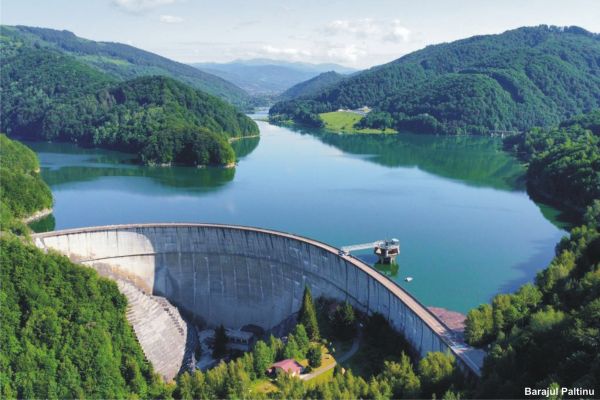
In mid-June, when the Minister of Environment was the liberal Mircea Fechet, it was decided to empty the lake in a controlled manner up to a certain level to allow the intervention of divers. This means, in concrete terms, that the main water source of two counties was to be taken out of the usual operating regime for delicate works, in an old and clogged infrastructure, with high risk. The decision is technical, but the consequences are eminently public. However, the population does not receive a clear plan, a calendar, a risk map or a minimum set of explained scenarios, but only finds out, vaguely, that "works are being done” and that there would be no danger.
Against the background of this lack of communication or, better said, the non-transparency of the authorities, the chain of decisions continues behind closed doors. In October, the Commission for Monitoring Construction Behaviour officially notes that the damage to the GF2 bottom discharge is serious, that the cofferdams are blocked, that the lake needs to be lowered to very low levels for repairs and that the works may increase the turbidity of the raw water reaching the Voila Treatment Plant. All this information circulates between Apele Române, the Buzău-Ialomiţa Basin Administration, SGA Prahova, Hidroelectrica, the diving company and the water operator ESZ Prahova. No one considers it necessary to explain to the people, and not even to all the mayors, that, once the works begin, there is a very concrete scenario in which drinking water will no longer be available for days or even weeks.
We enter November, when heavy rains, sand and mud alluviums crash into the low-lying lake, turbidity explodes and raw water becomes, as experts quoted by the mass media in our country say, a "dangerous cocktail” that cannot be given "even to animals”.
On November 28, ESZ decided to stop the water supply. It does not notify the mayors for hours, does not notify the Ministry, does not come out publicly with complete information. People suddenly find out that "there is no more water”, neither at the tap nor for toilets, and they find themselves standing in line at the cisterns, with bottles in hand, while the authorities send, with delay, drinking water from state reserves. Hospitals in Prahova and Dâmboviţa counties have limited admissions, schools have gone online, and the Public Health Directorate warned in RO-Alert that the water that is gradually returning to the networks can only be used for toilet sanitation, not for drinking or cooking. The water crisis is no longer a technical scenario: it is a daily, painful reality.
Meanwhile, the key question - who was supposed to tell the truth, in time? - remains unanswered. The Minister of Environment, Waters and Forests, Diana Buzoianu, points the finger at local institutions, saying that they have officially transmitted, including in the CJSU meeting of November 6, that there is no risk of the population being left without water. The ministry publishes a clarification in which it shows that the technical minutes of October 22 only spoke of a temporary increase in turbidity, without consecrating a risk of a total cessation of supply, and accuses "misinterpretations and untrue statements" appearing in the public space.
On the other hand, ESZ Prahova blames Apele Române and the "hazardous and wrong" decisions to empty the lake, claiming that it is only the victim of imposed hydrotechnical maneuvers. The Prahova County Council is passing responsibility back to the dam, and in all this institutional ping-pong, citizens are left with only one thing certain: no one told them, in a timely manner, that the water could simply disappear.
• Instead of solutions, the political class demands resignations
On Monday, December 8, the scandal officially moved to the plenary session of the Chamber of Deputies, after the hearings in the special parliamentary committee were previously more of a media, political show, thought up by the PSD and AUR representatives. Diana Buzoianu spoke about "fake news" related to Paltinu, rejected the theory of the dam demolition and insisted that the ministry and subordinate structures "did everything in their power" to restore the supply. In the same speech, she specified that, to the repeated questions of the ministry and the prefecture regarding the risk of the population being left without water, the local authorities gave written assurances that there was no such thing. Only on November 28, after the water was cut off, did the ministry learn about the situation "from the mayors”, not from Apele Române or the water operator. The picture is clear: the institutions talk to each other in addresses, but not with the people. Vertical communication, towards the population, simply does not exist.
On Tuesday, December 9, the people from Apele Române tried to calm spirits with a technical statement: there are now about 3 million cubic meters of water in Lake Paltinu, the flow rate discharged for treatment is 3 cubic meters per second, the maximum authorized, and, under these conditions, the reserves allow the supply of water "without restrictions” for 12 days, or up to 24 days if additional inflows appear.
This is the first time that public opinion has received concrete figures on how much water is left in the dam and how long the supply can be ensured. This is information that ANAR obviously had before; but it is only communicated after the crisis has brought two counties to their knees.
Also on Tuesday morning, FACIAS announced that it had notified the Prosecutor's Office to launch a criminal investigation into the drinking water crisis in Prahova and Dâmboviţa, demanding that all persons who, through action or inaction, contributed to the disaster be held accountable. The foundation explicitly speaks of "those who did not know how to communicate" and who started such an important project "without having a backup plan", directly indicating Apele Române de la Prahova and Buzău.
Prime Minister Ilie Bolojan, in turn, declared that the responsibility for the crisis belongs to the National Administration "Romanian Waters", and President Nicuşor Dan publicly stated that the guilty institution is also Romanian Waters, evoking the "consequences of the lack of anticipation".
In parallel, the Minister of Environment announced that he was even analyzing the dissolution of the ESZ Prahova company, which he characterized as "a totally bizarre system" that operates to the disadvantage of the people.
Yesterday, AUR parliamentarians initiated a simple motion against the Minister of Environment on the Paltinu issue, although, in the meantime, the water has returned to most of the localities, but it is still not drinkable. DSP and ISU warned that it can only be used to sanitize toilets, and people receive drinking water from state reserves.
• Dams, at the center of fake news
The crisis is not over, it has just moved to a less visible area, that of trust in institutions. And trust is met with defensive statements, fragmented press conferences and political squabbles.
At the same time, the big picture looks even bleaker. In the Senate Economic Committee, the same Romanian Waters acknowledges, through a director responsible for emergencies, that "the situation at Paltinu could be repeated at any time with other dams, such as Vidraru for example”, and that new interruptions in water supply are possible in the next six to eight months. This is not said by an activist or a political opponent; it is said by the authority that manages the dams. In free translation: Romania's water infrastructure is fragile, and communication about this fragility is even more fragile.
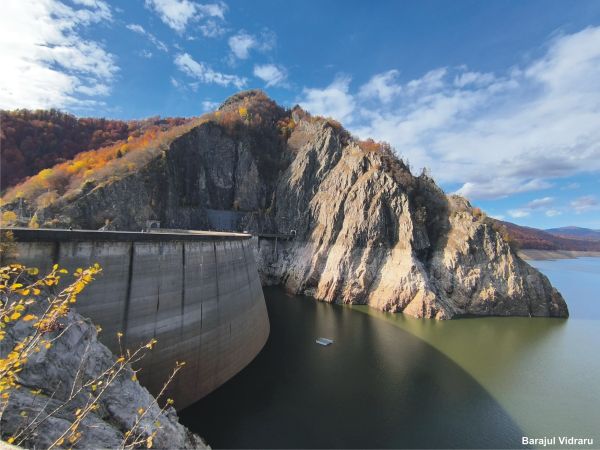
At Vidraru, Hidroelectrica began the controlled emptying of the lake in August for a large-scale refurbishment project, with the emptying due in February 2026 and refilling estimated in the fall, based on existing environmental approvals and agreements. The emptying is officially announced, but the public space is flooded with rumors and conspiracy theories: sometimes that the dams are being "demolished at the request of the EU", sometimes that the lakes are being emptied "for war". Fake news circulates online, although we are actually witnessing a re-engineering that has been delayed by decades, and the authorities are to blame for the wave of disinformation, who did not communicate in advance, clearly, with data, graphics, risks and measures, what the works are about.
In Siriu, in recent days, Apele Române Buzău-Ialomiţa announced controlled water discharges, up to 160 mc/s in the spring and new discharges after the rains at the end of November, invoking "hydrometeorological phenomena" and "high water regime".
Locals only find out about the operations when they see spectacular images on social networks or when they receive, on the last hundred meters, warnings from the ISU about the increase in flows on the Buzău. In the same basin, the Surduc-Siriu megaproject, started in 1981, almost completed and fiercely contested by NGOs and communities, is being sent back by the current Minister of Environment, Waters and Forests to review the environmental impact studies.
• Works at the dams, without risk of blackout
All this time, Hidroelectrica is transmitting that, from its perspective, there are no energy security problems generated by Paltinu, and the Brazi power plant and the national energy production system have backup solutions and alternative flows.
Silvia Vlăsceanu, executive director of the Electricity Producers Association - HENRO, told the BURSA newspaper: "Hidroelectrica has scheduled its production for such events and has sufficient available capacity of 6,000 megawatts. It can operate up to 3,500-4,000 megawatts at any time. That is why there is a production plan so that the national energy system is not affected. Especially since Hidroelectrica knew that the Vidraru dam would be emptied and was also informed of the situation at Paltinu. At Paltinu, the dam does not belong to Hidroelectrica, but is under the administration of Apelor Române, and ANAR has transmitted information to the energy producer. The maintenance works that are now taking place simultaneously at several dams do not affect energy production, do not have a negative impact on Hidroelectrica's activity. The company is scheduling its removal from production or in the availability of capacities, depending on how much the National Energy Dispatcher requests. That is, energy needs are never left unmet by Hidroelectrica. The company has phased all its maintenance, investment and other necessary works, including those regarding the emptying of the Vidraru dam and the Paltinu dam. In other words, there is no risk that hydroelectric production will decrease due to these works on the dams and that this decrease will have an impact on the energy supplied to the national energy system, because the company does not only manage the two production capacities. Moreover, Hidroelectrica must always keep a reserve for the National Energy Dispatcher, for balancing, in case there are problems with certain production groups that operate on natural gas or coal. In such cases, Hidroelectrica intervenes immediately and introduces electricity into the National Energy System”.
From what the executive director of HENRO told us, we note that, in the Paltinu case, the discussion is not about blackout, as has been circulating in the last week, even in the special committee in Parliament. We are obviously talking about "water-out”, that is, about the impossibility of guaranteeing drinking water at the tap in a country that boasts one of the densest networks of dams and reservoirs in the region. And here Apele Române can no longer hide the truth behind technical language: when you decide to empty a dam for maintenance, in a context of aging infrastructure and unpredictable climate, you have the obligation to communicate, not just to advise.
The Paltinu case showed what happens when this obligation is ignored: two paralyzed counties, hospitals in crisis, schools closed, people drinking bottled water and washing themselves with household water brought in by tanker, while institutions pass the blame and issue defensive statements. Foundations like FACIAS end up requesting criminal investigations to obtain what should have been normal since June: the complete truth about the state of the dam and the real risks of the maintenance works.
The Paltinu crisis is not just a local drama. It is proof that, in Romania, the safety of the drinking water supply depends, dangerously, on how honestly and in a timely manner Apele Române communicates. As long as the maintenance of dams is planned internally, and the population finds out about the works only when the tap is full of mud or nothing flows anymore, each dam becomes a potential Paltinu, each lake turns into a new experiment on people's health. If we do not have a transparent national dam maintenance plan, with public calendars, risk scenarios, alternative sources and continuous information, it will not be a surprise when the headlines in the press say, in a few months: "The Paltinu crisis was repeated at another dam". Because the authorities have already recognized what people have been feeling for a long time. During this period it was Paltinu. Tomorrow it could be anywhere.

























 Euro
Euro Dolar SUA
 Franc elveţian
 Liră sterlină
 Gram de aur