English


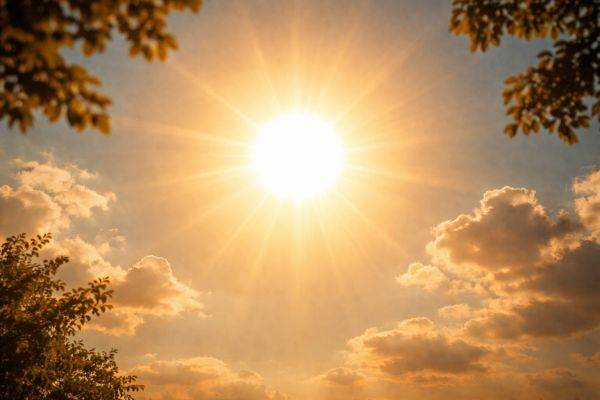
The visible disk of the Sun was completely free of sunspots on February 22, for the first time in almost three years, a phenomenon that attracted the attention of the scientific community because it could mark the beginning of a phase of decreasing solar activity. The event was reported by the scientific publication Live Science, which cites data from international solar observatories. Although the episode lasted only two days, specialists consider that it represents a symbolic indicator of a slow but inevitable change in the dynamics of the star that makes life on Earth possible.
• An 11-year cosmic cycle
Solar activity is not constant, but evolves in natural cycles of approximately 11 years. During this period, the Sun passes from a maximum phase, with numerous spots, eruptions and magnetic storms, to a minimum one, characterized by an apparent calm. Sunspots are cooler regions on the surface of a star, created by intense magnetic fields that prevent energy from the inside from reaching the surface. But these areas are also "hot spots” of solar activity: when magnetic fields become unstable, they can generate huge flares and coronal mass ejections. The current solar cycle, the 25th since systematic observations began, reached its maximum in 2024. The appearance of a spot-free solar disk indicates that the descending phase could begin. However, according to the British Met Office, the next solar minimum is not expected until around 2030.
• Why sunspots matter to Earth
Although they may seem like a distant phenomenon, sunspots directly influence modern technology and everyday life. Solar flares associated with these areas can cause geomagnetic storms that can: disrupt radio and GPS communications; affect satellites and space missions; cause fluctuations in electrical grids;
generate spectacular auroras at unusual latitudes.
In recent years, the approach to solar maximum has led to an increase in the frequency of these phenomena, including strong geomagnetic storms observed in 2024.
A decrease in the number of spots could reduce, over time, the risks to global technological infrastructure.
• Appearing calm, not lack of danger
However, experts warn that a period without spots does not mean the complete absence of risks. Solar activity can remain unpredictable even in the descending phases of the cycle. According to the publication Space.com, it is possible that spots will continue to exist on the invisible side of the Sun or that active regions capable of producing major eruptions may suddenly appear. History confirms this variability: during the previous solar minimum, between 2018 and 2020, the Sun remained without spots for almost 700 days, but there were still sporadic episodes of activity.
• Climate Impact: Myths and Reality
A frequently discussed topic is the connection between solar activity and Earth's climate. Although solar cycles can slightly influence the amount of energy received by the planet, scientists emphasize that the effect is small compared to the impact of greenhouse gases. In other words, a possible decrease in solar activity could not compensate for global warming caused by human activity.
The moment when the Sun appears without spots is rare and spectacular for researchers, because it marks a transitional stage in the cosmic rhythm of our star. Even if the quiet observed in February was short-lived, it confirms that the solar cycle is gradually starting to slow down, preparing the ground for a new period of relative calm. For humanity, this process remains a reminder of the profound dependence on the dynamics of the Sun - an immense natural force, whose fluctuations continue to influence technology, the environment and life on Earth.

























 Euro
Euro Dolar SUA
 Franc elveţian
 Liră sterlină
 Gram de aur