English


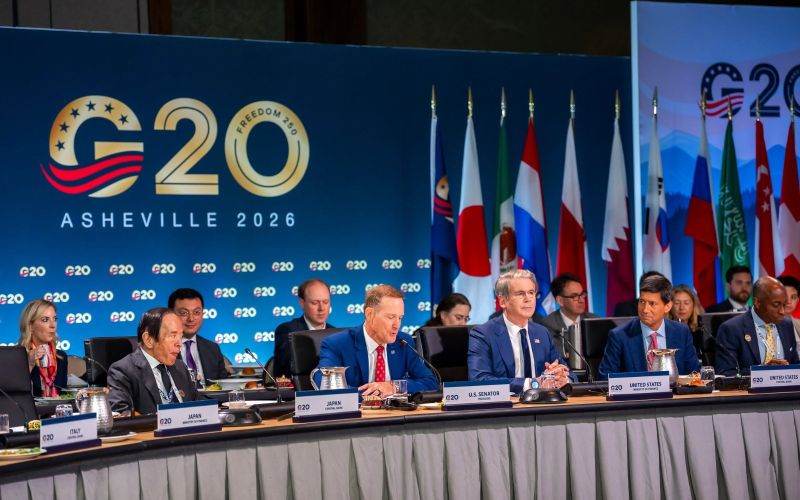
The citizens of the world want to have access to cheap products, while the member states of the G20, with the exception of China, want these products to be removed from the market or to be overtaxed to reach the price level of the products in the respective states. This is the main conclusion that emerges from the Declaration of the Presidency of the meeting of the finance ministers and central bank governors of the G20, which took place in the USA, between August 31 and September 1.
The position of the majority of the G20 members is a political one, in favor of large producers and contrary to the interests of consumers. We are basically talking about an inhuman philosophy. The world's largest economies came very close to a common front against the model based on industrial subsidies, insufficient domestic consumption and massive export of surplus production, but China rejected the proposed formulation. Beijing remained the only G20 member to oppose it, while Russia, although it is China's main strategic partner, did not formulate any reservations and joined the position supported by the other participants.
The statement of the Presidency of the G20 meeting this week does not represent the introduction of a global tax on Chinese products or the adoption of common customs tariffs. The G20 members did not establish quotas, tax levels, product categories or an application timetable, but only formulated a political and economic diagnosis: persistent trade imbalances, maintained by practices that do not work according to market rules, have harmful effects on other economies and can no longer be ignored.
The specific proposal for countries to raise trade barriers against cheap Chinese goods came separately from US Treasury Secretary Scott Bessent and is not a collective decision of the G20.
In the central paragraph of the US presidency's declaration, the participants state that countries must eliminate non-market policies and practices that exacerbate imbalances. Economies with excessive and persistent external surpluses are asked to remove distortions that limit domestic consumption and generate excessive dependence on exports to support growth. The document warns that these policies affect global, regional and national markets, increase economic dependencies, make supply chains vulnerable and can cause disorderly adjustments in trade and financial flows. At the same time, in order not to turn the text into a unilateral accusation, the declaration also calls on countries with persistent deficits to stimulate domestic saving and consolidate their public finances.
• China, the target of the paragraph on the elimination of non-market policies and practices
China is not named, but the target is obvious. According to Reuters, China's trade surplus reached almost 1,200 billion dollars in 2025, and the surplus in goods trade with the European Union rose to 360.6 billion euros, 15% above the level in 2024. Chinese exports increased by 23.9% in July 2026 compared to the same month of the previous year. Electric cars, batteries, solar panels, semiconductors, steel and many manufactured goods have come under criticism, amid fears that state support, preferential loans and oversized production capacities allow Chinese companies to sell at prices that producers in other countries cannot compete with.
According to Scott Bessent, non-market economies that throw an endless stream of cheap exports onto world markets create an unsustainable situation. The US official argued that Washington's high tariffs had reduced access to the US market for Chinese products, but had redirected some of the flow to Europe, Latin America and other regions. For this reason, he recommended that his G20 partners analyze their own trade barriers. However, the European participants did not take up the entire American approach without reservations: they criticized China's practices, but also warned that the US tariff wars were generating uncertainty and affecting global growth. Representatives of the authorities in Beijing rejected the idea that China's surplus was the result of a deliberate strategy to flood foreign markets with cheap products. The governor of the People's Bank of China, Pan Gongsheng, said that his country was aiming to expand domestic demand and maintain a high degree of economic openness. He admitted that countries with surpluses should stimulate consumption and investment, but called for the responsibility to be shared: countries with deficits must reduce budget imbalances and increase their saving rate.
In Beijing's version, protectionism, the increasing use of the national security argument and the unpredictability of trade policies are themselves causes of the deterioration of the world economy, as they fragment supply chains and fuel inflation. China has also refused to expand the role of the IMF and the OECD in monitoring non-market policies. The other participants have called on the two organizations to improve the data and tools through which the structural causes of imbalances, subsidies and their cross-border effects are analyzed. For Beijing, such a mandate could provide future anti-dumping or countervailing duty measures with a technical and multilateral justification, transforming political accusations into a documented economic file.
• Russia, in agreement with the final text of the G20 meeting declaration, to the detriment of China
Russia's position is one of the most interesting conclusions of the G20 meeting earlier this week. Moscow was represented by Finance Minister Anton Siluanov, and the official G20 presidency note states that only China opposed the paragraph on cheap goods. As a result, Russia accepted the wording on eliminating non-market policies, reducing excessive dependence on exports, and intensifying surveillance of imbalances by the IMF and OECD. There was no roll call vote, as the G20 operates by consensus, but, translated into the usual terms of a vote, Russia's position was in favor of the text, while China's was against.
Siluanov has not yet explained why Moscow did not join Beijing, nor has he directly criticized the Chinese trade model. Moreover, he has not explicitly supported tariffs on Chinese products. In his remarks, the Russian minister called for the G20 to return to being a financial coordination mechanism, criticized geopolitical fragmentation and trade and non-tariff restrictions, and said that major developed economies must reduce their deficits and debts. Interfax reported that Siluanov presented the free movement of goods, capital, and technology as one of the victims of global fragmentation. Russia's Prime news agency, citing the Russian Finance Ministry, said the official insisted on budgetary discipline in developed countries and on eliminating the causes of debt accumulation.
This position creates a crucial distinction. Russia accepted the G20's general diagnosis of trade imbalances, but there is no evidence that it approved the tariff remedy promoted by Washington. The text was broad enough for Moscow to interpret it in its own terms: both surplus and deficit countries must make adjustments, and Western economies must reduce their fiscal deficits. Moreover, the statement does not name China and does not oblige Russia to tax Chinese products. Moscow may have avoided a conflict at the meeting that marked Siluanov's physical return to the G20 financial table, but this remains an interpretation, not an explanation confirmed by the Russian minister.
The fact that Russia did not follow China is nevertheless relevant. The Russian-Chinese relationship has deepened dramatically under the pressure of Western sanctions, and China has become a key source of automobiles, industrial equipment, electronics and consumer goods for the Russian market. It is precisely this asymmetry that may make Moscow sensitive to its dependence on Chinese imports, even if it does not want to turn the issue into a public confrontation. Accepting the statement allows Russia to support the principle of trade balance without engaging in a policy hostile to Beijing.
• G20 meeting in the US, no joint final statement
The dispute over cheap products prevented the adoption of a joint communique. In its place, the United States issued a presidential statement, and the footnote states that the document was accepted by all members present except China, which objected to paragraphs 4, 10, 11 and 13. Therefore, it can be said that the G20 produced an unusually large political majority against non-market practices, but did not adopt any binding trade measures.
China also opposed the paragraph on the free and safe operation of trade routes, including navigation through the Strait of Hormuz, as well as the paragraph on strengthening the G20 Joint Framework for Restructuring the Debts of Vulnerable States. On debt, other participants called for faster, predictable and coordinated procedures and fair burden-sharing among creditors. Beijing's reservation is important because China is one of the main bilateral creditors of developing countries and often prefers direct negotiations to multilateral mechanisms that require greater transparency on claims and restructuring conditions.
The meeting otherwise set a broad agenda. Participants called for avoiding unnecessary restrictions on exports of energy, food, fertilizers and critical minerals, as well as for a roadmap for multilateral development banks to finance the production, processing, storage and transport of fertilizers. They reaffirmed the independence of central banks and the priority of price stability, and advocated reducing bureaucracy, stimulating private investment, developing skills and increasing labor market participation.
Artificial intelligence also played an important role. The G20 Presidency Statement presents AI as a general-purpose technology capable of raising productivity, but recognizes the risks to the financial system and the need for cyber resilience. According to the quoted text, the G20 encourages investment in digital infrastructure, computing and affordable energy, modernizing financial regulations, responsible development of digital assets and continuing the reform of cross-border payments. Participants also reaffirmed FATF standards against money laundering, terrorist financing, digital fraud and the use of virtual assets for illicit purposes.
The G20 meeting in the US will not trigger a coordinated trade war against China, but it has produced a political signal that is difficult to ignore: for the first time, Beijing is left alone in the face of a coalition that includes Western economies, major emerging powers and even Russia. The next step will depend on the decisions of each capital: anti-dumping duties, countervailing measures, technical standards, subsidy controls or negotiations to stimulate Chinese consumption. For now, the 19 have agreed on the problem, not on the same solution. China blocked the formal consensus, and Russia accepted the text without explaining why and without publicly embracing the tariffs proposed by Washington.

















 Euro
Euro Dolar SUA
 Franc elveţian
 Liră sterlină
 Gram de aur