English

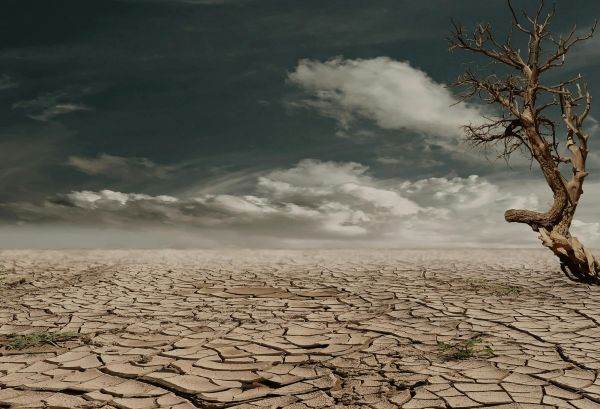
The increasingly dramatic consequences of climate change are already forcing millions of people to flee their homes, warns the UN Refugee Agency (UNHCR) in a report released on the occasion of the UN Climate Conference (COP30), hosted by the Brazilian city of Belem. According to the document, natural disasters caused by climate change have generated an estimated 250 million internal displacements in the past decade - the equivalent of more than 67,000 people forced to flee their homes every day. UNHCR describes the current situation as a "vicious cycle” between armed conflict and climate crises, in which the effects of one amplify the severity of the other. "Three quarters of people displaced by conflict live in countries that are extremely vulnerable to the consequences of climate change,” the report says. These countries, often marked by political instability and fragile infrastructure, are among the most exposed to natural disasters - from floods and droughts to record heat waves. Examples include the devastating floods in South Sudan and Brazil, extreme heat waves in Kenya and Pakistan, and severe water shortages affecting Chad and Ethiopia. In these regions, the climate crisis is not only destroying homes and farmland, but also fueling social tensions, hunger and conflicts over basic resources. The report also highlights a global equity issue: only a quarter of climate change adaptation funds actually reach conflict-affected countries, even though they are among the most vulnerable and often host large numbers of refugees. "Climate change is exacerbating and multiplying the challenges faced by those already displaced, as well as the communities that host them,” warns UNHCR. For these regions, the lack of funding is not just an administrative problem, but a matter of survival: without concrete support, millions of people risk being trapped in a perpetual cycle of loss, displacement and instability.
• Filippo Grandi: "COP must deliver real action”
In a strong message to summit participants, Filippo Grandi, the UN High Commissioner for Refugees, called for a change of approach and an urgent mobilisation of resources. "If we want stability, we must invest where people are most at risk. To prevent further displacement, climate finance must reach communities already living on the edge,” Grandi said. "COP must deliver real action, not empty promises,” he added, stressing that the time for fruitless negotiations is over and the planet needs concrete action. This year's UN Climate Conference, COP30, is taking place in the city of Belem, located in the heart of the Amazon rainforest - a symbol of the global climate balance, but also of the danger that threatens the planet's ecosystems. The event brings together some 50,000 participants from over 190 countries, including world leaders, civil society representatives, scientists and environmental activists. During the two weeks of discussions, they will try to identify solutions to reduce carbon emissions, protect biodiversity and financially support poor countries, which are feeling the hardest hit by the climate crisis.
• Climate refugee crisis - a global threat
Experts warn that, without firm measures, the number of climate refugees could exceed 1 billion by 2050, a figure that would destabilize not only local economies but also the global geopolitical balance. International organizations are calling for climate migration to be officially recognized as a distinct category in international refugee law - a discussion that has been delayed for years for political reasons. As extreme weather events become more frequent and violent, the question is no longer "if” but "when” the world will be prepared to manage this climate exodus. The UN message is clear: every delay in climate action means lives lost and communities destroyed. And the price of inaction will not only be measured in billions of euros, but also in human destinies.
Belem is thus becoming, in these days, not just a place of debate, but a test of global solidarity. If world leaders succeed in turning promises into concrete policies, COP30 could mark the beginning of a new phase in the fight for a livable future. If not, the world will continue to count climate refugees, day by day, 67,000 more people losing their homes to nature's fury.
















 Euro
Euro Dolar SUA
 Franc elveţian
 Liră sterlină
 Gram de aur