 English

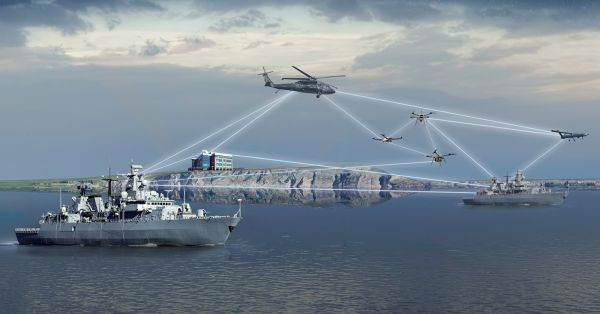
NATO's Support and Procurement Agency (NSPA) has decided to suspend the Israeli company Elbit Systems from all new tenders and freeze some ongoing contracts, after serious allegations of corrupt practices emerged, according to an article published yesterday by the investigative journalism website Follow The Money.
The investigation, conducted by Follow The Money together with the Belgian dailies La Lettre, Le Soir and Knack, targets suspicions of bribery, manipulation of procurement processes and elaborate networks of influence, and an international arrest warrant issued for an Elbit associate consultant amplifies the shock within the Alliance. The NSPA decision sends shockwaves: it is no longer just about the integrity of NATO's military procurement, but about trust in its most important suppliers at a time when European security critically depends on the flawless functioning of these chains.
Elbit Systems is Israel's largest arms manufacturer, with a turnover of almost $7 billion in 2024 and ranked 25th in SIPRI's top 100 defense companies.
At the heart of the NSPA decision is a wide-ranging corruption scandal that led to arrests in May 2025, following raids by authorities in seven countries, including Belgium and the United States. The investigation targets current and former employees of the agency, suspected of having received bribes worth millions of euros in order to award supply contracts to NATO and its 32 member states.
Documents obtained by the journalists from the cited sources show that Elbit and its subsidiary Orion Advanced Systems were suspended by the NSPA on July 31, and several ongoing contracts were put on hold. "The suspension of the suppliers follows the emergence of serious allegations indicating that they are likely to have engaged in sanctionable practices, including irregularities in the award of contracts,” a letter issued by an NSPA manager reads.
In this context, the delivery of ammunition for truck-mounted howitzers, mobile artillery rocket systems and defense systems for aircraft and helicopters has been disrupted. Contracts for explosive detonators supplied by Orion Advanced Systems have also been frozen. Other Elbit contracts, not related to the alleged corruption, continue, according to sources close to the investigation.
The impact on Romania is potentially major, as Elbit has become one of the most important industrial players in the national defense sector in the last two decades. The company operates factories, engineering centers, production lines for military optics and electronic systems, and is involved in key projects of the Romanian Army, including aircraft modernization, integration of advanced electronic systems and local production of strategic military components. The recent contract of approximately 60 million dollars for an advanced drone countermeasure system, as well as its extensive portfolio of equipment delivered in recent years, could experience tensions or delays if the situation at NATO level escalates.
In parallel with the suspension, according to the cited sources, a figure closely associated with Elbit, an Italian citizen identified as Eliau E., is now targeted by an international arrest warrant issued by Interpol on September 30, on suspicion of bribery and participation in a criminal organization. The 60-year-old man has not been detained and may be traveling under a false identity, according to people familiar with the case. He is not officially an employee of Elbit, and the company is not directly under investigation, but two people close to the investigation say he plays a significant role as a consultant for the firm. Eliau E. owns or runs several defense consulting companies - Elar Systems Corp in the US, Eral Systems UAB in Lithuania and Arelco Europe Management Consultancies in Greece - but authorities have not confirmed the involvement of these entities in the NSPA scandal. People close to the case say Eliau E. was in direct contact with Guy M., the main suspect in the Belgian investigation, a former Belgian defense official and ex-NSPA employee who became a consultant after 2021. Guy M. was arrested on May 12, 2025 at Brussels airport, accused of participating in a criminal organization, corruption and money laundering. He spent six months in custody before being released under electronic monitoring. His lawyer, Pieterjan Dens, told Follow The Money that he admits to many of the facts in the case, but disputes the total value of the bribe estimated by prosecutors at 1.9 million euros.
According to other sources close to the investigation, Eliau E. was allegedly introduced to Guy M. by another former NSPA employee, Turkish national Ismail Terlemez, who now runs and co-owns one of Turkey's fastest-growing defense companies, Arca. Terlemez was himself arrested in Belgium in May and was due to be extradited to the United States, where a parallel investigation into corruption in NATO tenders was underway. That US investigation was abruptly and inexplicably halted in July, leading to the extradition request being dropped and Terlemez being released.
All the while, NSPA, an agency that has tripled its total contract volume since Russia's full-scale invasion of Ukraine in 2022, to a projected euro9.5 billion for the current year, has been facing internal accusations of favoritism, lack of transparency and undue interference by its leadership. Leaked documents show that senior officials accuse the agency's director, Stacy Cummings, of favoring suppliers, failing to investigate corruption complaints, and interfering in departmental activities. NATO and NSPA did not respond to requests for comment from Follow The Money.
Amidst this crisis, Romania is at a vulnerable point: its dependence on Elbit technology to modernize its armed forces, the company's major investments in the national industry, and its role in the European defense ecosystem could turn this scandal into a destabilizing factor. NATO's suspension of Elbit raises questions about the continuity of supply chains, the pace of the Romanian Army's equipment programs, and the credibility of international military procurement procedures. At a time when Eastern Europe's security depends on the Alliance's cohesion and resilience, any crack in its internal mechanisms becomes a strategic vulnerability.


















 Euro
Euro Dolar SUA
 Franc elveţian
 Liră sterlină
 Gram de aur





























