English


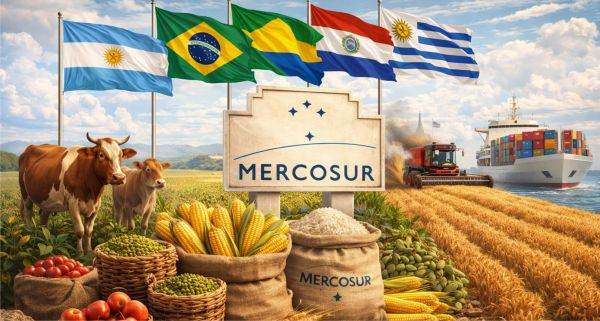
The Council of the European Union yesterday approved the regulation on the activation of safeguard mechanisms for agricultural products in the EU-Mercosur trade agreements, according to a press release issued by the Brussels institution. It is a decision that attempts to reconcile two political objectives that have been in tension for years: opening up markets to one of the world's largest agricultural economic blocs and protecting European farmers from shocks caused by massive imports.
The regulation adopted by the Council implements the bilateral safeguard clauses provided for in the EU-Mercosur Partnership Agreement and the EU-Mercosur Interim Trade Agreement for agricultural products, giving the Union rapid tools to intervene when imports from South American countries threaten to cause serious damage to European producers. Brussels is essentially creating a safety net for when trade liberalization begins to have destabilizing effects on the agricultural market.
The new rules introduce accelerated procedures and clear thresholds for triggering investigations. For sensitive agricultural products, the regulation sets a threshold of 5% above the average of imports over the past three years for initiating a formal review, and investigations must be completed within a maximum of four months. In situations considered urgent, the European Commission will be able to impose provisional measures within just 21 days, which turns the mechanism into a rapid intervention tool designed to avoid price collapse or massive losses for European producers.
In addition to these reaction mechanisms, the Commission will also have a permanent market surveillance role, monitoring imports of sensitive agricultural products and publishing regular reports on market developments. In practice, the system functions as an early warning mechanism, designed to quickly detect any distortions caused by increased imports from Mercosur.
The Council's decision comes amid persistent political tensions over the EU-Mercosur agreement, which many European farmers see as one of the riskiest trade deals negotiated by the European Union. The Mercosur bloc, made up of Argentina, Brazil, Paraguay and Uruguay, is one of the world's largest exporters of agricultural products, and European farmers' fears have focused in particular on imports of beef, sugar, soya or ethanol, products that can reach the European market at lower costs than those of EU producers.
By introducing these safeguard mechanisms, the European institutions are trying to reduce political opposition to the agreement and provide guarantees that trade liberalisation will not leave the agricultural sector defenseless.
Michael Damianos, Minister for Energy, Trade and Industry of Cyprus, which holds the rotating presidency of the Council of the EU, said: "We pledged to protect our farmers; today we have kept our promise. EU farmers will be better protected from sudden market shocks and rapid increases in imports. With this regulation, we will have the capacity to respond quickly and effectively to protect our agricultural interests, while deepening our trade relations with Mercosur." The EU-Mercosur Partnership Agreement and the interim trade agreement were signed by both parties on 17 January 2026 in Asuncion, Paraguay. However, they must also receive the consent of the European Parliament in order to enter into force. The regulation adopted by the Council is an essential element of the legal architecture accompanying the trade agreement, providing the Union with a reaction mechanism in case imports seriously affect European agricultural producers.
The regulation will enter into force 20 days after its publication in the Official Journal of the European Union and will apply to both the interim trade agreement and the full partnership agreement when ratified. With this decision, Brussels is trying to send a message that the opening of markets will not be a unilateral process, but one accompanied by defensive instruments capable of limiting the negative effects on sensitive sectors.
Also yesterday, the EU Council adopted another regulation relevant to the agricultural sector, which introduces new rules to combat unfair cross-border trading practices in the agri-food chain. The new provisions aim to improve cooperation between national authorities when suppliers and buyers are established in different Member States, through a mutual assistance mechanism that allows for the exchange of information, collaboration in investigations and the application of sanctions in other Member States. The regulation also introduces the possibility of coordinated action when unfair practices affecting at least three Member States and lays down rules on data protection, confidentiality of information and allocation of costs in cooperation procedures. The new rules will enter into force 18 months after publication in the Official Journal of the European Union, to allow Member States to prepare for the implementation of this legal framework intended to strengthen the position of farmers in the European food chain.





















 Euro
Euro Dolar SUA
 Franc elveţian
 Liră sterlină
 Gram de aur