English

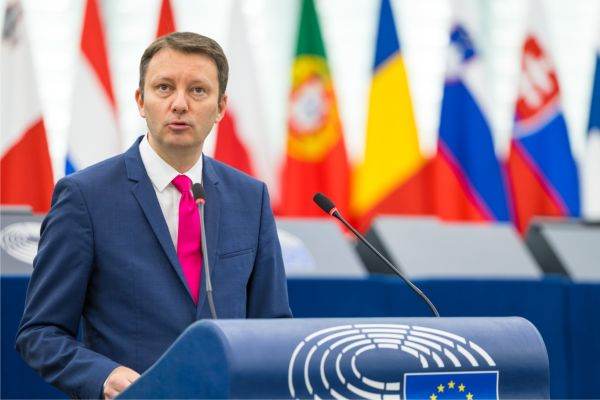
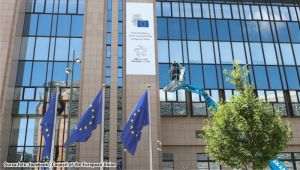
The European Parliament yesterday approved its negotiating position with the EU Council and the European Commission on the multiannual financial framework for the period 2028-2034. MEPs want the future budget to be set at 1.27% of the EU's gross national income (GNI), with one key condition: the debt repayment costs of the NextGenerationEU recovery fund, estimated at 0.11% of GNI, to be kept outside the budget ceilings. This position, adopted by 370 votes in favour, 201 against and 84 abstentions, sends a clear signal to member states that the Union's ambitions can no longer be supported by limited resources.
Parliament's proposal means an increase of around 10% compared to the European Commission's version of July 2025, an increase that would be evenly distributed across the EU's main funding lines, excluding administration and agencies, to absorb inflationary shocks and maintain investment capacity. In concrete terms, this translates into an extra euro197.30 billion, not including the NextGenerationEU reimbursement. In total, Parliament is counting on a budget of euro2.01 trillion, an amount intended to support the Union's strategic objectives and political priorities. On the revenue side, Parliament reaffirms its commitment to introducing new own resources to cover the NextGenerationEU debt and to support the future budget. MEPs support the "basket" approach proposed by the Commission and estimate that the new sources should generate around euro60 billion annually. If some proposals are dropped, alternatives such as a digital services tax, a tax on online gambling, an extension of the carbon border adjustment mechanism, or a capital gains tax on cryptoassets are being considered.
After the approval of the European Parliament's negotiating position, co-rapporteur Siegfried Mureşan, Vice-President of the European People's Party, said: "This is a budget that guarantees Romania's funds for agriculture and cohesion and cancels the proposed cuts. Today's report completes the work that we have coordinated in the European Parliament over the past two years. We have arrived at the best possible budget proposal for the current European context. One that finances both new priorities, such as defense and competitiveness, and traditional priorities, such as agriculture and cohesion. Specifically, the budget proposes a record allocation to strengthen defense, in the face of all the security challenges at our borders. At the same time, we are allocating more resources to strengthen our economy. We want to be more competitive globally and better combat competition from third countries, such as China. At the same time, we are also protecting traditional policies: agriculture and cohesion. For us, Romania, as one of the largest agricultural producers in Europe, it is important to know that our farmers will continue to rely on funds dedicated to agriculture and rural development. We guarantee this through the report negotiated by me. At the same time, we are also saving the cohesion policy. In the Commission's initial proposal, this policy, which is very important for Romania, no longer had dedicated funding. We, the European Parliament, believe that cohesion policy is the best antidote to the growth of the anti-European and Eurosceptic current in Europe. Cohesion policy guarantees the reduction of economic differences between the more developed and the less developed countries in Europe and combats, through visible results, the false speeches of anti-Europeans. It is the policy that finances roads, schools and hospitals in Romania and in many other countries. We have worked intensively precisely to ensure that our position is adopted on time. We are now also waiting for the Council to speed up the process and have an official position on the budget. The objective is to reach an agreement on the budget by the end of the current year. Thus, the Member States will have another year to prepare funding programmes and allow beneficiaries to start absorbing funds on time, not late, as happened in previous exercises”.
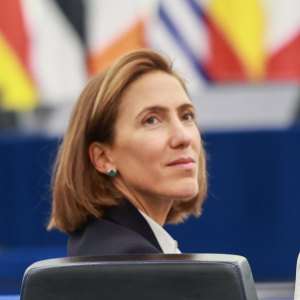
For her part, co-rapporteur Carla Tavares, from the Alliance of European Socialists and Democrats, underlined the deep stakes of these negotiations: "The Common Agricultural Policy, the Cohesion Funds, Horizon Europe and Erasmus+ are not relics of the past, but the backbone of European solidarity and the factors shaping our future. Ambition without resources is empty, which is why we have taken a strong stance on the future budget, balancing new and old priorities with moderate growth and genuine new own resources. Now it is the turn of the European Council to live up to our ambition, to develop our proposals and ensure a solid and timely budget, one that works for regions, beneficiaries and citizens. We look forward to constructive negotiations." The message from MEPs is clear: the EU budget must remain an investment tool, not a mechanism diluted by renationalisation or fragmentation. The idea of a "one plan for each Member State" model is strongly criticised as a major risk to the coherence of European policies, transparency and fairness between beneficiaries. Parliament insists that the EU's added value must be clear and superior to national spending. At the same time, MEPs call for separate and reinforced funding for key programmes, from the common agricultural policy and fisheries to cohesion policy, the European Social Fund and home affairs, including for the outermost regions. Local and regional authorities must be directly involved in the planning and implementation of these programmes, to ensure efficiency and adaptation to realities on the ground. Support is also extended to areas considered vital for Europe's future: competitiveness, defence, innovation, digital and green transition, infrastructure, health, education and culture, in line with the Commission's proposal to double funding for these sectors. Programmes such as the European Competitiveness Fund, Horizon Europe, the Connecting Europe Facility, Erasmus+, AgoraEU or the Civil Protection Mechanism are identified as essential pillars requiring additional resources, as are the EU4Health and LIFE initiatives.
Externally, Parliament warns that the proposed level of funding is insufficient and calls for more consistent allocations for enlargement, development, support for Ukraine, multilateral cooperation and humanitarian aid, in an increasingly tense geopolitical context. At the same time, MEPs point out that any simplification of budgetary mechanisms must not undermine transparency, accountability or democratic control, warning that the widespread use of funding not directly linked to costs could affect the capacity for audit and verification. Respect for European values and the rule of law remains a firm condition for accessing the funds, but without penalizing the final beneficiaries for any slippages by their governments.
Having established this position, Parliament has finalized the negotiating framework for the regulation that will define the structure and main figures of the 2028-2034 budget. The decisive stage now lies ahead: the agreement of the member states and the interinstitutional negotiations that will determine the final shape of the most ambitious European budget to date.















 Euro
Euro Dolar SUA
 Franc elveţian
 Liră sterlină
 Gram de aur