English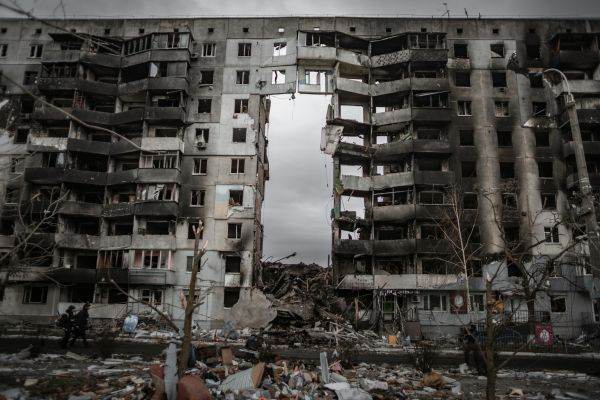
The toll of the war in Ukraine today, four years after the conflict began, includes human losses, massive migration, economic contraction and the destruction of critical infrastructure.
The most important of all is the human dimension. According to the UN Human Rights Monitoring Mission in Ukraine (HRMMU), 15,172 civilian deaths and 41,378 injuries were recorded as of 31 January 2026.
The UN warns that there has been a sharp increase in civilian casualties in 2025, particularly from short-range drones, which have extended the direct threat to residential areas. The UN data only reflects confirmed cases, suggesting that the true scale of the losses is likely higher.
Estimates of military casualties, although controversial in terms of the sources that provide them, show that we are dealing with hundreds of thousands of dead and wounded, for both sides. The Center for Strategic and International Studies (CSIS) estimated at the beginning of 2026 that the Russian Federation has approximately 1.2 million military casualties (dead, wounded, missing), including 325,000 deaths, while Ukraine counted between 500,000 and 600,000 casualties, with up to 100,000-140,000 deaths. The American press, however, emphasized that, maintaining the current pace of fighting, the symbolic threshold of "nearly 2 million cumulative military casualties" becomes a plausible projection, not a rhetorical exaggeration. In addition, the war caused an unprecedented displacement of the civilian population in Ukraine. According to UN data, approximately 10 million Ukrainians live far from their homes, of which about 5.9 million are external refugees and approximately 3.7 million are internally displaced. UNICEF estimates that over 2.5 million children remain displaced, exposed to educational instability, psychological risks and social precariousness. Inside Ukraine, displacement does not mean full rescue. Organizations such as the Norwegian Refugee Council warn that millions of families live in fragile conditions, dependent on insufficient humanitarian aid, while civilian infrastructure continues to be the target of attacks. HRMMU signals the degradation of essential services, such as energy, water and heating, which has a direct impact on public health, especially in the cold season.
Territorially, the dynamics remain paradoxical. International media analyses show that Russia reached a maximum of control in the spring of 2022, followed by withdrawals and stabilization of the front. At the end of 2025 - the beginning of 2026, slow, local territorial gains were recorded, obtained at enormous cost. The narrative of "minimum progress, maximum losses” constantly recurs in the syntheses prepared by the Associated Press, Financial Times and other European publications. However, Al Jazeera noted yesterday that the Russian Federation, from occupying 26% of Ukrainian territory in March 2022, reached only 19.3% by the end of 2025.
Added to this balance sheet is the economic impact. The World Bank, the European Commission and the Ukrainian government have estimated the costs of reconstruction at hundreds of billions of dollars, and the trend is upward as the destruction continues. The Ukrainian economy suffered a historic contraction of approximately 30% of GDP in 2022 (according to World Bank estimates), followed by fragile partial recoveries, constantly threatened by attacks on energy and logistics infrastructure. Heavy industry, agriculture, transport and the energy sector are also operating under extreme constraints.
Energy has become a strategic battleground for the Russian Federation since the beginning of the conflict in Ukraine. The UN and European institutions have described Russian air campaigns as a form of "weaponising winter”, systematically targeting electricity and thermal energy production and distribution capacities. The HRMMU shows that Ukraine entered the winter of 2025-2026 with a major structural deficit in energy capacity compared to peak demand (11 gigawatts of production compared to 18 gigawatts needed during the winter), which has led to widespread blackouts, industrial disruption and pressure on the civilian population.
In parallel, the Institute for the Study of War (ISW) notes a diversification of targets by the Russian Federation towards water infrastructure and railways in Ukraine, a sign that military pressure aims to functionally paralyze the economy and internal mobility. Agriculture, the traditional pillar of Ukrainian exports, has been severely affected by land grabbing, mining, destruction of silos and logistical bottlenecks. The global costs have been felt in the volatility of grain markets, with echoes in the European food inflation of the early years of the conflict. Supply chains, shipping transports on Black Sea and risk insurance have become geopolitical variables.
Europe is also bearing indirect economic costs.
The energy crisis that began in 2022 has accelerated diversification of sources, investments in liquefied natural gas (LNG) and renewable energy production capacity, but at high prices for industry and consumers. Public budgets have been strained by military, financial and humanitarian support for Ukraine, and disputes over sanctions reflect the tension between strategic solidarity and domestic economic pressures. The Western press has frequently reported on political confrontations generated by vetoes and conditionality related to energy and trade.
For Ukraine, the war is simultaneously a military, humanitarian and economic crisis. The population is shrinking, private investment remains limited by risk, and reconstruction is delayed by security uncertainty. Demographic estimates cited in the European press suggest that, in the absence of stabilization, the population could decline dramatically by mid-century, amplifying the labor shortage and pressures on social systems.
After four years, the overall picture is that of a conflict that continues, for the time being without any peace solution. Human losses are increasing, infrastructures are damaged, economies are adapting to instability, and millions of people remain trapped between exile, displacement and uncertainty.





















 Euro
Euro Dolar SUA
 Franc elveţian
 Liră sterlină
 Gram de aur