English

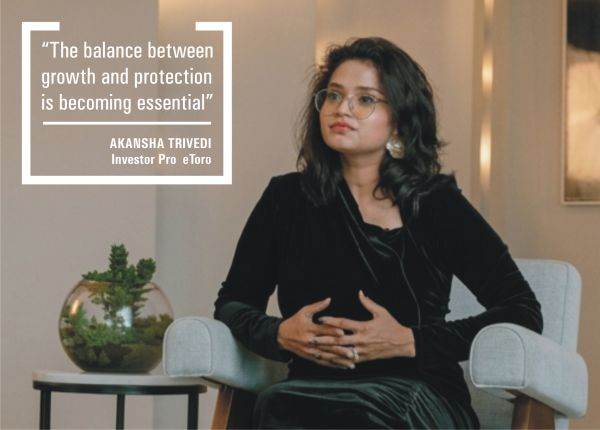
Reporter: How do you see the investment market evolving in the particularly harsh geostrategic and macroeconomic conditions we are currently experiencing? How can external political events influence investment decisions?
Akansha Trivedi: We are no longer in a low-volatility, synchronized globalization cycle. We are in a fragmented world. Supply chains are being regionalized, defense budgets are expanding, and capital is moving toward strategic assets.
Political events now have a direct market impact. Sanctions affect energy flows. Trade tensions affect semiconductor supply chains. Elections influence fiscal and regulatory frameworks.
As investors, we cannot treat geopolitics as background noise anymore. It is now a pricing variable. That is why I combine growth exposure with hard asset hedges like gold, silver and miners.
Reporter: How do you feel as an investor at the moment? What is the market sentiment now?
Akansha Trivedi: I feel constructive but selective. There is optimism around artificial intelligence and productivity gains, but there is also underlying fragility in liquidity and global politics.
Sentiment feels bifurcated. Mega-cap technology remains strong. Meanwhile, many cyclical and rate-sensitive sectors are still adjusting.
In such an environment, discipline matters more than emotion. I focus on position sizing and diversification rather than reacting to headlines.
Reporter: Were there situations or moments when you withdrew your money from one asset and invested it in another?
Akansha Trivedi: Yes, capital rotation is part of disciplined portfolio management. In 2025, I reduced exposure to certain cyclicals and increased allocation to physical gold and silver when geopolitical risk escalated.
At the same time, I selectively added to semiconductor leaders during periods of weakness. I am not trying to predict every short-term move. I aim to rebalance when the risk-reward profile changes meaningfully.
Reporter: What was the biggest disappointment, from an investment point of view, in 2025?
Akansha Trivedi: One of my biggest disappointments in 2025 was missing part of the upside in memory stocks and certain upstream semiconductor supply chain companies.
While I had strong exposure to leading chip designers and foundries, I underestimated how powerful the recovery in memory pricing and equipment-related names would be.
That experience reinforced an important lesson. In a structural AI cycle, the entire ecosystem matters, not only the most visible leaders.
Reporter: Which investment areas have caught your attention this year?
Akansha Trivedi: Three areas stand out. First, semiconductor infrastructure and equipment, particularly companies that control manufacturing bottlenecks. Second, energy security and LNG, as Europe and Asia continue to reconfigure supply sources. Third, precious metals as monetary insurance in a world of high debt and geopolitical uncertainty. I look for businesses with pricing power, balance sheet strength, and structural demand drivers.
Reporter: What products, tools, service on the platform do you use or find very helpful?
Akansha Trivedi: What are the most important features an online platform can offer?
Risk score transparency is extremely valuable. It forces discipline and allows investors to understand portfolio volatility.
The ability to see allocation breakdowns and performance metrics in real time is also critical.
For me, the most important features are transparency, execution reliability, and access to diversified global markets. An online platform must empower informed decision-making, not encourage speculation.
Reporter: What is your investment strategy for 2026?
Akansha Trivedi: My strategy for 2026 is to maintain a balanced exposure between structural growth and macro hedges.
I plan to continue focusing on AI infrastructure, selective healthcare innovation, and high-quality cash-generating companies. At the same time, I will keep a meaningful allocation to precious metals as systemic protection.
My goal is not to chase momentum. It is to compound capital responsibly while managing downside risk.
Reporter: Thank You!














 Euro
Euro Dolar SUA
 Franc elveţian
 Liră sterlină
 Gram de aur