English

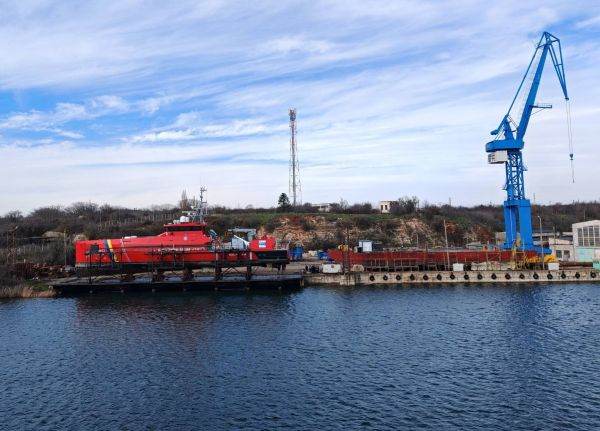
The government agreed to increase the payment-using funds secured through the SAFE program-for four military vessels, with the aim of saving the Mangalia Shipyard, which is currently undergoing bankruptcy proceedings. Unfortunately, Rheinmetall-the company tasked with building the ships and revitalizing the shipyard-has not entered any of the four tenders held so far. A gap has effectively opened up between the euro920 million contract awarded to Rheinmetall and the industrial site awaiting a buyer-a gap that statements from the Ministers of Defense and Economy can no longer bridge. In Mangalia, the rescue plan has a budget, a designated builder, and political backing, yet we have not yet seen the German giant Rheinmetall actually take over the shipyard.
Rheinmetall's absence from the fourth tender, held yesterday, moves the sale into a new phase: the starting price is set to drop from approximately euro184 million to 75% of the valuation-roughly euro138 million. If no buyer emerges then either, the price could fall to the 50% threshold, or approximately euro92 million. For the German investor, this price reduction might represent an opportunity; however, for Romania's industrial and strategic objectives, every week of waiting consumes funds and drives away the workforce needed to build the ships. These two calculations are proceeding simultaneously, but they do not necessarily lead in the same direction.
The stakes go far beyond the failure of a tender. The Romanian state publicly justified the higher cost of the naval package precisely by citing the investments required at Mangalia. In January 2026, the programs for two patrol vessels and two diving support vessels totaled euro757 million. By April, the total had reached euro920 million. The euro163 million difference-approximately 21.5% of the total value-was attributed at the time by Radu Miruţă, the Minister of National Defense, to additional investments undertaken at the shipyard and an increased share of production taking place there. In other words, the country is not merely purchasing ships from Rheinmetall but is also financing the industrial infrastructure needed to build them at Mangalia.
• MoND order linked to saving the shipyard
On April 23, Radu Miruţă further explained that the order's value had to be attractive enough for the German manufacturer to accept the shipyard's economic difficulties, offsetting them with profits from the ship construction. Saving the Mangalia Shipyard thus became part of the economic rationale behind the military procurement. For this very reason, Rheinmetall's failure to participate in the four tenders held so far cannot be dismissed as a detail without consequences: the contract intended as an incentive exists, yet the transaction it was meant to encourage has not materialized.
During parliamentary hearings on September 28, the interim Minister of Defense reaffirmed this conditionality. According to a statement by Radu Miruţă-which we published in the BURSA newspaper-Rheinmetall's cooperation obligation regarding the acceptance of the vessels cannot be deemed fulfilled unless the group takes over the economic asset. Miruţă cited the shipyard's valuation of euro80 million against debts of euro190 million, suggesting that the investor does not yet view the venture as financially justified. He then offered a measure of certainty: the company will eventually participate in the organized tenders; however, for the people of Mangalia, that "eventual moment" requires a specific date on the calendar.
The issue is not that an investor is trying to secure a favorable deal, but rather how much leeway the state has allowed them to wait within a program billed as the urgent rescue of a strategic industrial asset. In July, Minister Radu Miruţă admitted he did not know why Rheinmetall had not yet signed up, speculating that the company was waiting for the price to drop. This remains the minister's explanation, not a reason confirmed by the company itself. Yet, it raises a legitimate question: if the Government accepted additional costs to revitalize the shipyard, what deadlines and guarantees did it secure to ensure this revitalization actually begins?
In May, Rheinmetall announced it was considering a joint takeover with MSC and transforming Mangalia into a hub for military and civil naval production. The outlook was promising: investments, orders extending beyond the Romanian program, professional training, and several thousand long-term jobs. In July, a representative of the naval division confirmed intensive discussions with the Government regarding the procurement, without commenting on the tenders that had failed to attract bidders. The decisive step is still missing between that outlook and the current situation.
In the description of the military order issued by the Ministry of National Defence, the euro920 million package officially comprises two maritime patrol vessels and two diver intervention boats. The Ministry indicates estimated values of euro836 million for the first and 84 million for the others, with NVL/Rheinmetall Naval Systems acting as the economic operator. Precision matters: citizens need to know what the Ministry of National Defence (MApN) is buying, what industrial capacity the country gains in return, and what portion of the cost goes toward revitalizing the Mangalia shipyard.
• High risk of total workforce loss
The shipyard did not fall into insolvency overnight. As we have reported in our newspaper over the past three years, even prior to the insolvency, there was a deadlock regarding budget approval and shareholder decisions. In April 2024, union sources described to BURSA potential projects worth nearly euro300 million for which the necessary bank guarantees could not be secured. These were contract opportunities rather than guaranteed profits, yet the underlying issue was already apparent: an industrial facility cannot operate if its owners fail to make the decisions required to secure contracts and finance projects.
The insolvency proceedings, opened on June 19, 2024, did not bring the expected turnaround. In September 2024, CITR reported debts totaling one billion lei and a workforce of 1,453 employees, 692 of whom were on technical unemployment. The administrator sought to generate liquidity through the sale of non-essential assets and ship repair work; however, the shipyard's sheer scale-spanning over one million square meters, with three dry docks exceeding 300 meters in length and extensive workshops-demanded orders of a commensurate magnitude. Such infrastructure cannot be sustained indefinitely through work that fails to cover its costs.
Laurenţiu Gobeajă, leader of the Navalistul (Shipbuilder) Union, stated last year that the decline manifested as outstanding wages, technical unemployment, and job losses. The union's memorandum from September 2025 reported over 17 million lei in unpaid wage entitlements and more than 161 million lei in current debts accumulated between the start of insolvency proceedings and the end of July 2025. In March 2026, employees protested over wages that had gone unpaid for more than three months and demanded approval for the reorganization plan. The plan failed to secure the support of Damen, which believed the proposal would jeopardize the recovery of its investments and loans. Bankruptcy proceedings, opened on April 28, 2026, were followed by mass layoffs. For the employees, the promise of a rescue went hand in hand with the loss of professional continuity.
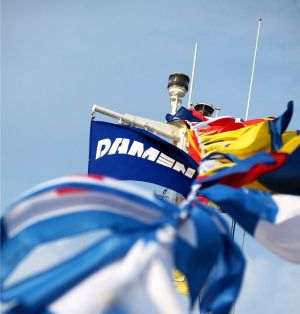
The conflict between the state and Damen also explains the difficulty of the sale. The state holds the majority of the capital, but this does not guarantee control over the creditors' assembly, where the Damen Group holds approximately 85% of the claims. The initial strategy called for six monthly auctions at a fixed price of approximately 184 million euros. After three rounds with no bidders, CITR obtained approval from the Constanţa Tribunal in early September to change the mechanism, allowing for a potential price reduction. Damen has challenged the ruling, as it seeks to recover its funds, while the potential investor focuses on acquisition terms and the workers aim to return to their jobs. It falls to the state to explain whether the military program can still be completed within the timeframe consumed by this standoff, especially given the 2030 deadline.
However, the strongest warning comes from those with firsthand knowledge of the production process. In September, Laurenţiu Gobeajă, leader of the Navalistul union, argued that a takeover by year-end and the start of production in the first half of 2027 were essential to minimize the risk of missing the 2030 deadline. Recruiting the workforce could take over six months. While these are union estimates rather than a technical schedule certified by the manufacturer, they highlight an obstacle that no price reduction can overcome: the ships require welders, fitters, mechanics, electricians, and teams capable of working in unison. A shipyard acquired at a lower price may prove more expensive to restart if the skilled workforce that gave it value has already left.
Furthermore, the euro920 million does not come without obligations for Romania. SAFE is a loan instrument that beneficiary states must repay. Consequently, the industrial costs included in the ship procurement must yield verifiable results. Unfortunately, the current issue at Mangalia is the gap between what the state claimed to be funding and what is actually taking place. The government agreed to a larger package, citing the need to save the shipyard. Rheinmetall holds the order but lacks the platform. Employees have been promised a relaunch but are awaiting payment of outstanding wages and a return to work, while the shipbuilding schedule continues to shrink.
The next auction may bring a buyer, but it cannot automatically make up for lost time.






















 Euro
Euro Dolar SUA
 Franc elveţian
 Liră sterlină
 Gram de aur