English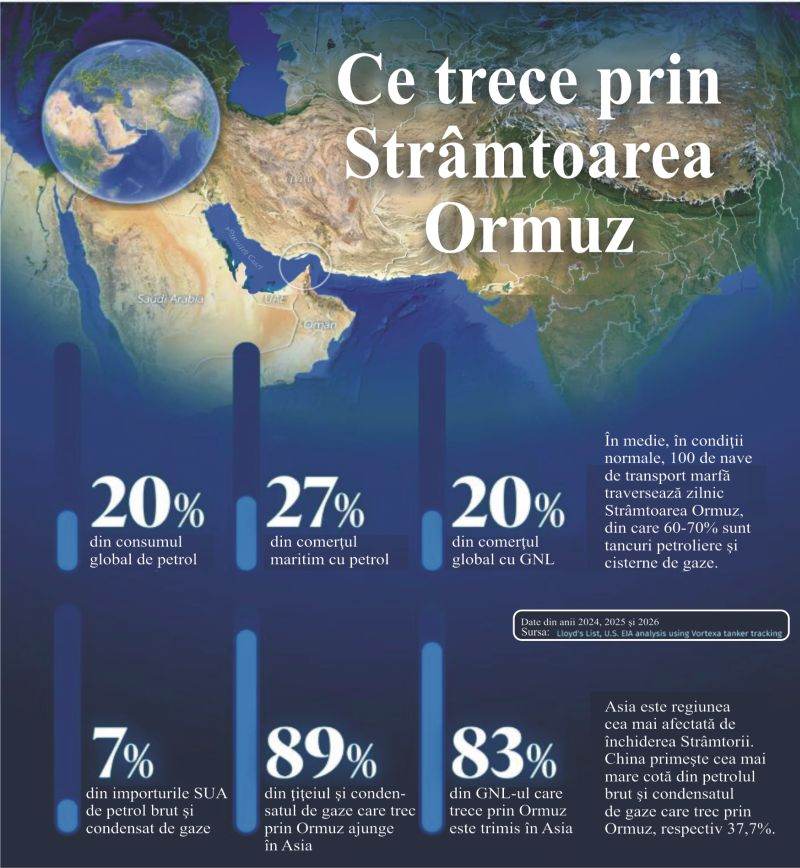
The increase in the price of oil to over 100 dollars per barrel, during yesterday, as a result of the blockade of naval traffic in the Strait of Hormuz, had the effect of new increases in fuel prices at some gas stations in our country, exceeding the threshold of 9 lei per liter, with premium diesel being sold at 9.35 lei/l.
Transporters, as well as representatives of other economic sectors affected by the increase in the price of gasoline and diesel, have asked the Government to adopt emergency measures to stop the trend of increasing fuel prices.
In this context, the governing coalition in Bucharest is preparing a package of measures to support transporters and farmers.
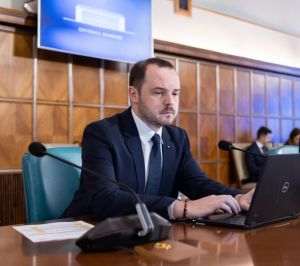
Following the meeting of the leaders of the governing coalition, the Bolojan Cabinet remained working on three measures: temporary reduction of excise duty on gasoline and diesel, granting financial support to certain professional categories, especially for transporters and farmers, diversifying oil supply sources, in order to reduce dependence on imports from the Middle East.
According to political sources cited by Antena 3 and Digi 24, the state aid scheme for transporters could be extended. The proposal was presented yesterday, at the meeting of the governing coalition, by Alexandru Nazare, Minister of Finance, and was agreed by Prime Minister Ilie Bolojan. The initial measure was approved on December 11, 2025 by the Executive. The aid is granted in the form of a grant, i.e. non-refundable money, calculated according to the quantity of diesel fuel purchased. During the period October 1 - December 31, 2025, the compensation was 40 bani for each liter of diesel fuel. Between January 1 and March 31, 2026, the support increases to 65 bani per liter.
The government is expected to announce which measure it will adopt before the publication of the draft state budget for the current year, since the first two measures have a direct impact on public finances.
In the meantime, the main opposition party, AUR, has registered a bill in Parliament requesting that the VAT on fuels be reduced from 21% to 5%.
Transporters and farmers have also asked the Government to reduce excise duties and even VAT on fuels, arguing that any increase in the price of diesel and gasoline will be reflected in the price of products on the shelf and in the pocket of the final consumer. According to representatives of small traders quoted by the media, the prices of basic foodstuffs are expected to increase in ten days by percentages ranging between 7 and 12%, and for vegetables by 15%, if the price of crude oil remains at an international level at a level of over 100 dollars per barrel. The increase in shelf prices estimated by the representatives of small traders is higher than the 3% increase expected in a study conducted and published by the Smart Energy Association, but which was based on the price of oil from the beginning of the year until March 5, not on yesterday's price of over 100 dollars per barrel.
• Cătălin Pisoceanu: "Prices are dictated by producers or importers, but the trend is upward"
The untimely increase, from the first day of the war in the Middle East, in the price at the pump for fuels in our country has displeased both transporters, distributors and farmers, who accused the fact that it is not normal for the price increase to occur immediately, because the existing fuel stocks should have covered the effect of the war and then the blockade of naval traffic through the Strait of Hormuz for at least two months, according to representatives of the three categories listed above.
Regarding this aspect, Cătălin Pisoceanu, executive secretary of the Association of Petroleum Distributors, told us: "The price at the pump is correlated with what is happening in the international market. Transactions are made on stock exchange quotes and then those minimum emergency stocks, which each producer or importer has, are valued at the cost price. And if it increased, and if it remained at the same value, the price in the warehouse goes in the same direction. We do not know how the situation will evolve in the coming period, because everything depends on the conflict in Iran. Therefore, at the moment prices are fluctuating and we do not see a favorable situation in the short term. The entire distribution sector of petroleum products is affected by the current situation. We market the goods that domestic producers or importers put into circulation in Romania. The prices are dictated by them, but the trend is upward.”
The representative of the Association of Petroleum Products Distributors noted that another increase will be added to the current price increase at the pump at the end of May, if the Government does not amend the provisions of OUG 89/2025 (the train-like ordinance) regarding the taxation of this sector of activity. The representative of the economic operators, who wholesale and sell petroleum products, gasoline and diesel, draws attention to the fact that the respective normative act prohibited the resale of these products, eliminating distributors.
Cătălin Pisoceanu specified: "Marketing is done between producers - importers - a single distributor and the final customer. Small distributors are, practically, eliminated by on the market. Currently there are over 900 operators, they will probably remain below 100 or 150 maximum. There will be less competition, which will lead to higher prices. This is a situation. The second condition for continuing activity on the distribution market is the financial guarantee (letter of guarantee) of 2.5 million lei, to which is added a patrimonial guarantee of 2.5 million lei in the assets registered in the company's accounting. It is clear that not all operators will be able to meet this condition and will be eliminated from the market. Basically, we will witness a reduction in competition on the fuel distribution market, which will lead to a possible blockage in supply, because the companies that disappear from this chain were providing financing, practically lending, for example, to final consumers in agriculture for a maximum term of six months, those in construction for 90 days or more and carriers for a minimum of 30 days. Therefore, this financing disappears, but also the logistical part related to it, because small resellers or distributors used to take the fuel to the final consumer in agriculture or construction. Therefore, there is the possibility of a blockage in the supply plan, which, obviously, will be reflected in the costs. Regarding resellers, the increase will not be very large, but there will be a price increase, I cannot estimate in percentage now what this will be, but to it will be added a possible blockage regarding the supply of fuel to companies in agriculture and construction, with all the effects that arise from this, including the intervention of insolvency for some companies. According to OUG 89/2025, the deadline is May 31 for submitting certification, recertification, reauthorization files. Whoever does not meet the conditions will exit the market on May 31. Basically, on May 31st we will witness a shock in the market, which will cause an increase in the price at the pump and problems in the supply chain”.
• The increase in the price of diesel will be reflected in the shelf price of agri-food products
Regarding the fuels needed by farmers in our country, Nicu Vasile, former president of the League of Agricultural Producers Associations of Romania (LAPAR), told us that the price increase will be reflected in production costs.
Nicu Vasile also told us: "These problems in the Middle East should not have impacted us, but, unfortunately, they will be felt in the final product. Romania produces around 3 million tons of oil, but in the past we produced 36 million tons of oil. Now, as you can see, production is much lower. And from the country's oil reserves or stocks, we export around 6 million tons. This is where we should have reported. From my point of view, the Government is not doing anything else to reduce this price increase, which creates the current crisis and which will have an impact on food security, unfortunately. In fact, we are working on a manifesto for the creation of a food security policy. Every year, we talk about imports of agri-food products. Last year we had a trade deficit of 8 billion euros on food products alone. We believe that through an efficient and coherent policy, our country can ensure food security with only 5 billion euros, with one million hectares to have cycles of agricultural products. I mean here to give cereals and take citrus fruits, olives and whatever agri-food products we need. Things could go right and well, if we were careful and made economic policies starting from the daily consumer basket. By 2023, our daily basket increased 258 times compared to 1990 (ed. - in 2024 there was an increase of 4.7%, followed by a 9% increase in 2025, according to data on the INS website)”.
• New fuel prices worsen the financial situations of companies in the distribution of goods
Companies in the distribution of goods are also affected by the increase in fuel prices at the pump, an increase that is added to other measures taken in recent years by the Government to the detriment of this sector of activity, Ovidiu Gheorghe, executive director of the Association of Goods Distribution Companies in Romania (ACDBR), told us.
Ovidiu Gheorghe told us: "The increase in fuel prices comes on top of a situation that the distribution of goods has been facing for several years. Goods distribution companies were forced to cap commercial markups for basic food products, as established by the Government in July 2023. This capping is a temporary measure of a few months, three, four, five, six months. Unfortunately, this measure is already several years old, so it is not a temporary measure, as European competition law indicates and obliges member states. It is, in practice, a slippage that the Ministry of Agriculture is knowingly exercising under the patronage of the Prime Minister, the Parliament and the entire state. Unfortunately, the government does not intervene in the market to eliminate this measure that was supposed to be temporary and which, from our point of view, clearly contributed to the distortion of the market through direct state action. In addition to this measure, goods distribution companies were also faced with the introduction of IMCA - the minimum turnover tax, which was a thorn in the side of the government parties, who argued that this tax is against the risk of outsourcing profits by multinationals. This is a false argument, because there has been legislation there for many years on transfer pricing and the government's inability to exercise official state control, unfortunately, was transferred through additional costs to companies with a turnover of more than 50 million euros. It should be noted that there are economic sectors in which the profit margin, for example, in our distribution sector, is somewhere around 2.5 - 3.3% and then the establishment of a tax of 1% of the total turnover led, in certain situations, to companies where the profit margin was even below 1%. In addition to the layoffs that were made, this measure also led to the contracting of bank loans for the payment of taxes; therefore, the distortion of the economic environment and from a competitive point of view was generated by the Romanian government. These measures, plus inflation and the increase in VAT, have obviously contributed to the decrease in consumption in the market, to the decrease in the income of goods distribution companies in Romania and sometimes to the closure of some companies; a month ago, at least three companies with a history of distribution in Bucharest closed their business. At the distribution level (as an economic sector) there are over 2,000 people laid off. So, in addition to this inflation and decrease in consumption, this fuel crisis certainly leads to the following alternative: further decrease in economic activity, layoffs or price increases. We, continuing to play in this profit margin between 1 and 3%, either manage budgets differently, or close the business. Managing budgets also means layoffs or redesigning commercial departments in companies. In distribution, personnel and fuel represent 70% of the cost components. Strictly speaking, fuel expenses represent between 9 and 15% of costs, depending on the company, more precisely on its size and the activity performed”.
The ACDBR representative indicated that he expects that, in addition to a possible temporary reduction in fuel taxes and excise duties, the Government will take other measures to support companies in our country, but he specified that the respective decisions should also take into account the points of view expressed by the employers' associations.
• Transporters, dissatisfied with the daily increase in fuel prices
As for transporters in our country, they are dissatisfied not only with the increase in the price at the pump, but also with the monthly increase in the price of mandatory car insurance - the RCA policy, according to their representatives.
Vasile Ştefănescu, president of the Confederation of Authorized Transport Operators of Romania (COTAR), told us: "We do not understand how, on the second day of the war in Iran, all prices increased to pump, an increase that was daily during the past week, because Mr. Bogdan Ivan, the Minister of Energy, announced that our country has fuel stocks for five to six months. Diesel and gasoline stocks. Then who are we paying these increases to or what are we paying? Are we paying for the luxury and opulence of the smart guys in Romania? Because, in the end, I think we could keep this price for a month or two, so that it would be good for both the transporter and the citizen. Because, if we were to increase the transport tariffs, all the costs would be paid by the final consumers, that is, all those who take the goods off the shelf. Then, the excise tax exceeds over 100% of the price of the fuel. That is, if today it is probably taken at the refinery gate for 4.50 lei, we pay 9 lei. Mr. President Nicuşor Dan said the other day, in a press conference, that in no case will the excise tax be reduced. Then how will it be reduced the price at the pump? That is why the transport companies in COTAR are asking the Government for a very drastic investigation into the increase in the price at the pump in the last ten days, given that the Minister of Energy said that we have diesel and gasoline stocks for another five to six months”.
The transporters' representative stated that, in addition to the increase in fuel prices, companies in the field are also faced with the monthly increase in the price of RCA. That is why COTAR is asking Prime Minister Ilie Bolojan to adopt an emergency ordinance or a government decision to establish a Romanian financial institution that can issue RCA policies, at fair prices, as provided for by Law 132/2016.
• Price caps and discounts excise duty on fuel
Immediately after the $100 per barrel threshold was crossed, the European Commission, according to Reuters, offered assurances that EU member states have sufficient stocks of oil and gas, despite the disruption of supply chains caused by the war in the Middle East. "We are much less concerned about security of supply than about high energy prices,” said European Commission spokeswoman Anna-Kaisa Itkonen, according to the quoted source.
Anna-Kaisa Itkonen said that EU member states have stocks of oil or equivalent that can cover up to 90 days and that there are no signs of an emergency.
However, Hungarian Prime Minister Viktor Orban announced at noon on Monday that he had sent a letter to European Commission President Ursula von der Leyen demanding that all sanctions on oil and gas sold by Russia be suspended in order to stop the rise in oil prices in Hungary.
The Croatian government yesterday introduced a two-week cap on fuel prices, according to an announcement published on its official X account. Under the new regulations, which come into effect on Tuesday, the price of regular gasoline will increase by 0.04 euros, reaching 1.50 euros per liter, while diesel will increase by 0.07 euros, reaching 1.55 euros per liter.
The price caps will remain in force until March 23.
Italian Prime Minister Giorgia Meloni said her government was studying the activation of a mobile excise tax, which would use higher-than-expected VAT revenues generated by rising pump prices to reduce excise duties on gasoline and diesel. The government is also expected to take measures to support companies in the transport and logistics sectors, which are being hit hard by rising costs.
In Spain, Economy Minister Carlos Cuerpo said the government was monitoring fuel prices to prevent speculative and artificial increases. Madrid media reports that the government is considering further cuts in fuel taxes and excise duties to cushion the impact of rising fuel prices.
The Serbian government on Monday banned the export of oil and its derivatives until March 19, when it will reassess the situation, EFE reported.
In a statement, the Belgrade government said the ban applies to the export of diesel, gasoline and crude oil and covers all modes of transport.
In Asia, the South Korean government announced it would cap fuel prices, the first such measure in 30 years.
Bangladesh has decided to close all universities starting Monday, bringing forward the Eid al-Fitr holidays as part of emergency measures to conserve electricity and fuel. It has also imposed daily limits on fuel sales after panic buying.
Vietnam plans to eliminate import tariffs on fuel to ensure supplies amid disruptions, the government said, adding that the measure is expected to last until the end of April. Indonesia will increase the amount allocated to fuel subsidies in the state budget, the Asian country's finance minister said on Monday.























 Euro
Euro Dolar SUA
 Franc elveţian
 Liră sterlină
 Gram de aur