English

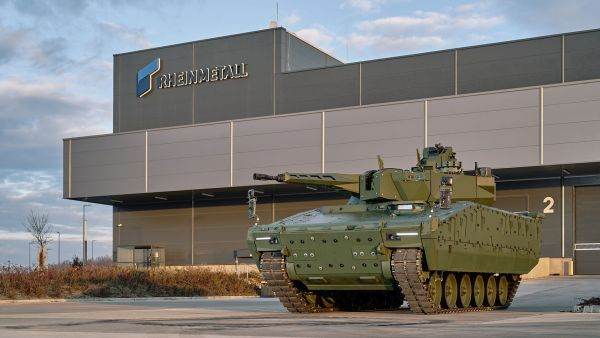
The German giant Rheinmetall will take the lion's share of the SAFE funding allocated to Romania, according to the official list of the 15 endowment programs sent by the Ministry of National Defense to the defense committees of Parliament, a document that shows unequivocally how billions of euros are concentrated around the company in question, while public discourse continues to talk about "diversification", "strategic autonomy" and "development of the national industry". In practice, the list sent by the MApN to Parliament confirms what the BURSA newspaper has presented to you recently: the Romanian state borrows, through SAFE, for the acquisition of armaments, and the main beneficiary of this loan is the German giant Rheinmetall.
From analyzing the respective document, we note that it is not just a technical list of military acquisitions, but an exact radiograph of how economic power is distributed behind the accelerated rearmament of our country. The list includes 15 acquisition programs that must be contracted by May 31 and includes, among others, the 8x8 Piranha 5 armored personnel carriers from General Dynamics Romania (359 units, of which 139 financed through SAFE with 831.2 million euros), the IVECO multifunctional vehicle platforms (1,115 units, 344.4 million euros), two tactical operations centers for air and missile defense (160 million euros), two diver intervention stars (84 million euros) and two OPV maritime patrol vessels (836 million euros), both naval contracts to be signed with Rheinmetall Naval Systems. The list continues with 12 H225M multi-mission helicopters produced by Airbus (852 million euros), Naval Strike Missile launch systems (207 million euros), the Lynx infantry fighting vehicle program (3.337 billion euros), Skynex (476 million euros) and Skyranger (470 million euros) anti-aircraft systems, Gap Filler radars from the French company Thales (258 million euros), IRIS-T surface-to-air missile systems (547.83 million euros), loitering munitions (147 million euros), Millennium CIWS systems (36 million euros) and 35 mm ammunition (450 million euros), most of which were awarded through direct negotiation.
Of these 15 programs, an overwhelming proportion, both in value and strategic importance, revolve directly or indirectly around Rheinmetall, confirming the thesis supported by the BURSA newspaper: SAFE is not just a security mechanism, but an instrument for massive redistribution of resources to major European players, especially to the German defense industry. The most eloquent example is the Lynx infantry fighting vehicle program, which will be carried out through Rheinmetall Automecanica, valued at over 3.3 billion euros, of which a substantial part is financed through SAFE. Even in its adjusted form, with 232 units financed through this mechanism, the program remains one of the central pillars of the Romanian Army's endowment and one of the main channels through which SAFE funds reach directly into the Rheinmetall ecosystem. The remaining units, which will be purchased later from the national budget, only expand the financial and operational dependence already created. However, according to data published by the BURSA newspaper, the industrial platform for Lynx vehicles exists only in Budapest, and one has not yet been built in our country.
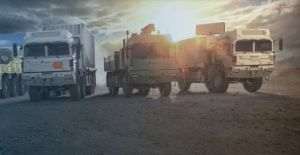
The same logic is also found in the area of air defense, where the Skynex and Skyranger systems, supplied by Rheinmetall Italia, total almost a billion euros, and the Millennium CIWS systems and related ammunition, supplied by Rheinmetall Waffe Munition, add another hundreds of millions. Practically, from combat platforms to air defense systems and ammunition, Rheinmetall is not only present, but omnipresent, covering the entire operational chain of equipment.
In the naval area, the situation becomes even clearer: the contracts for OPV maritime patrol vessels and for diver intervention stars are awarded to Rheinmetall Naval Systems in association with NVL, thus strengthening the position of the German group, including in the field of military shipbuilding. These programs are not just simple acquisitions, but open the door for Rheinmetall's involvement in the restructuring and eventual takeover of Mangalia's capacities, exactly the scenario I have described in recent months: saving a shipyard without an economic model by injecting military orders financed from SAFE.
What becomes evident, analyzing the list as a whole, is that Romania is not just buying equipment, but is positioning itself in an industrial system in which technological and financial control is concentrated abroad. SAFE, presented as a historic opportunity, works in practice as an accelerator of this dependence, with tight deadlines, direct negotiations and an administrative pressure that drastically reduces the space for real competition or for the development of national alternatives.
The fact that most contracts are awarded through direct negotiation is not a procedural detail, but an alarm signal: the mechanism that should ensure transparency and balance becomes one that concentrates the decision and directs financial flows to the same actors. In this context, the statement that Rheinmetall takes the lion's share of SAFE funding is no longer a journalistic metaphor, but a conclusion supported by figures, contracts and industrial structure.
Behind these billions of euros, a profound paradigm shift is in fact taking shape: Romania is not only rearming itself, but is also outsourcing a significant part of its industrial and strategic decision-making capacity. And if this direction continues, SAFE will not go down in history as the program that consolidated Europe's strategic autonomy, but as the moment when part of this autonomy was discreetly transferred to a few industrial giants, with Rheinmetall in the foreground.













 Euro
Euro Dolar SUA
 Franc elveţian
 Liră sterlină
 Gram de aur