English


The closure of the Strait of Hormuz by Iranian forces is an event with a systemic effect on the global economy, especially on Asia. According to data on the website of the International Energy Agency, the blockade removes approximately 20 million barrels of oil per day from the international circuit, placing the energy security of the major Asian and European economies under direct pressure. In parallel, an estimated 20% reduction in global supplies of liquefied natural gas (LNG) amplifies the risk of industrial stagnation and the emergence of internal energy imbalances in states heavily dependent on imports. Faced with this situation, policymakers and investors are faced with a sudden rupture in regional logistics chains and the blocking of one of the most important maritime routes connecting the Middle East to the Indo-Pacific.
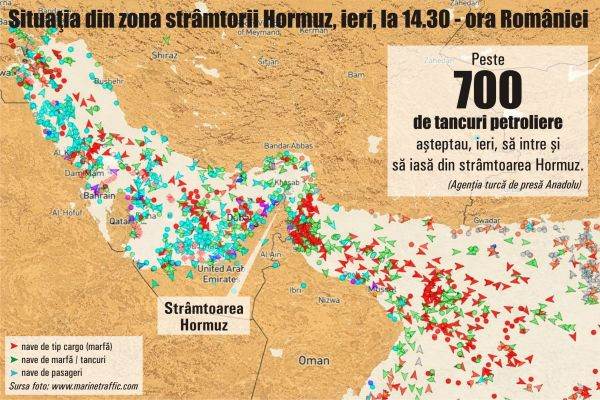
The Strait of Hormuz is a narrow waterway between Iran to the north and Oman to the south. It connects the Persian Gulf with the Gulf of Oman and the wider Arabian Sea. At its narrowest point, it is about 39 kilometers wide, although shipping lanes for oil tankers are only about 3 kilometers wide in each direction. The strait is what analysts call a chokepoint: a narrow passage on a major trade route with no practical alternative. The Persian Gulf has no other outlet to the sea, and the capacity of land-based pipelines can carry only a fraction of the volumes that ships can carry. There is no equivalent bypass. The Strait of Hormuz is the most important maritime chokepoint for global oil transport, passing through one-fifth of all petroleum liquids consumed globally. In 2024, the daily average was 20 million barrels, a level maintained at the beginning of 2025. In addition, about 20% of global LNG trade circulates through this corridor, mainly from the North Field perimeter in Qatar. According to estimates by the International Energy Agency, global oil demand reached 104.87 million barrels per day in February 2026.
• China, one of the main beneficiaries of hydrocarbon traffic through the Strait of Hormuz
Asian economies, especially China, India, Japan and South Korea, absorb more than 80% of the crude oil transiting the strait. In 2025, China reached a record level of crude oil imports, of 11.6 million barrels per day, a significant part of which comes from the Middle East. According to the US Energy Information Administration, China, India, Japan and South Korea together accounted for about 69% of total oil flows through the Strait of Hormuz in 2024, with India and China importing about half of each country's total oil needs through the route. In 2024, the US transported about 7% of its total crude oil and condensate imports and 2% of its consumption of petroleum liquids through the strait.
According to data published by the Intellinews website, Iran, OPEC's third-largest producer, has exported about 1.5 million barrels of oil per day through the Strait of Hormuz in recent months, almost all of which goes to China.
In the event of a blockade, as it is now, alternative transport capacities are insufficient in relation to the blocked volume. Saudi Arabia's East-West pipeline can carry up to 7 million barrels per day, while the Abu Dhabi-Fujairah pipeline carries about 1.5 million barrels per day. Together, these routes account for less than 40 percent of the region's export traffic, meaning most Gulf production remains blocked by Tehran's decision.
• 3,000 ships in the strait, including more than 700 tankers
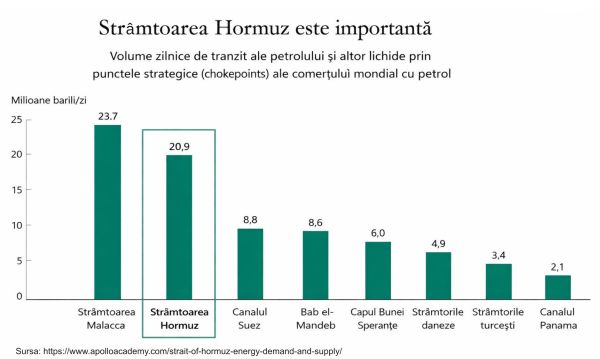
According to data published by the Turkish Anadolu news agency, more than 700 oil tankers were waiting to enter and exit the Strait of Hormuz yesterday. By contrast, the British website ITV.com estimated yesterday that more than 3,000 ships were blocked around the strait, including about 150 tankers. "The number of oil tankers is about twice as high as usual, according to data and analysis firm Kplr, indicating a halt in trade movements as ships have nowhere to go,” the British journalists of the cited source say.
According to Al Jazeera, which cites ship monitoring data on the MarineTraffic platform, the tankers are clustered in open waters off the coasts of major Gulf oil producers, including Iraq and Saudi Arabia, as well as LNG giant Qatar.
The cited source also shows that, immediately after the closure of the strait, Qatar's state-owned energy company, which is also the world's largest LNG producer, QatarEnergy, announced that it had halted LNG production after its operational facilities in Ras Laffan and Mesaieed were affected, leading to higher gas prices in Europe and Asia. Shortly after the announcement, wholesale natural gas benchmark prices in the Netherlands and the UK rose by almost 50%, while LNG benchmark prices in Asia rose by almost 39%.
For China, the impact is major: about half of its oil imports transit the Strait of Hormuz. A prolonged outage, longer than 14 days, could affect industrial production and the stability of energy networks, with possible consequences for economic growth in the current financial year, the source cited shows.
In practice, by closing commercial shipping in the Strait of Hormuz, China loses its main source of hydrocarbon supply, after losing its secondary one - Venezuela - after the US took control of exports from the South American country and is left with the tertiary source of supply, the Russian Federation, which should double its supply capacity of 2 million barrels per day (according to data published by Reuters on February 16) to that Asian country.
However, according to information published by the Sunday Guardian, China maintains large strategic stocks and diversified supply routes and, therefore, economic analysts believe that these buffers could mitigate the immediate shock, although prolonged disruptions would continue to test the country's energy security.
If we take into account that the first effects of the closure of shipping through the Strait of Hormuz will be felt in China only after two weeks, and we refer to President Donald Trump's statement on Monday evening that the war in Iran "will last four or five weeks or as long as it takes", it is possible that the prolongation of the conflict will benefit the US, which will economically downgrade its main competitor in Asia.
• Japan and South Korea, dependent on the import of crude oil from the Persian Gulf
The cited source claims that the biggest problems caused by the closure of shipping through the Strait of Hormuz would be for Japan and South Korea, which rely heavily on oil from the Persian Gulf. The region supplies approximately 75% of Japan's oil imports and over 70% of South Korea's imports.
This information is also provided by the Marketsday page on the X network, which states that a prolonged closure of the Strait of Hormuz would be devastating for Japan's economy, given its overwhelming dependence on energy supplies from the Middle East. In terms of liquefied natural gas (LNG), these Asian states' exposure is lower compared to South Asia. South Korea gets only 14% of its gas from Qatar and the United Arab Emirates, while Japan gets only 6%. However, both countries have limited LNG stocks: South Korea has about 3.5 million tons in reserve, and Japan has about 4.4 million tons, enough to cover only two to four weeks of steady demand. Basically, Japan would have to look for alternative, longer shipping routes (e.g. around Africa), adding weeks to transit times and sharply increasing costs. Moreover, higher oil and LNG prices would affect electricity, transportation and manufacturing costs, and there would be a strain on the trade balance, meaning that Japan's import bill would increase, worsening the current account balance. The source cited claims that we could also see an industrial slowdown and face production cuts in energy-intensive sectors such as steel, chemicals and the automotive industry.
The website binance.com noted yesterday that "Japanese experts warn that a prolonged blockade of this critical sea route could lead to a 3% reduction in Japan's GDP.”
However, Japanese Chief Cabinet Secretary Minoru Kihara said yesterday, according to the website nippon.com, that the Tokyo government has stockpiled crude oil and petroleum products for 146 days, while the private sector has stocks for 101 days and a joint reserve of oil-producing countries for seven days, for a total of 254 days. Japan's energy and gas companies also have stocks of liquefied natural gas equivalent to about three weeks of national consumption, the official told the cited source.
As for South Korea, an official from the Ministry of Trade, Industry and Resources of the Seoul government told the Korea JoongAng Daily, regarding crude oil imports: "We are carefully managing existing stocks and reviewing the increase in imports from the United States and Australia, alternative countries to the Middle East."
The cited source states that the Korean government is analyzing and the option to redirect volumes produced overseas back to Korea.
"Crude oil refined at our overseas plants, such as in Vietnam, is generally sold locally, but we are considering bringing it home,” a representative of the Korea National Oil Corporation told the source.
Korea's reserves include government stocks equivalent to 117.1 days of consumption and private sector stocks covering another 104.1 days, totaling about seven months.
"The government does not foresee an immediate emergency, given that reserves amount to about 200 days of crude and gas, but authorities are working to secure alternative supply routes,” Rep. Han Jeoung-ae, chairman of the Democratic Party's policy committee, said yesterday, according to the source.
The Korea Times states that the Hyundai Research Institute estimated that, in a prolonged war scenario, in which crude oil would sell for an average of $100 per barrel, "Korea's economic growth rate would fall by at least 0.3 percentage points,” while "consumer inflation would rise by 1.1 percentage points.”
• Who is covering the 20 million barrel per day deficit?
According to the cited sources, in the coming period, as long as the conflict in Iran continues, several indicators should be monitored. The first concerns the evolution of the use of strategic oil reserves by the member states of the International Energy Agency, to compensate for the daily deficit of 20 million barrels. The second refers to Iranian naval activity and possible mining operations in the 21-mile navigable corridor of the Strait of Hormuz. Another indicator is the volume redirected through the East-West and Abu Dhabi-Fujairah pipelines to terminals in the Red Sea and the Gulf of Oman.
In the short term, the dominant scenario is that of a severe energy shock, accompanied by the invocation of force majeure by major Gulf producers. If access through the Strait of Hormuz is not restored within 14 days, Asia could see a significant contraction in industrial production and global shipping costs would rise sharply.
In the long term, the blockade is causing a profound reassessment of the reliability of the Persian Gulf as a stable energy supplier. The conflict highlights the vulnerability of geographically concentrated supply chains and the need to decentralize energy production. For multinational companies, adaptation involves increasing strategic stocks and reducing reliance on a single transit corridor for critical components.
At a structural level, the crisis is accelerating states' efforts to reduce their dependence on fossil fuels in the Middle East. Investments in nuclear energy, renewables, and national energy infrastructure could increase, changing the architecture of international energy trade over the next decade.






















 Euro
Euro Dolar SUA
 Franc elveţian
 Liră sterlină
 Gram de aur