English



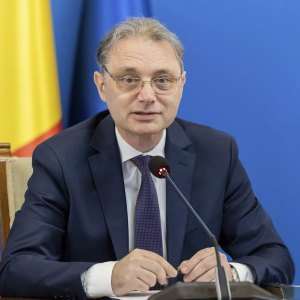
President Nicuşor Dan has nominated Liberal MEP Siegfried Mureşan as the candidate for Prime Minister, following more than four months of political crisis and two failed attempts to form a government. According to the head of state, Mureşan was the person who garnered the most support during consultations with the parties, even though a parliamentary majority has not yet taken shape. Furthermore, it is worth noting that the "BURSA" newspaper had already highlighted-in its edition from Friday, September 18-the President's unusually blunt warning: the negotiations revealed "more electoral posturing" than concern for the country's stability.
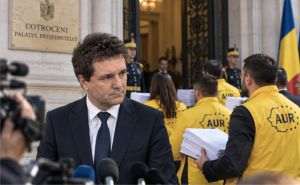
The nomination should have put to rest at least one of the accusations leveled against Nicuşor Dan: that he was stalling the appointment of a Prime Minister and that the resulting deadlock could justify his suspension. It did not. It merely changed the nature of the attack. Petrişor Peiu, the leader of the AUR senators, immediately predicted that Mureşan would either resign his mandate before the vote or achieve a "ridiculous" result in Parliament. Gheorghe Piperea announced that AUR would not vote for the future cabinet. The party did not even wait for the governing program, the list of ministers, or the conclusion of negotiations; the verdict had been decided before the case was even heard. The reactions of AUR leaders indicate that the nomination is not viewed as a potential way out of the crisis, but rather as a stage that could lead to a failed investiture vote and, potentially, early elections.
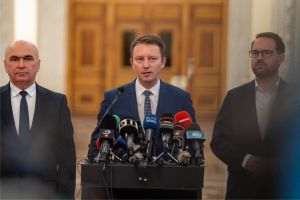
This reveals the political trap in which AUR is attempting to ensnare the President. If Nicuşor Dan fails to nominate a candidate, the delay becomes proof of his alleged disregard for the Constitution. If he nominates a candidate who does not belong to AUR and refuses to accept the party's conditions, AUR will withhold its support, contribute to the failure of the investiture, and frame the resulting crisis as yet another failure on the part of the President. Indeed, AUR leader George Simion stated after the consultations at Cotroceni that AUR would only vote for a government in which it participates.
In a third scenario-were the head of state to accept a prime minister imposed or politically controlled by AUR-the party would gain access to executive power and governmental resources while simultaneously pursuing the parliamentary process to suspend the President. Although the government plays no formal constitutional role in the suspension procedure-a matter resting with Parliament and, ultimately, the voters-controlling the Executive would grant AUR an incomparably stronger political and institutional position. In all three scenarios, AUR stands to gain something: grounds for impeachment, the prospect of early elections, or a share of executive power. The only option the party seems unwilling to accept is political stabilization achieved without its involvement.
• The campaign that didn't end in May 2025
This behavior did not begin with the nomination of Siegfried Mureşan; rather, it should be viewed as an extension of the presidential campaign George Simion lost in May 2025. Since then, AUR has acted more like a party in a perpetual state of campaigning than a political group that adjusts its tactics for the periods between elections. The themes may shift-government formation, the justice system, policy regarding Ukraine, alleged constitutional violations, Romania's representation abroad-but they all fit into the same narrative: that Nicuşor Dan lacks political legitimacy as president and should be removed from office.
In this type of campaign, impeachment is no longer the exceptional remedy prescribed by the Constitution for serious misconduct. Instead, it becomes a campaign brand, a tool for mobilization, and a means of keeping society in the charged atmosphere of a presidential runoff election.
Tangible evidence of this is the "suspend.ro" platform itself, used to pressure lawmakers and rally public support. An investigation by Public Record revealed that the domain was registered using details linked to Nicolae Capcelea, the owner of Follow Digital Solutions. During the 2024 and 2025 campaigns, the firm received over 10.6 million lei from AUR for online electioneering. This amount cannot be automatically attributed to the suspension platform, but the link between the digital infrastructure of AUR's election campaigns and the new campaign against the president is documented.
Consequently, we are not dealing merely with isolated political statements. We see a repeated objective, a dedicated platform, communication resources, and a strategy whereby every crisis is transformed into a new episode of the electoral campaign.
• A candidate challenged before even being heard
Siegfried Mureşan is neither a flashy candidate nor one built for confrontation. This is, in all likelihood, precisely his problem within the current political equation.
He is an economist, a Member of the European Parliament since 2014, and a vice-chair of both the European People's Party and the EPP Group in the European Parliament. He has participated in negotiations regarding EU budgets and major economic dossiers, following studies in Bucharest and Berlin and professional experience in the Bundestag. In other words, he is a logical choice for a country in need of European negotiations, financial stability, and the restoration of its international credibility. One need not share his political views to acknowledge that he possesses a civilized, predictable, and competent profile. Such characterizations are, of course, a matter of judgment; the experience underpinning them, however, is verifiable.
Mureşan may face criticism regarding the program he proposes, the ministers he selects, or any concessions made to political parties. Yet none of these factors existed at the moment AUR was already declaring his bid a failure. The candidate was challenged before he had even presented a government lineup. This haste speaks volumes about the detractors' agenda rather than the candidate himself. If the priority were the formation of a functional executive, the parties would be negotiating the program and the cabinet's composition. If the goal is to prolong the crisis until impeachment proceedings or snap elections, the identity of the prime minister becomes almost secondary.
• Who benefits from the crisis
The crisis directly benefits AUR. The party is leading in the polls and could gain more power through snap elections. According to an analysis published by Reuters, an early vote would benefit George Simion's party, whereas prolonged instability puts pressure on the country's credit rating, investments, and Romania's ability to implement economic measures.
Thus, the party's benefit and the country's interest do not align. Romania needs a government, budgetary predictability, and access to European funds. AUR needs the current majority to fail, the president to appear powerless, and society to remain mobilized against a constant adversary.
This observation does not prove the existence of an external command structure, nor is it sufficient to claim that all of AUR's actions are coordinated by a foreign power. Russia is the obvious geopolitical beneficiary of the weakening of a state on NATO's eastern flank, the undermining of pro-European institutions, and the ongoing conflict regarding support for Ukraine. However, strategic benefit alone does not constitute proof of a command relationship. Such an accusation would require documents, financial trails, or operational evidence that have not been made public.
What "can" be demonstrated is the internal mechanism: AUR maintains a state of perpetual campaigning, turns institutional deadlock into political capital, and keeps the suspension of Nicuşor Dan as an objective, regardless of the president's actual decision.
The nomination of Siegfried Mureşan makes this mechanism easier to observe. The president nominated a candidate with experience and the broadest support available from the consultations. AUR did not respond by negotiating a solution, but by declaring its failure.
Therefore, the essential question is no longer what reason AUR will cite for the suspension. The grounds cited can be found or changed from one week to the next. The question is whether the suspension represents the conclusion of a constitutional assessment or if it has become the starting point of the entire strategy.
The facts to date point to the latter: the political objective was established first, and the justifications were sought afterwards.















 Euro
Euro Dolar SUA
 Franc elveţian
 Liră sterlină
 Gram de aur