English

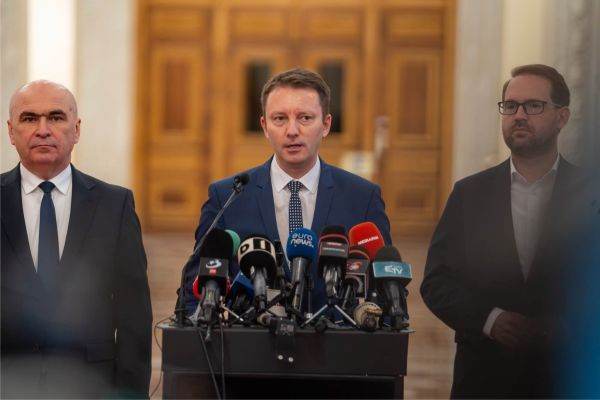
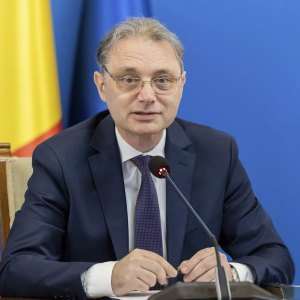
Nominating Siegfried Mureşan for the role of Prime Minister does not automatically resolve the political crisis, nor does it guarantee that Romania will have a fully empowered government in the coming days. However, in terms of professional experience and the candidate's suitability for addressing current economic challenges, this is the most coherent of the three choices made so far by President Nicuşor Dan. Unlike Eugen Tomac-who returned his mandate without ever reaching Parliament-and Adrian Veştea-whose proposed cabinet secured only 189 of the 233 required votes-Mureşan begins with the declared support of the PNL, USR, and UDMR. Furthermore, he possesses a professional profile that aligns with Romania's key priorities: the 2027 budget, the deficit, investment protection, the absorption of EU funds, and safeguarding the country's interests during negotiations on the future European Union budget.
This nomination is not without risks. Mureşan has never led a ministry, a local administration, or a government, and the experience gained in Brussels does not automatically translate to the Victoria Palace. A Prime Minister must manage a cumbersome bureaucracy, arbitrate conflicts between ministers, negotiate daily with political parties, and secure votes for their initiatives. The most critical question is not whether Siegfried Mureşan knows how to read a budget, but whether he can leverage his technical expertise and European connections to build a functional parliamentary majority. However, if the nomination is viewed in light of the problems the future government must solve, the choice follows a logic that is hard to dispute.
Our country is at a juncture where fiscal policy can no longer be treated as a mere appendage to governance. Political instability is putting pressure on the sovereign credit rating; agencies such as Fitch and Moody's have linked the maintenance of financial credibility to the country's ability to reduce the public deficit and adopt a coherent budget for 2027. Experts from Standard & Poor's are due in Bucharest starting Wednesday, with a new assessment of the country scheduled for publication on October 2.
Against this backdrop, the profile of a negotiator well-versed in budgets, European regulations, and institutional compromises becomes more relevant than that of a politician chosen solely for their ability to reconcile factions within their own party.
• Who is Siegfried Mureşan?
Siegfried Mureşan has been a Member of the European Parliament since 2014, serving on the Committee on Budgets and as a Vice-Chair of the European People's Party Group-the largest political family in the European Parliament. He served as the Parliament's general rapporteur for the 2018 EU budget and as a negotiator for several annual budgets and budgetary amendments; in the current institutional cycle, he is a co-rapporteur for the 2028-2034 Multiannual Financial Framework. In other words, while he has not drafted a national budget-nor should he be portrayed as the architect of the Union's entire financial structure-he has worked directly within the mechanism through which the European Parliament formulates its position and negotiates it with the governments gathered in the Council of the EU and with the European Commission. The official reports drafted and presented in the European Parliament by Siegfried Mureşan confirm his involvement in the file concerning the future multiannual budget, the implementation of the Recovery and Resilience Facility, and several EU amending budgets.
However, the new Prime Minister-designate is not a "maker of Europe's budgets"; rather, he is someone who understands the procedures, the figures, and the balance of power between European institutions, and who has negotiated-on behalf of the Parliament-with representatives of the Commission and the Council of the EU.
The fact that Ursula von der Leyen belongs to the same political family-the EPP-does not mean that Siegfried Mureşan carried out the Commission's orders, as has been frequently suggested in the public sphere in recent days. In the budgetary process, the European Parliament, the Council of the EU, and the European Commission have distinct institutional interests; Parliament's negotiators-including Siegfried Mureşan-must defend its position, even when it conflicts with the European executive.
Furthermore, Mr. Mureşan worked alongside Social Democrat Victor Negrescu on the report regarding the implementation of the Recovery and Resilience Facility, as well as on other annual budgetary amendments and the Union's annual budgets. This collaboration does not prove that the PSD will vote for him, but it demonstrates that the Prime Minister-designate is capable of institutional cooperation with a representative of the opposing camp when the specific file requires it. That report called, among other things, for a solution for mature projects at risk of not meeting their completion deadlines, as well as for greater involvement from local and regional authorities.
Moreover, a Prime Minister who comes from the role of the European Parliament's chief negotiator for the 2028-2034 multiannual framework, he is assumed to understand the architecture of the European budget and to be capable of identifying-well in advance-risks affecting agriculture, infrastructure, and regional development, thereby offering the country a potential advantage. While Siegfried Mureşan cannot unilaterally decide on the allocation of funds or guarantee that every request from Romania will be accepted, he knows exactly where, when, and with whom negotiations must be conducted.
This marks a crucial difference compared to Eugen Tomac, who possesses political, parliamentary, and European experience, as well as a well-defined public profile regarding issues such as the Republic of Moldova, security, and European integration. However, Tomac's nomination was built primarily on a relationship of trust with the President rather than on a genuine parliamentary foundation. His failure stemmed not necessarily from a lack of personal qualities, but from the fact that his designation was not the product of a political formula capable of delivering a cabinet and a parliamentary majority. Tomac never presented a team to Parliament, ultimately returning his mandate after the negotiation period had expired. Mureşan starts-at least formally-from a stronger position: he is the joint nominee of three political parties, rather than solely the President's choice.
• Accusations of undermining national interests refuted by his stance in the European Parliament
Regarding European issues of particular sensitivity to Romania, Siegfried Mureşan has sought to strike a balance between defending the national interest and adhering to European regulations. Regarding Schengen accession, he repeatedly intervened in the European Parliament plenary, supported resolutions favorable to Romania, and challenged Austria's arguments, pointing out that the country had met the technical criteria, that the migration route cited by Vienna did not primarily pass through Romania, and that the Austrian veto was political and unjustified. In an official statement in 2023, Siegfried Mureşan asserted that Romania had secured its border "to the highest standards," fulfilled all conditions, and secured the support of 26 of the 27 member states, with Austria remaining the sole obstacle. He urged the Commission led by Ursula von der Leyen not to treat the impasse as a mere bilateral dispute and exerted political pressure on Austrian representatives to lift the veto.
Regarding the Cooperation and Verification Mechanism, Siegfried Mureşan advocated for its lifting once the Commission's recommendations had been met, framing the closure of the mechanism and Schengen accession as twin confirmations of Romania's full integration into the European core. However, his stance did not entail shielding the PSD governments of the Liviu Dragnea era. In February 2018, speaking in the European Parliament plenary, he accused the PSD-ALDE coalition of attempting to weaken institutions and place the judiciary under political control, noting a rift between citizens demanding justice and the rule of law and a political leadership that was altering laws for its own self-interest. At the same time, he advocated the view that European sanctions should target those responsible for undermining the rule of law, rather than indiscriminately punishing citizens, farmers, local authorities, or entrepreneurs by imposing a blanket freeze on funds intended for Romania. In other words, his stance was one of maximum pressure on the political leadership undermining the judiciary, but without blocking the European funds allocated to the country-as doing so would have amounted to a collective sanction against Romanian citizens.
This same distinction arises in the recent controversy surrounding the euro770 million from the National Recovery and Resilience Plan (NRRP) and the so-called "Fritz amendment." The EPP and Renew groups called on the Commission to verify the new integrity law's compatibility with European law and to make the disbursement of the euro770 million conditional upon meeting the relevant NRRP milestone. Essentially, the EPP and Renew Europe did not call for the allocation to be blocked, but rather for verification that the milestone had been met. This is a nuance that political leaders in Bucharest and the subservient press fail to convey to the public.
The Commission decided to evaluate the ANI (National Integrity Agency) law as part of the sixth payment request and to make a decision only at that stage. It is worth noting that the country has only recently submitted its fifth payment request for the funds allocated under the NRRP.
In short, Siegfried Mureşan did not call for Romania to lose the euro770 million, nor did he propose financial sanctions against the country as an objective. The position he expressed in Strasbourg was that the Government must provide the requested explanations, and if the European executive finds that the law does not meet the NRRP requirements, the Romanian Parliament must amend it so that the funds can be disbursed.
"The National Liberal Party will support amending the ANI law in line with the European Commission's requirements, if doing so gives us the chance to receive the 770 million euros," Siegfried Mureşan stated in Strasbourg, after the EPP and Renew Europe had appealed to the EU executive.
His position is open to criticism for accepting the Commission intervention in a case where the Constitutional Court had already ruled on the law's constitutionality. However, Mureşan's argument is that the CCR decision and the Commission's assessment address different legal matters: the Court verifies compliance with the Romanian Constitution, whereas the Commission examines compatibility with EU law and the fulfillment of a milestone committed to under the NRRP. From this perspective, he did not choose between Dominic Fritz and Romania's funds; rather, he called for the law to be clarified and-if necessary-corrected prior to the final assessment, precisely to avoid losing the money. This reflects the consistency of his stance: defending the rule of law without accepting the notion that Romanians should foot the bill for politicians' mistakes or political calculations.
• Siegfried Mureşan: a better nomination than Veştea or Grindeanu
Regarding the prime ministerial nominee prior to Siegfried Mureşan-Adrian Veştea-the latter possesses executive experience within the Romanian administration, gained through his roles as mayor, President of the Braşov County Council, and Minister of Development. The issue with his candidacy was political: Nicuşor Dan nominated him without the PNL leadership's consent, and the party Veştea belonged to refused to back his cabinet. The Veştea government secured 189 votes-44 short of the required threshold-despite receiving support from the PSD. A nomination made outside the candidate's own party, and rejected by that very party, suffered from a structural vulnerability from the outset. In the case of Siegfried Mureşan, the President is no longer attempting to build a majority around a unilaterally chosen name; instead, he is starting with the candidate who garnered the most explicit support during consultations-specifically from the PNL, USR, and UDMR. Compared to the PSD's nominee, Sorin Grindeanu, Mureşan's advantage lies primarily in his professional suitability for handling the financial crisis and his capacity for representation at the European level. Conversely, Grindeanu possesses national executive experience that Mureşan lacks: he has served as prime minister, deputy prime minister, and minister, has led various institutions, and currently heads the largest parliamentary party. In terms of raw arithmetic, the PSD leader's candidacy cannot be dismissed as lacking legitimacy; the PSD won the 2024 parliamentary elections and holds the largest parliamentary caucus. However, Sorin Grindeanu also carries significant political baggage. His first term as prime minister ended in 2017 following a no-confidence motion initiated by his own party-triggered by a conflict with Liviu Dragnea-and his administration remains associated with Emergency Ordinance No. 13 and some of the most extensive civic protests seen since 1989. Furthermore, the current political crisis was precipitated by the PSD, which withdrew its ministers from the Bolojan government and subsequently voted alongside AUR to oust it-a move tantamount to abandoning the original coalition without having first secured an alternative majority. The PSD's bid to lead the government is constitutionally legitimate yet politically vulnerable: the very party that played a decisive role in the government's collapse is now claiming the premiership to resolve the resulting deadlock. By comparison, Mureşan is less burdened by the conflicts of recent months and can more credibly claim to represent an attempt at a fresh start, rather than a mere reshuffling of power within the old coalition.
At a time when the country is negotiating European funds, striving to protect its credit rating, and needing to rapidly adopt the budget, Mureşan's predictability is a clear advantage.
Information from Siegfried Mureşan's asset declaration is also relevant to this context. The MEP holds investments exceeding one million euros in Romanian government bonds, demonstrating that he has chosen to place a significant portion of his savings in the Romanian state's ability to honor its obligations. This signals confidence and creates, on a personal level, a vested interest in the country's financial stability.
However, this is neither a sufficient criterion for appointing a prime minister nor a guarantee of good governance. A holder of government bonds naturally seeks investment security and returns; political competence must be demonstrated through decisions, team composition, and results. This argument becomes compelling only when considered alongside-not instead of-his work on the budget.
All the above points to a combination of arguments in Siegfried Mureşan's favor: over a decade of experience in the European Parliament, direct involvement in budget negotiations, knowledge of cohesion, agricultural, and recovery policies, connections within the most powerful European political family, and the initial support of three parliamentary parties. Working against him is a significant drawback: he has never led the Romanian central administration and, at this moment, lacks the necessary 233 votes. Despite this momentary vulnerability, Siegfried Mureşan seems better tehnically prepared to handle the budget crisis than his competitors, and less politically vulnerable than Sorin Grindeanu, yet he is not yet an invested Prime Minister. The true value of his nomination will be measured by his ability to do exactly what he has done for years in Brussels: negotiate with political adversaries, accept compromises without abandoning the objective, and transform a minority position into an agreement capable of passing a vote in the full Parliament.















 Euro
Euro Dolar SUA
 Franc elveţian
 Liră sterlină
 Gram de aur