English
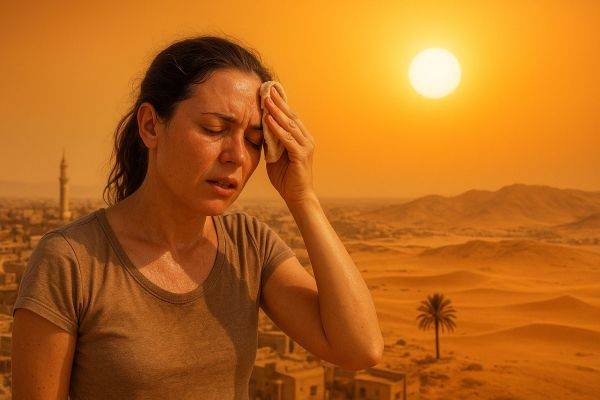
The Middle East and North Africa (MENA) recorded its hottest year on record in 2024, confirms the first climate report dedicated to this region, published by the World Meteorological Organization (WMO). The UN agency warns that temperatures are rising here twice as fast as the global average, and the climate consequences threaten the health of the population, fragile ecosystems and already vulnerable economies. According to Reuters, the situation risks becoming "unbearable" for hundreds of millions of people. According to the WMO, the average temperature in 2024 was 1.08 degrees Celsius above the 1991-2020 average, and some states have far exceeded this threshold. Algeria recorded a heat anomaly of +1.64 degrees Celsius, the highest in the region. "Temperatures are rising twice as fast as the global average, and intense heat waves are pushing society to its limits,” said Celeste Saulo, WMO Secretary-General. She warned that prolonged episodes of temperatures exceeding 50 degrees Celsius, observed in several Arab countries, are "too hot to handle” for the human body and are putting major pressure on ecosystems and infrastructure. Heat waves are not only more intense, but also more persistent: in North Africa, their duration has been increasing steadily since 1981, and the risks of extreme events are increasing.
• Water crisis, severe drought and devastating floods
The MENA region is already facing one of the world's worst water crises. 15 of the worst-hit countries are located here, and climate change is amplifying the alarming trends. The WMO report shows that: droughts have become more frequent and severe, massively affecting Morocco, Algeria and Tunisia. Precipitation has been insufficient for several consecutive seasons. Torrential rains and floods have caused significant damage in Saudi Arabia, Bahrain and the United Arab Emirates. More than 300 people died in 2024 due to heat waves and floods. Almost 3.8 million people have been directly affected by extreme weather events. These climate phenomena destabilize food security, water resources and the functioning of cities, exacerbating social tensions and climate migration.
To limit the impact of these phenomena, the WMO recommends major investments in: water resource security - desalination, wastewater reuse, modernization of hydrological infrastructure; early warning systems for extreme weather phenomena - currently, only 60% of the region benefits from these. Without clear action, the region is heading towards an alarming scenario: average temperatures could rise by up to 5 degrees Celsius by 2100 if current emissions levels are maintained. The projections cited come from the Intergovernmental Panel on Climate Change (IPCC).
























 Euro
Euro Dolar SUA
 Franc elveţian
 Liră sterlină
 Gram de aur