English


If the memorandum or agreement to be signed on Friday in Zurich by representatives of the US and Iran enters into force in the form anticipated by the international press, it will not represent so much the end of a conflict as the beginning of a new stage of it, show major publications from the US, Germany, Italy, France and the UK, but also those from the Middle East. Beyond the triumphalist declarations from Washington and the cautious tone displayed in Tehran, the Western, Arab and Israeli press seem to converge towards a conclusion rarely seen in such a controversial file: after four months of war, Iran has suffered significant military losses, but has not been forced to make those strategic concessions that were the declared objectives of the Trump administration and its allies.
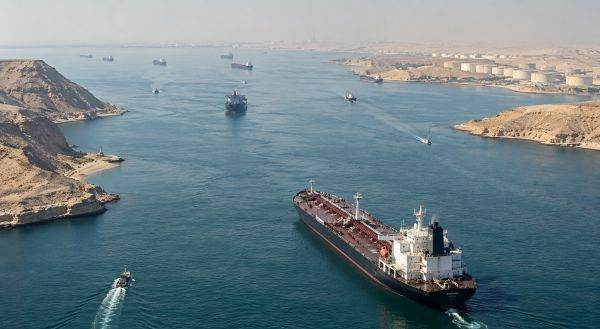
Perhaps the harshest assessment comes from the New York Times, which assesses that, at the end of the conflict, "Iran emerges as the strategic winner of the war." The conclusion is all the more significant since the American publication does not ignore the costs incurred by Tehran. On the contrary, it recalls that the Islamic Republic has lost a large part of its fleet, air capabilities, military infrastructure and important political leaders. However, the central argument of the newspaper is that the Iranian regime has survived, and with the cessation of hostilities, "the leadership in Tehran can begin the process of reconstruction and regrouping." The same analysis also makes one of the essential observations for understanding the agreement: the closure of the Strait of Hormuz has shown the world that Iran has an extremely powerful economic weapon. According to the cited source, the blockade has worked exactly as Iranian leaders wanted, causing tensions in international markets and increasing political pressure on the United States. The implicit message is clear: even if it has been hit militarily, Iran has shown that it can influence the world economy to an extent that few regional actors can match.
The same idea appears in other Western publications. The Swiss daily Neue Zurcher Zeitung (NZZ) notes that Donald Trump is trying to present the agreement as a great diplomatic victory and a step towards regional peace, but notes that the reality of the agreement is much more ambiguous. The Swiss publication emphasizes that the major objectives pursued by Washington before the war do not seem to have been achieved. The United States wanted Iran to completely abandon uranium enrichment, limit its ballistic missile program, and stop funding allied militias in the Middle East. According to the cited source, there are no indications that Tehran has made substantial concessions in any of these areas. Moreover, journalists from "Land of Cantons” warn that as long as the Iranian regime remains intact and the Israeli-Palestinian conflict continues to be unresolved, it is difficult to believe that the Middle East will enter a period of genuine stability. In this interpretation, the Zurich agreement is not the beginning of peace, but only a pause between two stages of the same confrontation.
The Italian daily La Stampa claims that both camps had something to lose. "It is difficult to say who won - at least for now. The losers, however, are right in front of us. In Iran and in the US. In Tehran, it is the old guard, the one connected to the old Ali Khamenei. They have been replaced by a new generation. (...) The other loser on the US side is the neoconservative ideology. (...) This envisaged the controlled dismantling of Islamic states, which were to be balkanized, weakened and harmless. The most recent and difficult case was Iran, but there the project was shattered by a wall of missiles, drones and a deficient understanding of the enemy", note the Italian journalists.
If the New York Times and the NZZ insist on the strategic advantage obtained by Iran, the British publication The Times emphasizes what is missing from the memorandum. British journalists note that the financial markets and some Western leaders have welcomed the deal because it promises to restore traffic through the Strait of Hormuz and ease global trade tensions, but they note that the very issues that led to the war are missing from the agreement. "Nothing has been agreed on Tehran's nuclear ambitions, and not a word has been said about the range, stockpiles and production of Iranian missiles,” the publication notes. According to The Times, the real test will only begin after the signing, when Iran will have to demonstrate that it is willing to sincerely participate in mine clearance operations and the full reopening of maritime traffic in the Strait of Hormuz. However, the 60 days risk becoming, in the words of the British daily, "a real time bomb.”
Journalists from the Dutch daily De Volkskrant state that "almost four months of war against Iran have not yielded any concrete results” and that the US and its allies are practically returning to the negotiating table where they left off before the conflict broke out. The nuclear program is to be renegotiated, sanctions are to be discussed again, and the compromises that were considered before the war reappear on the agenda almost unchanged. Even harsher is the assessment of the way the United States negotiated. "Under the Trump administration, the Americans have proven to be amateur negotiators, while Iran has demonstrated great skill in delaying and blocking substantial progress,” writes De Volkskrant. For the political opponents of the American president, this is perhaps the most dangerous interpretation: that, after months of military confrontation, Washington is back to square one.
From Israel's perspective, the memorandum lacks precisely what the Jewish state considered essential. Journalists at The Times of Israel and in Israeli media close to the security establishment have insisted in recent days that simply reopening the Strait of Hormuz does not solve the fundamental problem of Iran's nuclear and ballistic infrastructure. For Israel, the survival of the regime in Tehran without major concessions in these areas is tantamount to maintaining the strategic threat that has justified the entire pressure campaign of recent years. Therefore, while markets and major energy-importing economies welcome the agreement, the Israeli establishment views it with much more reserve. In the eyes of many Israeli analysts, Iran gains exactly what it wanted: time for reconstruction, reduced international pressure, and a return to negotiations in a diplomatic framework. The Arab press also does not seem convinced that the document represents a lasting solution. Al Jazeera has repeatedly noted that the central issue in the Iranian dossier is not the reopening of a sea route, but the lack of consensus on the future of Tehran's nuclear program and regional role. From this perspective, the agreement may reduce the risk of immediate escalation, but it does not eliminate the root causes of the conflict. Moreover, the mere fact that the major powers are forced to negotiate with Iran again confirms that the Islamic Republic remains an actor that cannot be marginalized. Interestingly, even some American publications that are not sympathetic to the Iranian regime admit that the final result is far from the initial objectives of the Trump administration. Before the war, Washington talked about eliminating Iran's ability to enrich uranium, drastically limiting its ballistic program, and reducing the regional influence exerted through Hezbollah, Shiite militias in Iraq, and other allied groups. Today, none of these goals appear to have been achieved. What is there is a promise of further negotiations and a 60-day period in which the parties will try to transform the ceasefire into a broader agreement.
In these circumstances, the list of winners and losers becomes surprisingly clear. The big strategic winner is Iran, which, despite the losses suffered, has preserved its regime, essential instruments of influence and negotiating capacity. The big economic winners are global energy markets, shipowners and states dependent on trade flows through Hormuz. Diplomacy also wins, which returns to the center of the game after months of military confrontation. In return, the followers of the theory of regime change through military and economic pressure lose. Israel loses, which sees its strategic objectives towards Iran postponed or diluted. Those American political circles that had promised that the war would produce rapid and decisive concessions from Tehran also lose.
The biggest bet, however, remains Donald Trump. If, in 60 days, Iran accepts verifiable restrictions on its nuclear program, if traffic through Hormuz returns to normal, and if regional tensions decrease, the US president will be able to claim a major diplomatic success. But if Tehran uses the period to buy time, rebuild its capabilities, and avoid substantial concessions, then history may record the Zurich agreement not as an American victory, but as the moment when Iran managed to turn a partial military defeat into a major strategic success.






















 Euro
Euro Dolar SUA
 Franc elveţian
 Liră sterlină
 Gram de aur