 English
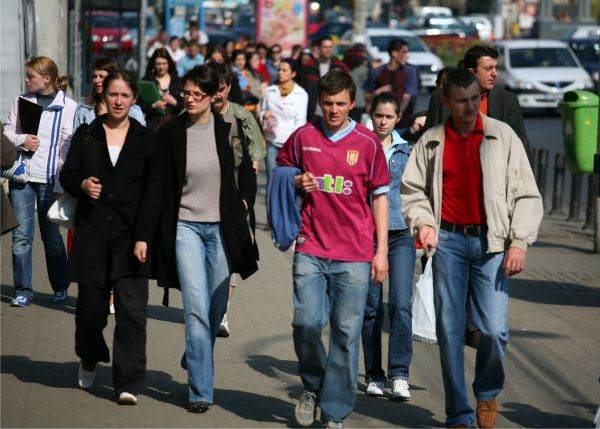
Young people in Romania live in households where the equivalized disposable income is only 33.7% of the European Union average, according to 2025 Eurostat data recently presented by Euronews. Meanwhile, regarding personal wage earnings, Romanian employees under the age of 30 reached approximately half of the EU average in 2022-specifically, 50.6%. Although these are two distinct metrics covering different years and age groups, both highlight the significant financial gap that remains relative to the European benchmark.
In an analysis published on October 26, Euronews reports that the median annual equivalized disposable income for young people aged 18-24 is 7,237 euros in Romania, compared to 21,482 euros in the EU. This calculation begins with household income after taxes and adjusts it based on the number and ages of the household members. In other words, it measures the household resources allocated to each individual, rather than the personal earnings of a young person.
Romania lags behind several other member states in the region: Hungary records 8,576 euros, Bulgaria 8,680 euros, and Croatia 15,921 euros. In the latter case, the figure is more than double the level seen in Romania.
If we shift our focus from household budgets to income earned through employment, a different picture emerges. The study "Wage Disparities: Influencing Factors in 2022," published by the National Institute of Statistics (INS) in 2024, shows that employees in Romania aged 15-24 had an average annual gross wage of 49,238 lei. The average for all employees included in the research was 77,416 lei. Consequently, young people earned approximately 36.4% less.
Based on the 2022 average exchange rate from the National Bank of Romania (BNR), the figure for the 15-24 age group amounts to approximately 9,984 euros in annual gross earnings. This represents individual earnings-before taxes-for employees working in enterprises with at least ten staff members. It does not reflect the income of all young Romanians; those without a wage are not included in this average.
In Eurostat data for 2022, the youngest age category reported is "under 30 years old." For Romania, the average annual gross wage was 14,724 euros, compared to 29,099 euros for the EU as a whole. Romania ranked 23rd out of the 27 member states. The research covers enterprises with at least ten employees and excludes the agriculture and public administration sectors.
In this comparison, Romania ranked ahead of Poland (14,435 euros), Hungary (14,411 euros), Croatia (14,013 euros), and Bulgaria (12,496 euros). However, it ranked below Slovakia (euro16,600), the Czech Republic (euro18,901), and Slovenia (euro24,430).
The contrast is stark: in a recent comparison of the resources of households where young people reside, Romania ranks below Bulgaria, Hungary, and Croatia-yet it ranks above them in 2022 statistics regarding the gross wages of employees under the age of 30.
We cannot interpret this discrepancy as a narrative of progress or decline, given the variations in the years, age groups, populations analyzed, and specific indicators used across the statistics published to date on this subject by the National Institute of Statistics (INS) and Eurostat. Nevertheless, it is fair to say that a wage-based ranking captures only one aspect of a generation's financial situation.
Similarly, the gap between the approximately euro9,984 figure derived from INS data and the euro14,724 figure from Eurostat cannot be interpreted as a salary increase. The latter figure includes employees aged 25-29, and the scope of economic activities covered also differs.
Beyond these distinctions lies the issue of independence. In an analysis by Euronews, the European Youth Forum warns that living with one's parents can artificially improve the statistical profile of young people-even when, in reality, they cannot afford to move out.
For Romania, the uncomfortable question begins here: what can a young person actually build using their own income, once housing costs and daily living expenses are covered? While a job and a shared household budget with one's parents may sustain one's current standard of living, they do not necessarily provide a path toward true independence. The ability to rent a place of one's own, to save money, and to make plans without family support reveals just how much financial freedom that income actually provides.
























 Euro
 Dolar SUA
 Franc elveţian
 Liră sterlină
 Gram de aur






























Reader's Opinion