 English


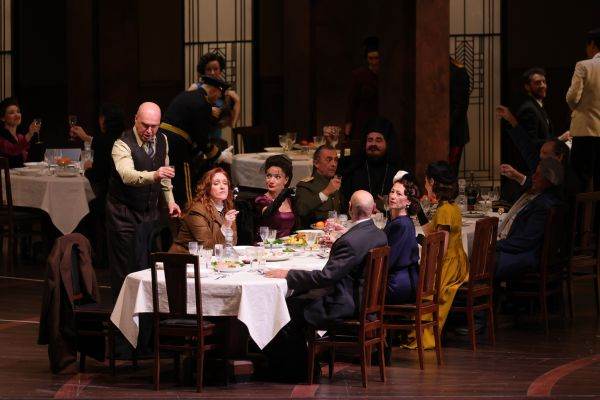
The season of the famous La Scala theater in Milan opened with the presentation of the opera "Lady Macbeth of the Mtsensk Region", composed by Dmitri Shostakovich and considered one of the most controversial creations of the 20th century. The choice is not accidental, this year marks the 50th anniversary of the death of the Russian composer, a titan of modern music, persecuted during the Stalinist regime. The opera, inspired by Nikolai Leskov's short story, tells the story of Katerina, a woman trapped in a toxic marriage, pushed towards murder and self-destruction. The emotion, eroticism and violence that Shostakovich renders through explosive music transformed the work into an "ideological danger" in the 1930s. Although the 1934 premiere in St. Petersburg was acclaimed, Stalin condemned the opera just two years later, and it was banned in the USSR for almost 30 years. "Opening the season with this opera is a tribute to a giant of the 20th century and to an opera that has suffered for many years,” Riccardo Chailly, the theater's principal conductor, told Reuters.
• Russian artists on European stages
In the current geopolitical context, the choice of a Russian opera that was banned in the past inevitably raises questions. Controversies over the presence of Russian artists in Western cultural institutions continue to divide audiences and the art world. Russian director Vasily Barkhatov, who is directing the La Scala production, stressed that art must be separated from propaganda: "If you openly support the Russian government, you must be aware of the consequences of your choice. But it's a different situation if you are discriminated against simply because you are a Russian artist.” In the current production, Barkhatov and Belarusian set designer Zinovy Margolin have radically changed the classical perspective, moving the action from rural 19th-century Russia to urban Moscow in the 1950s, an era in which Shostakovich himself lived under constant pressure from censorship. The cast brings together important names from the international scene: American soprano Sara Jakubiak plays the central character, Katerina, while Russian tenor Yevgeny Akimov plays her husband, Zinovy, and Uzbek tenor Najmiddin Mavlyanov is Sergey, the fatal lover.
The opening of the La Scala season is one of the most important moments in Italian cultural life, but also a major social event, scheduled every year on December 7, the day of Saint Ambrose, the patron saint of the city of Milan. Sunday's premiere was played to a full house (2,000 spectators) and generated record revenues of about 2.8 million euros, according to organizers quoted by Reuters. The price of a ticket varied between a few hundred and 3,200 euros for the most exclusive seats. For the new artistic director of the institution, Fortunato Ortombina, this was the first season opening, and the symbolic choice of a protest opera written in Russia during the years of Stalinist terror inevitably becomes a cultural message with political valences for the present: a plea for artistic freedom, for the dignity of women and for the independence of culture from any form of ideological pressure. "Lady Macbeth of the Mtsensk Region” will remain in the program of the La Scala theater until December 30, marking one of the strongest season openings in recent years.
















 Euro
Euro Dolar SUA
 Franc elveţian
 Liră sterlină
 Gram de aur





























