English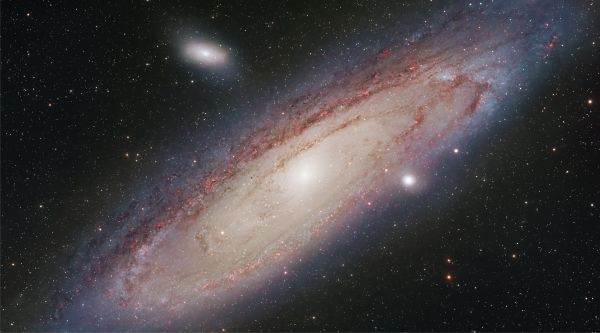
Artificial intelligence, genetics, medicine, and astronomy are beginning to form a research ecosystem where discoveries in one field contribute to progress in the others. From DNA analysis and the observation of cellular structures to identifying the origins of chemical elements within the human body, science is striving to describe life across increasingly diverse scales.
• Research transcends disciplinary boundaries
The most exciting scientific breakthroughs no longer always occur within strictly defined fields. In recent years, tools developed for artificial intelligence, medicine, genetics, and space exploration have begun to be used in tandem, enabling researchers to analyze phenomena that cannot be understood through a single method alone, according to the < Stanford Report >. Artificial intelligence is being used to interpret vast amounts of genetic data, while new microscopy technologies allow for the observation of biological structures with a level of detail previously difficult to achieve. Meanwhile, astronomical research provides insights into the origins of the chemical elements that constitute living matter. These avenues of inquiry are not isolated projects but part of a broader shift in how life is studied.
• Artificial intelligence used for DNA analysis
One of the most significant developments is taking place in genetics. Artificial intelligence models can rapidly analyze massive quantities of information and identify connections that would be difficult to detect using traditional methods, according to the journal < Nature >. In this field, AI is used to study DNA and to evaluate how specific genetic modifications influence gene activity. Researchers aim to better understand disease mechanisms and identify potential avenues for the development of personalized medicine. Although these tools cannot yet provide definitive answers regarding every genetic mutation, they significantly expand scientists' capacity to analyze the human genome.
• Microscopes provide a more precise view of cells
Technological advances are also transforming how biological tissues are observed. Modern microscopes enable the analysis of extremely small structures and provide information on cell behavior under conditions that closely mimic those within the body. These images can help elucidate the processes underlying various conditions, including inflammatory diseases. Researchers can closely monitor tissue changes and compare how they evolve under different circumstances.
Thus, imaging technology has become an essential tool in medical research-not only for describing cellular structures but also for identifying disease mechanisms.
• Astronomy explains the origin of matter in the human body
At the opposite end of the observational scale lies astronomy. Studying stars, supernovae, and other cosmic events offers clues about how the chemical elements in the Universe were created. Hydrogen, carbon, oxygen, and iron-elements essential to living matter-have distinct cosmic origins. Some formed during the early stages of the Universe, while others were produced within stars or during violent cosmic events. According to NASA, space research thus contributes to answering a fundamental question: where does the matter that forms the planet, living organisms, and ultimately the human body come from?
• From the cell to the Universe
The link between these fields lies in the use of increasingly sophisticated tools to analyze vast amounts of information. Artificial intelligence can interpret genetic data, microscopes can capture biological processes at a microscopic scale, and astronomy tracks the evolution of matter at a cosmic level. Together, these technologies offer a broader perspective on life and the conditions that made its emergence possible. Research is no longer focused exclusively on a single level of organization; scientists are attempting to connect processes within cells to genetic mechanisms and the history of matter in the Universe.
• A new stage for scientific research
The convergence of artificial intelligence, genetics, medicine, and astronomy demonstrates that major discoveries can emerge at the intersection of fields that, until recently, were analyzed separately. From DNA interpretation to the observation of biological structures and the identification of the origins of chemical elements, new technologies are expanding the boundaries of research. The goal is not merely to obtain more precise data, but to build a coherent picture of how life functions and its place in the Universe. From this perspective, the most important discoveries no longer emerge solely in laboratories, but also at the intersection of disciplines, technologies, and research methods.



























 Euro
Euro Dolar SUA
 Franc elveţian
 Liră sterlină
 Gram de aur