English

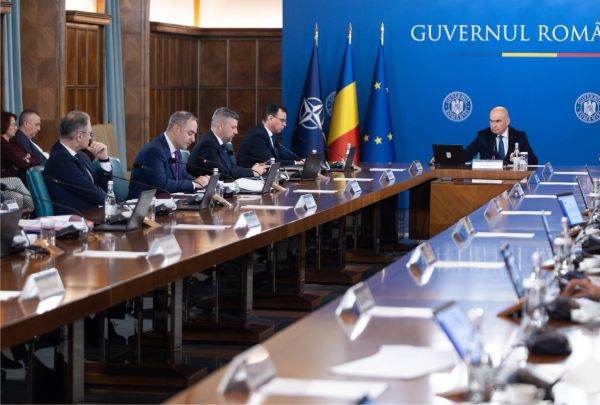
The Ministry of Finance published yesterday in decisional transparency the draft state budget and the draft state social insurance budget for 2026, documents that are built on a series of macroeconomic indicators that show a slowly growing economy, with persistent pressures on public finances. The government estimates economic growth of approximately 1% for the end of 2026, while the average annual inflation is forecast to reach 6.7%, and the average gross monthly salary is estimated at 9,192 lei, an increase compared to the previous year, which would mean an average net monthly salary of approximately 5,500 lei.
Based on these macroeconomic assumptions, the budget for the current year is built on a gross domestic product estimated at approximately 2,040 billion lei. However, the budgetary indicators reveal a significant structural imbalance: the revenues of the general consolidated budget are estimated at approximately 36% of GDP, while the expenditures rise to 42.3% of GDP. The difference between the two dimensions of the budget will lead to a deficit estimated at approximately 6.2% of GDP in the cash methodology and 6% of GDP according to the ESA methodology used at the European Union level at the end of the year.
In nominal terms, the budgetary construction indicates revenues of approximately 391.7 billion lei and expenditures of over 527 billion lei, which means a deficit of approximately 135.7 billion lei. The size of this deficit confirms the huge pressure exerted on public finances and explains why fiscal-budgetary policy is oriented towards a gradual adjustment, so that the deficit gradually decreases towards the European threshold of 3% of GDP in the coming years.
A central element of the budgetary construction for the current year is the high level of public investments. The government estimates total investments of approximately 150 billion lei for 2026, equivalent to about 7% of GDP, a level considered essential for maintaining the pace of economic development and for absorbing the European funds available under the multiannual programs and the National Recovery and Resilience Plan. The authorities claim that these investments will be directed with priority towards infrastructure, energy, digitalization and strategic projects capable of generating multiplier effects in the economy.
In parallel with the general state budget, the draft state social security budget confirms the major pressure exerted by the public pension system on public finances. Pension spending in the public system is estimated at approximately 154.7 billion lei, representing about 7.6% of GDP. This dimension reflects the dominant role of social spending in the budgetary structure and the system's dependence on transfers from the state budget in order to maintain financial balance.
The social security budget revenues are estimated at approximately 159 billion lei, coming mainly from social security contributions and subsidies granted from the state budget. A significant part of the contributions collected is directed to privately managed pension funds, which reduces the resources immediately available to the public system and increases the need for financing from the central budget.
The budget construction for 2026 thus reflects an attempt to balance two major pressures: the need for fiscal consolidation to reduce the deficit and the need to maintain public investments at a high level to support economic growth. The authorities argue that investments financed from European funds and national programs can become the main engine of the economy in a period in which consumption is affected by inflation and fiscal adjustment measures.
The two budget drafts are to be approved by the Government in the coming days, after which they will be sent to Parliament for debate and vote. PSD leader Sorin Grindeanu said on Monday that a meeting of the National Political Council of the Social Democrats will take place on Sunday, in which prominent members of the party will determine whether they will vote to approve the budget proposed by the Bologna government or whether they will reject the budget.



















 Euro
Euro Dolar SUA
 Franc elveţian
 Liră sterlină
 Gram de aur