English
Only a few days after the scandal caused by the new ANI law and CCR Decision no. 883/2026, which paved the way for the termination of the mandates of some local elected officials based on a regulation subsequent to the sanctioned acts, the Permanent Electoral Authority proposes a new law on political parties, through which it requests almost the entire administrative power over their establishment, operation, reorganization and dissolution. The two situations do not have the same legal object, but they seem to indicate the same trend: limiting the effects of the vote and transferring the decision from voters to unelected authorities. If the ANI legislation allows intervention after the vote, to terminate the mandate of an elected official, the AEP project creates the instruments through which the political framework can be controlled before the citizen reaches the polls.
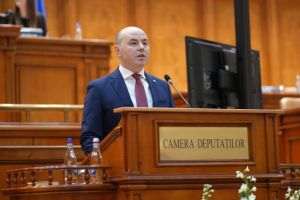
The institution led by Adrian Ţuţuianu would decide who can establish a party, what documents are accepted, whether statutory amendments are legal, whether the formation is still active and whether it should be dissolved. The current president of AEP is not a technocrat with no political past, but a former president of the Dâmboviţa County Council, senator, Minister of Defense and an important leader of the PSD. The fact that he is no longer a member of the party does not erase this biography or the legitimate questions raised by the project. It is at least curious that an institution led by a former leader of a party that was frequently in government would request the right to decide administratively on the legal birth and death of all political formations, including those that compete with the PSD. There is no evidence that the project aims to favor a party, but the laws must also be analyzed in terms of how the powers granted can be used by the current or future leaders of the institution.
The project is not limited to digitizing registers. The AEP would take over from the Bucharest Tribunal the party and alliance registers, files, archives and databases, verify the founders, statutes, programs, headquarters, names and permanent signs, decide on the registration or rejection of a party, approve subsequent amendments and ascertain cases of dissolution.
Currently, the registration of a party is decided by the Bucharest Tribunal. The project transfers the competence to panels made up of five AEP employees, declared "independent” by law. However, they are appointed by the institution, work within it and do not even pronounce the final decision: they draw up a report and formulate a proposal, and the decision is made by the AEP. The independence of the panels stops, therefore, exactly where the real power begins.
The AEP decision will be able to be challenged at the Bucharest Court of Appeal within ten days of publication. Access to justice does not disappear, but it is moved after the exercise of administrative power. Instead of the court deciding on the establishment of the party, the party will first have to obtain the approval of the AEP and only after rejection will it be able to request the intervention of the judge.
More seriously, the AEP will be able to initiate proceedings in cases of dissolution and it will also issue the decision. The institution will ascertain the alleged misconduct, initiate the procedure, handle it through its own employees and decide to dissolve the party. It will be simultaneously a controller, a notification authority and a decision-making authority, and the court will intervene only if the party challenges the decision within the deadline.
One of the most controversial texts is art. 56 para. (7). If the statutory amendments are not communicated to the AEP or are definitively rejected, and the party continues to act on their basis, the Authority orders the dissolution of the party, considering that its purpose or activity has become illicit or contrary to public order. The provision is strikingly reminiscent of the conflict in the PNL, in which the decisions of an extraordinary congress were later annulled by the court. If the project had already become law, the dispute could have reached the courts only after the AEP, led by former social democrat Adrian Ţuţuianu, had ordered the dissolution of the PNL.
It is not clear how the failure to register a statutory amendment automatically turns the party's purpose into an illicit one. Between the procedural deviation and dissolution, there should be gradual sanctions: notification, a period of remediation, a fine or suspension of the effects of the amendment. The project jumps straight to the maximum sanction and uses the notion of public order to give it a legal appearance.
The AEP will also be able to establish the inactivity of a party that has not organized a general assembly for four years, has not renewed its leadership, has not updated its headquarters, has not submitted financial statements, has prevented the control of financing or has not designated candidates for two successive elections. The phrase "two successive elections” is ambiguous. It is not specified whether they must be elections of the same type - local, parliamentary or European Parliament, or any two elections. A party interested only in local elections could be declared inactive because it does not participate in presidential and parliamentary elections? Does a regional party have to participate in the European Parliament elections in order to continue to exist? The legislative project does not answer.
Another change concerns the number of founders. After the CCR declared the 25,000 person threshold unconstitutional, the current law allows the establishment of a party by three members. AEP proposes a minimum of 100 founders, representing both sexes. The threshold is over 33 times higher than the current one, without the explanatory statement showing how many fictitious parties were established, what problems they caused and why exactly 100 founders are necessary. The representativeness of a party should be verified by voting, not before establishment. Legal personality does not guarantee mandates, subsidies or access to Parliament. The formation must separately fulfill the electoral conditions and convince voters. Raising the threshold does not protect democracy, but makes it more difficult for new competitors to emerge.
The draft law also grants the AEP extensive powers over names and permanent signs. Words likely to create confusion with authorities or public institutions are prohibited, such as "authority”, "guard”, "academy”, "institute”, "university”, "chamber”, "bar” and "others like that”. Preventing confusion is legitimate, but the open-ended formula "others like that” allows the AEP to supplement the prohibitions through administrative practice. Even the protection of names and symbols does not sufficiently clarify the situation of satire, parody, civic campaigns and content published on social networks. The draft law also stipulates that party members must act with professionalism, meritocracy, honesty and integrity, correctly inform voters and respect fair political competition. As ethical principles, the requirements are natural. As legal obligations that can justify sanctioning or exclusion, they are dangerously vague. It is not explained who determines what political professionalism, meritocracy or correct information means. A critical member could be accused of harming the party, and a wrong opinion could be qualified as false information.
While the AEP expands its power, parties are given very short deadlines and fines between 20,000 and 80,000 lei. Some documents must be communicated within only three days. For a parliamentary party, the fine is bearable; for a small formation, it may mean the cessation of activity.
The most dangerous transitional provision obliges all existing parties and alliances to amend their statutes, programs or protocols within six months. Failure to comply with the deadline becomes a reason for dissolution for inactivity. Thus, a legal, active and electorally participating party can be dissolved simply for not adapting its documents on time. There is no mandatory warning procedure and no additional deadline for remedy: administrative delay is treated as political disappearance.























 Euro
Euro Dolar SUA
 Franc elveţian
 Liră sterlină
 Gram de aur