English


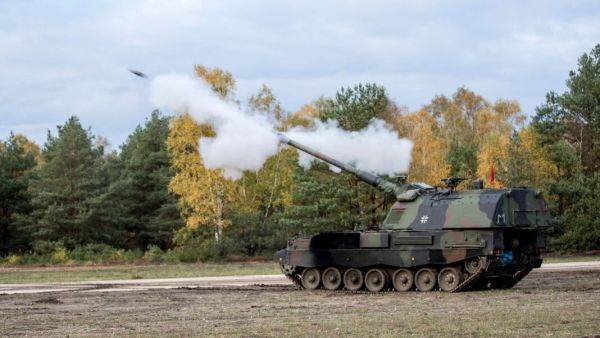
The spectacular increase in spending on rearmament in the European Union does not guarantee that the objectives set for 2030 will be achieved, according to the report "EU Defence Policy in Focus", published yesterday by the European Court of Auditors (ECA), which examines developments between 2020 and July 2026.
The war launched by Russia against Ukraine has exposed the effects of decades of insufficient investment: low stocks of ammunition and missiles, limited industrial capacity, long production and delivery times, inadequate transport infrastructure and a considerable dependence on suppliers outside Europe.
"The EU has launched a number of initiatives to encourage cooperation between Member States and strengthen their defence efforts. However, for the objective of defence readiness by 2030 to become a reality, it will be essential to both seize new opportunities and address existing risks,” said Marek Opiola, the Member of the European Court of Auditors responsible for the review.
According to the ECA report, if all Member States had allocated 2% of GDP to defence between 2006 and 2020, European military spending would have been around euro1.1 trillion higher. The lack of cooperation between states in turn produces costs estimated at between euro18 and euro57 billion annually.
The scale of the financial effort is considerable. Member States' cumulative defence spending increased by 78.6% in real terms between 2020 and 2025. Between 2022 and 2025 alone, annual military budgets rose from euro262 billion to euro418 billion, with a total estimated at euro454 billion in 2026. In 2024, Romania allocated around euro7.9 billion to defence, equivalent to 2.2% of GDP, according to the data presented in the report.
These national expenditures are supplemented by European financial instruments. euro11.3 billion was allocated to defence programmes in the period 2021-2027, and around euro20.6 billion was redirected from other funds to defence-related objectives. Through the SAFE instrument, member states can access loans of up to euro150 billion, financed by EU borrowing on capital markets and repayable over periods of up to around 45 years. For the next multiannual budget, the Commission has proposed around euro125 billion for resilience, security, defence and space.
However, the problem is not only the lack of money, but also how it is spent. In 2021, only around 18% of member states' military equipment was purchased cooperatively, well below the 35% benchmark. Only 7% of military research and technology spending was done jointly, compared to the 20% target. In addition, from the start of the war in Ukraine until June 2023, 78% of EU states' military purchases came from outside the Union, with US suppliers alone accounting for 63% of the total.
Europe's vulnerability is also evident in the area of ammunition. In 2022, EU industry produced only 300,000-400,000 155 mm artillery shells per year, while the Ukrainian army consumed around 180,000-240,000 shells per month. Member States only managed to deliver one million artillery shells to Ukraine in November 2024, eight months after the original deadline.
The Court warns that the EU still lacks a common, coherent and binding capability planning process. Planning remains mainly national and bottom-up, with each state determining its own needs. In the absence of effective European coordination, additional funds can fuel fragmented investment, parallel procurement, incompatibilities between systems and the maintenance of essential deficits. Nor are spending targets set as a percentage of GDP automatically accompanied by clear performance, efficiency and effectiveness criteria.
Military mobility illustrates the disproportion between ambitions and resources. Adapting Europe's transport infrastructure to military standards would require around euro70 billion, while the funding allocated under the Connecting Europe Facility for the period 2021-2027 is only euro1.7 billion. Existing bottlenecks can prevent the rapid movement of troops and equipment across the continent, even if countries buy additional weapons. The report also identifies industrial and budgetary risks. Inflation in the defence industry often exceeds general inflation, reducing the real purchasing power of military budgets. Production is limited by access to raw materials, strategic components and skilled personnel. At the same time, debt financing of defence and loans guaranteed by the EU budget can slow down the diminuation of public debt and can create additional obligations for Member States if loans are not repaid.
Governance is another vulnerability. European defence policy is managed through a complex mix of EU institutions, intergovernmental bodies, budgetary programmes and extra-budgetary instruments. The Directorate-General for Defence Industry and Space, which manages the main European programmes, had only 286 staff in January 2026, although its responsibilities have grown rapidly. The Court warns that overlapping powers and the lack of a clear demarcation of responsibilities can affect financial control and the assessment of results.
Accountability mechanisms also do not cover the whole system. The European Parliament scrutinises spending from the EU budget, but does not have comparable formal powers over extra-budgetary instruments such as the European Peace Facility. The European Court of Auditors cannot audit all the bodies and mechanisms involved, and access to classified information can limit the depth of controls and the accuracy of public conclusions.
Europe therefore has bigger budgets, new financial instruments and an industry that has the chance of historic development. But the Court's report shows that real preparedness cannot be measured solely in billions of euros or percentages of GDP. Without joint planning, sufficient industrial capacity, functional infrastructure, coordinated procurement, performance criteria and rigorous public control, increased spending risks producing more debt and more contracts, without necessarily delivering the military capabilities that Europe needs by 2030.





















 Euro
Euro Dolar SUA
 Franc elveţian
 Liră sterlină
 Gram de aur