 English

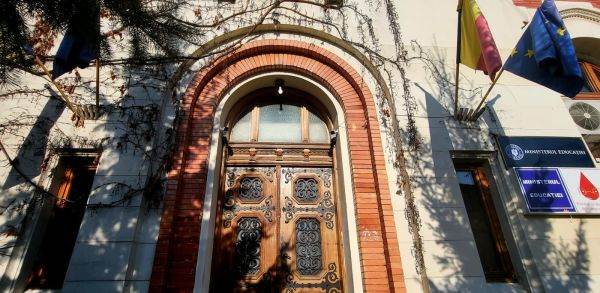
The Minister of Education and Research, Mihai Dimian, rejects the image of "chaos in education" circulated in the public space and claims that the existing difficulties must be viewed in the context of the size and complexity of the system. In a post on Facebook, the minister states that over 97% of schools organized simulations for the National Assessment in the first stage, while the educational projects in the PNRR and the Baccalaureate exam were, in his opinion, examples in which fears regarding the emergence of "chaos" were not confirmed.
Dimian states that since the first day of his mandate, he encountered the image of "chaos in education" in the public space, starting from the information according to which approximately half of the schools would not organize simulations for the National Assessment. The minister says that instead of giving up on organizing the simulations, he chose to dialogue with union representatives, teachers and students and prepared, together with his team, measures adapted to the situation. According to Mihai Dimian, the result was different from the scenarios initially circulated: over 97% of schools organized the simulations in the first stage, and a second stage allowed the participation of another approximately 1.5% of schools. "However, I prefer this "boring' reality, built through work, facts and results, instead of spectacular scenarios about what is about to happen,” says the minister.
• PNRR and Baccalaureate, cited as examples
Mihai Dimian also recalls other situations in which, he claims, major problems in education were anticipated. Among these is the implementation of the PNRR projects for education, which the minister says is approaching completion with good results, following the efforts of those involved. Another example is the Baccalaureate exam. Dimian states that it ended with "the best results in the last decade”, given that there were warnings about the emergence of major problems. The minister, however, emphasizes that the existence of problems in the system should not be denied. "There are problems in education. Some are old, others are newer, but equally serious and I have no intention of minimizing them. But problems are not synonymous with chaos”, states Mihai Dimian.
• A system with over 300,000 employees
In his argument, the minister emphasizes the size of the education system.
The Ministry of Education and Research coordinates, according to data presented by Dimian, over 6,000 credit officers, approximately half of the total number of credit officers in the Romanian Government. The system includes over 300,000 employees, more than a quarter of all employees in public institutions and authorities, as well as approximately 3.5 million children and young people in pre-university and university education.
If parents are included, the minister estimates that more than half of Romania's population is directly involved in the education system. At the same time, the Ministry is involved in the implementation of approximately 7,000 projects financed by the PNRR, representing about a third of the total number of PNRR projects carried out in Romania.
"In a system of such size and complexity, in which millions of people interact daily, there will be problems, dissatisfactions or situations that need to be corrected every day,” says Dimian.
• "We don't need to predict hurricanes with every flap of our wings”
The minister uses the "butterfly effect,” a concept associated with complex systems theory, to explain why a specific problem should not automatically be transformed into a prediction of the collapse of the entire system. "There are enough real problems in education that we need to solve. However, we don't need to predict hurricanes with every flap of our wings,” says Dimian. He argues that the education reform cannot be achieved in a short period, but the system can be improved through continuity and consistently applied measures. "Education cannot be rebuilt in a month or a year. But it can be corrected, if we have continuity, understanding and patience," the minister also says.
The structure of the school year maintains the organization by modules, separated by vacation intervals. The first break will take place between October 24 and November 1, 2026, after the end of the first learning module. The winter vacation is scheduled for December 23, 2026 - January 10, 2027, and the activity will resume on January 11, 2027. The mobile vacation in February, which will be established by each county school inspectorate and the School Inspectorate of Bucharest Municipality. This will be scheduled, depending on the decision of the local authorities, between February 15 and March 7, 2027, after consulting students, parents and teachers. The spring break is scheduled between April 24 and May 4, 2027, and will Summer camp begins after the end of classes, depending on the category of students each class is in. The last day of classes will be Friday, June 18, 2027, for most students.
















 Euro
Euro Dolar SUA
 Franc elveţian
 Liră sterlină
 Gram de aur





























