 English

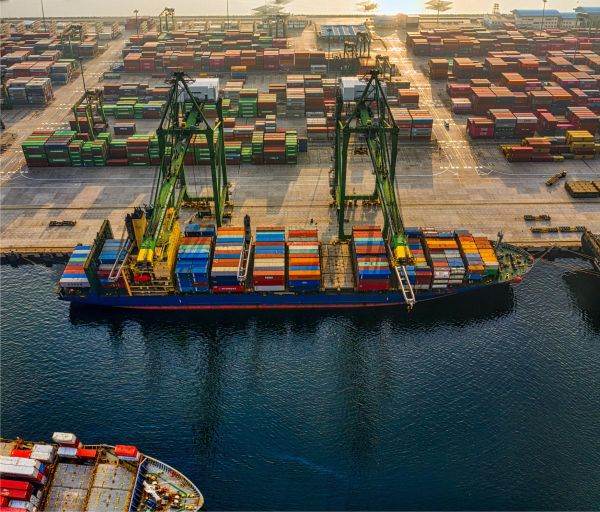
The European Union is approaching an open trade confrontation with China, after years in which dependence on Chinese raw materials and components, the interests of large European companies and fear of retaliation have tempered Brussels' reactions, according to an article published late last week by the German-language daily Der Standard. According to the cited source, the tone of relations between the EU and China is starting to change, with voices even in German industry, one of the most cautious in its relationship with Beijing, now calling for a tougher policy. The stakes are huge: the survival of industrial sectors essential to Europe, but also China's access to one of the most important markets for its exports.
The speed with which Beijing responded to a recent European decision has shown how easily the conflict can escalate. Just 24 hours after EU foreign ministers added 14 Chinese companies to a sanctions list in late July for alleged support for Russia's war in Ukraine, the Chinese authorities retaliated. While the Chinese firms targeted by Brussels are largely unknown to the European public, Beijing has chosen targets with strong economic and symbolic value. At the top of the list is Rheinmetall, Germany's largest arms manufacturer. Polish electronics company Vigo and the Franco-public-private laboratory III-V Lab were also prevented from purchasing dual-use civilian and military products from China. The immediate economic impact of the measures could be limited. Rheinmetall claims that less than 1% of its components come from China, and some of the other affected companies say they do not use Chinese products at all. The warning from Beijing, however, goes far beyond the situation of these companies: in a major trade conflict, China is prepared to restrict European industry's access to chips, rare earths and other indispensable materials.
The message is causing concern in Brussels and Berlin because it comes against the backdrop of an increasingly serious trade imbalance. China's export economy is breaking record after record, and sales of cars and equipment continue to grow. As Chinese manufacturers' access to the American market becomes increasingly difficult, Europe is taking on even greater strategic importance.
According to Deutsche Bank data, the share of Chinese cars on the European Union market has increased in just three years from 2% to 11%, which means that it has multiplied more than fivefold. The number of cars exported by China is expected to increase this year by approximately three million units, equivalent to the entire annual volume of German car exports.
At the same time, access for European companies to the Chinese market is becoming increasingly difficult. The phenomenon is particularly visible in the case of Germany. In 2021, German groups exported cars and machinery worth around 3% of the country's gross domestic product to China. In the meantime, the share has halved. Last year alone, Germany recorded a trade deficit of 90 billion euros with China, while Austria's deficit reached 12.6 billion euros, and the trend is worsening, according to the cited source.
Economists contacted by Der Standard journalists are already talking about a "China shock 2.0". The first shock followed China's accession to the World Trade Organization in 2001 and hit certain industrial branches in the United States in particular. This time, the threat is targeting Europe's very industrial core: the automotive industry, machine building, the chemical sector and green technologies.
The pressure on the European Commission to respond is growing. For months, the European institutions in Brussels have been trying to get an agreement from the Chinese leadership to limit the expansion of its exports. The negotiations are due in October, but so far no significant progress has been made. European rhetoric is becoming increasingly harsh. European Trade Commissioner Maros Sefcovic warned that if Beijing does not present "concrete results” by October, the European Union could resort to "stricter measures”.
The major change comes from Germany, a country that has so far tried to avoid a direct confrontation with China. The German car industry has long opposed tough measures because, despite losing market share, China continues to be considered an essential market for the future of Volkswagen, BMW and Mercedes-Benz. Now, however, even representatives of the German industry are warning of a "China shock 2.0” and are calling on Europe to be more capable of imposing its interests.
"The situation has already slipped through the fingers of German companies," Gabriel Felbermayr, director of Austrian Institute for Economic Research, Wifo, told the cited source. In the perception of the industrial environment, the risk of inaction has become greater than the risks posed by a trade confrontation with Beijing.
The main accusation against China is that it undermines fair competition through cheap loans, subsidies and other forms of support for its manufacturers. Beijing is also accused of keeping the renminbi artificially low, thus benefiting Chinese exports and making imported products more expensive.
Brad Setser, a specialist at the Council on Foreign Relations in Washington, estimates that the Chinese currency is undervalued by about 30%. The International Monetary Fund's assessment indicates an undervaluation of 21%. Regardless of the difference in estimates, such a currency advantage can massively influence the competitiveness of Chinese products on international markets.
The source also says that Gabriel Felbermayr warns that certain European industries, including the automotive industry, the chemical industry and the green technology sector, could suffer losses so great that their very survival could be at risk.
Beijing, however, rejects accusations of unfair competition and offers its own interpretation. European companies have made huge profits in China for years or even decades, and now, as the balance of power begins to reverse, Europeans are denouncing the rules of the game. From the Chinese perspective, the real problem would be Europe's inability to accept that China's industry has caught up with the technological gap and can compete directly with Western manufacturers.
The European Commission is already preparing possible countermeasures. One of the most likely is the introduction of customs duties on plug-in hybrid cars imported from China, modeled on the tariffs applied to Chinese electric vehicles starting in 2024.
However, the effectiveness of those duties has been reduced. Chinese manufacturers have adapted quickly and have started selling more hybrid cars on the European market, thus compensating for the restrictions on fully electric models. Brussels could extend the tariffs to other product categories, including machinery, but it would first have to open trade investigations under European law.
In parallel, the Commission is working on legislation to reduce Europe's dependence on single suppliers in sensitive sectors such as semiconductors and rare earths. One proposal is to require European companies to have at least three suppliers for certain critical raw materials and components, from at least two countries.
But diversification cannot produce results overnight, and China now has an extremely powerful trade weapon. In its confrontation with the United States, Beijing has already shown that it can use restrictions on rare earth exports to obtain concessions. A temporary embargo has prompted Washington to temper its position.
Western dependence is almost total. According to the International Energy Agency, around 60% of the rare earths used to make magnets are mined in China, and Beijing controls 91% of the world's refined production. Without these magnets, electric motors, wind turbines, industrial robots and many modern military systems cannot be produced or operated efficiently.
Europe therefore has good reason to avoid a brutal rupture. But China cannot easily afford to lose the European market either. The Chinese economy has not overcome the housing crisis and continues to depend on exports to support production, employment and economic growth. Closing the European market or imposing extensive tariffs would hit one of the main engines of the Chinese economy.
In a potential trade war, neither side therefore has an absolute advantage. China controls key links in supply chains and can paralyse European industries by limiting critical raw materials. But the European Union controls access to a market of hundreds of millions of consumers, which Chinese exporters increasingly need as the United States closes its doors.
The window for compromise is beginning to narrow. It has not closed yet, but any new round of sanctions, tariffs and retaliation could turn the current trade imbalances into a confrontation capable of reshaping European industry and the global economic order.



















 Euro
Euro Dolar SUA
 Franc elveţian
 Liră sterlină
 Gram de aur





























