 English

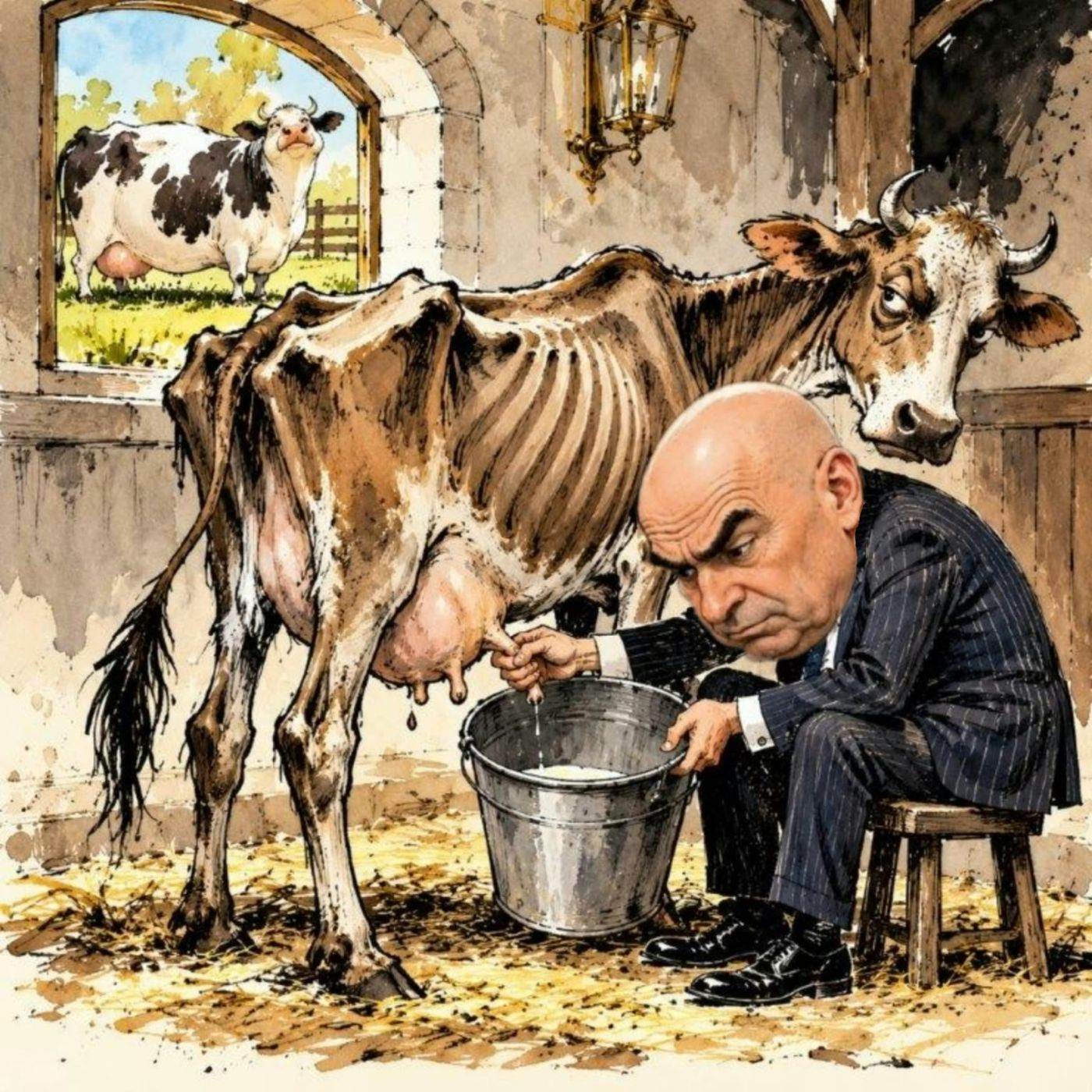
Foreign direct investment in Romania fell by 62.5% in the first eight months of the year, to 2.12 billion euros, from 5.66 billion euros in the same period of 2025, according to data from the National Bank of Romania (NBR), reported by BURSA.
What investments were missing, specifically?
The largest component of the decline comes from profits that foreign-owned companies no longer kept in Romania: dividends paid in 2026 out of 2025 profits exceeded the lower profits generated in 2026, and companies attribute the decline in profits to higher taxes. High energy costs have led some new investments by industrial groups to go to Turkey and Morocco rather than Romania; the public data do not show how much this loss accounts for in the NBR figures.
The NBR divides foreign direct investment into three components: reinvested earnings, meaning profits that foreign-owned companies leave in Romania; new capital brought in by investors; and loans received from parent companies. In the first half of the year, foreign direct investment was 3.05 billion euros below the 2025 level. Of this difference, around 1.2 billion euros came from reinvested earnings, 0.75 billion euros from new capital and 1.1 billion euros from loans from parent companies, according to Leonardo Badea, First Deputy Governor of the NBR, in an article published by Agerpres.
Taxes reduced the profits of foreign-owned companies
The state reduced its budget deficit mainly through higher taxes, provided for by Law No. 141/2025.
However, the same taxes reduced the profits of foreign-owned companies, and lower profits reduced foreign direct investment.
BURSA explains why the state increased taxes, what they brought in and what they cost in the article „Bolojan's fiscal policy had serious justifications: higher taxes reduced the deficit and the risk of a downgrade, but came at the cost of foreign investment”.
Banks, the largest foreign-owned companies in Romania, illustrate the mechanism with figures. The additional turnover tax on large banks doubled from 2% to 4% on 1 July 2025, under Law No. 141/2025.
In the first half of 2026, BCR Group's net profit fell by 18%, to 1.205 billion lei from 1.473 billion lei, according to data published by BCR on the Bucharest Stock Exchange.
ING Bank Romania's gross profit fell by 29.2%, and the bank attributes the decline to higher taxes on the banking sector, according to press reports.
UniCredit Bank Romania's net profit fell by 5.6%, due to higher loan-loss provisions and banking taxes, according to media reports.
Banks' profits also fell because they are setting aside more money for loans at risk of default: BCR Group set aside 352 million lei in the first half of 2026, compared with 104 million lei in the first half of 2025, according to press reports.
The minimum turnover tax also hit industrial companies.
At Ford Otosan Craiova, net profit in the first half of the year fell by 29.7% in euro terms, and payment of the minimum turnover tax was also cited in the explanations, according to press reports.
Why reinvested earnings turned negative
The NBR calculates reinvested earnings as the difference between profits in the current period and dividends paid to foreign shareholders.
Dividends paid in the spring of 2026 were decided on the basis of 2025 profits, a good year for banks and many other companies.
BCR Group, for example, recorded net profit of 3.32 billion lei in 2025, 20% more than in 2024, according to the results published by BCR, and paid a dividend of 0.0979 lei per share out of that profit, starting on 15 May, according to the BCR announcement to shareholders.
When a dividend calculated on last year's higher profits exceeds the lower profit generated now, reinvested earnings become negative, without any company having decided to leave Romania.
In the first half of the year, reinvested earnings were negative by 1.124 billion euros, according to Leonardo Badea.
Companies did not send substantially more money home than last year.
Dividends from major companies reviewed by BURSA increased by around 125 million euros compared with 2025, or around one-tenth of the decline in reinvested earnings; BURSA presents the calculations for each company in the article • „Are Foreign Companies Withdrawing Their Profits from Romania? No, Their Profits Are Lower”.•
High energy costs shifted production to Turkey and Morocco
The Renault Group decided that its new Dacia Striker model would be produced in Turkey, at its plant in Bursa, and that its new small electric model would be produced in Slovenia rather than at the Dacia plant in Mioveni, according to the Dacia trade union, as reported by the press.
Why?
Dacia and Renault Group management explained that the choice of the Bursa plant was related to the use of the group's production capacity, according to press reports.
However, Mihai Bordeanu, general manager of Automobile Dacia, says the Mioveni plant is losing competitiveness compared with the group's other plants, mainly because of energy prices.
An analysis by the Intelligent Energy Association estimates that a car produced in Mioveni costs 318-378 euros more than one produced in Bursa, mainly because of labour and electricity costs, according to Agerpres.
The Dacia plant in Mioveni produced 129,404 cars in the first half of the year, 18% fewer than in the first half of 2025, according to data from the Association of Automobile Manufacturers in Romania reported by the press.
Automobile Dacia cut its investments in 2025 by almost two-thirds, abandoned its project to increase production to 400,000 cars a year, and decided to pay the Renault Group almost all of its 2025 profit of 629.2 million lei as a dividend, according to media reports.
A decision on producing future generations of the Duster and Bigster at Mioveni has not been made, Mihai Bordeanu said, according to press reports.
US automotive components manufacturer Joyson Safety Systems closed its factory in Jibou, Sălaj County, and moved production to Morocco because of energy and fuel costs, according to press reports.
Why Turkey and Morocco?
The European Union has a customs union with Turkey and a free trade agreement with Morocco.
A car produced in Bursa or a component made in Morocco can be sold in the European Union without customs duties, just like one produced in Romania.
An industrial group choosing where to manufacture for the European market must therefore also compete with countries outside the European Union, where labour and energy cost less.
Groups withdrawing from several countries: Carrefour and JTEKT
French group Carrefour sold all 478 of its stores in Romania to Pavăl Holding, the company owned by the Pavăl family, which owns Dedeman, at an enterprise value of 823 million euros. The Competition Council approved the transaction in June, according to press reports.
Leonardo Badea links the decline in new capital to the sale of a major retail chain by a foreign owner to a Romanian owner, according to Agerpres. Carrefour is not leaving Romania alone: the group sold its stores in Italy and is preparing to exit Poland, according to press reports.
For Romania's economy, the transaction does not mean stores are closing: all 478 stores continue operating under Romanian ownership.
Statistically, however, the amount paid to the Carrefour Group for the shares in Carrefour Romania is recorded as withdrawn foreign investment. The enterprise value of 823 million euros also includes the company's debts, so it is not equal to the amount withdrawn.
Japanese group JTEKT is gradually closing its bearing factory in Alexandria, which employs around 820 people, by March 2027, as part of the group's withdrawal from almost all of Europe, according to media reports.
Foreign investors are also scaling back their plans. 40% of the companies surveyed by the American Chamber of Commerce in Romania no longer intend to invest over the next 12 months, and 89% consider the predictability of government policies to be poor or very poor, according to press reports.
The number of foreign investment projects announced in Romania fell by 15% in 2025, while the average number of jobs per project dropped from around 70 to around 40, according to the EY study.
Loans from parent companies fell by 1.1 billion euros
Over the first eight months, foreign-owned companies repaid parent companies 98 million euros more than they received from them, according to NBR data reported by BURSA.
In the first half of the year, loans received still exceeded repayments by around 0.2 billion euros, according to BURSA's calculations; in July and August, repayments exceeded loans by around 0.3 billion euros.
Public data do not show which companies received fewer loans from parent companies or repaid more.
One possible explanation is that companies investing less, as Automobile Dacia has done, need fewer loans from their groups.
Another possible explanation is that when a company is sold, as happened with Carrefour Romania, the debt owed to the former parent group is repaid, and that repayment is also recorded under loans.
What the decline in foreign investment means
New capital and reinvested earnings do not have to be repaid as debt.
New capital comes from investors abroad, while reinvested earnings do not come in from abroad: they remain in the company instead of leaving as dividends.
Loans from parent companies, the third component of foreign direct investment, are debt.
In January-August, foreign direct investment covered around 11% of the current account deficit, which stood at 19.93 billion euros, compared with around 30% in the same period of 2025, according to NBR data reported by BURSA.
When foreign direct investment falls, financing of the deficit shifts towards instruments that increase external debt, Leonardo Badea explained in the article published by Agerpres.
External debt increased by 7.45 billion euros over eight months, reaching 238.08 billion euros. On 31 August, the NBR's foreign exchange reserves covered 93.5% of the external debt falling due over the next 12 months, compared with 102.8% at the end of 2025.
Why the decline over eight months, at 62.5%, is smaller than the 82% decline over the first half of the year is explained by BURSA in the article • „Are Foreign Companies Withdrawing Their Profits from Romania? No, Their Profits Are Lower”.•
The Niculescu Government's programme provides for the elimination of the minimum turnover tax from 1 January 2027.
Will that be enough for the Renault Group to keep production of the Duster and Bigster models in Mioveni? The answer will come from the Renault Group, which has not yet announced where the next generations of the two models will be produced.
AUTHOR'S NOTE
I prepared the text of the three articles in this series with the assistance of artificial intelligence; I take full responsibility for the articles. (F.G.)












 Euro
Euro Dolar SUA
 Franc elveţian
 Liră sterlină
 Gram de aur






























Reader's Opinion