 English

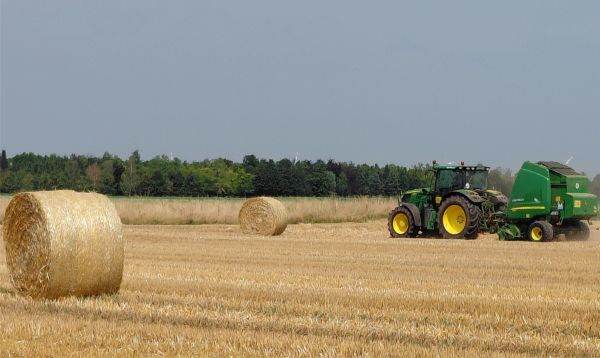
Romanian citizens who chose to work on European farms are victims of abuses in terms of labor relations by employers abroad, according to an investigation published yesterday by
the German website Tagesschau (the site of the ARD news television), which accuses the fact that although the European Union has linked agricultural subsidies to respect for workers' rights, the respective mechanism does not work, being more of a fiction bureaucratic, it is shown in a published article.
According to the cited source, although farms are controlled, inspectors discover thousands of violations of employee rights, seasonal workers - among them many Romanians - complain about endless working days, reduced salaries and unsanitary accommodation, European money continues to reach beneficiaries almost unhindered. Moreover, ARD journalists presented an investigation in the Report Mainz program that found 4,993 violations of labor protection standards, following 2,536 controls carried out in the agricultural sector in Germany since 2025. However, only one farm of those that seriously violated labor legislation no longer received the corresponding European subsidy.
German journalists report that in a strawberry pickers' accommodation facility in the Stuttgart region, representatives of the Faire Arbeit Baden-Wurttemberg organization found, in early June, dirty mattresses, holed floors, windows that did not close, and faulty plumbing. Romanian workers accommodated there told German media that they worked from 5 a.m. to 9 p.m. without being paid for all their hours. One of them claimed to have suffered a heat stroke and spent ten days in hospital. The farm rejected the allegations regarding the schedule and wages, stating that hours are recorded and paid according to the law and contracts, and that the accommodation facilities are cleaned, checked, and maintained before each season. However, the company admitted that it intends to modernize the container site and that it takes complaints about deficiencies seriously.
Beyond this one-off dispute, the systemic dimension of the problem emerges from data obtained by German journalists from almost 95% of the authorities responsible for labor protection: 4,993 violations, only 51 fines and a single reduction in European subsidies. The only farm hit financially was a dairy farm in the Rostock district, where the housing conditions were described by the authorities as "desolate”. The amount recovered: approximately 6,523 euros. The report, which finds 5,000 violations and a single cut in funds, describes more than a problem of administrative efficiency; it basically shows that the European Union can simultaneously finance a farm, but also the conditions in which its employees are vulnerable, as long as information about the violation of the law does not travel the entire route between the labor inspectorate and the agency that transfers the subsidy.
"Farms that exploit their employees and gain competitive advantages through illegal practices should not be financed from public funds. It is precisely these practices that threaten the survival of fair farms," warned Christian Beck, a member of the leadership of the German IG BAU union, for the cited source.
The formula gets to the heart of the problem: illegal working conditions not only produce victims among workers, but also distort the market, because the employer who does not pay all the hours, does not provide the necessary protection and transfers the costs of unsanitary accommodation to the people artificially reduces his expenses and competes unfairly with farms that respect the law.
• The social conditionality mechanism, ineffective in the face of multiple violations of labor law
The instrument called "social conditionality" was introduced by the reform of the Common Agricultural Policy 2023-2027 and became mandatory in all member states from 1 January 2025. Essentially, a beneficiary of European agricultural payments who violates certain rules on the transparency of employment relationships, the health and safety of employees can lose part or, in serious cases, even the entire subsidy. European Regulation No. 2021/2115 links the mechanism to the requirements of directives on transparent and predictable working conditions, general health and safety obligations and the safe use of equipment. Austria, France and Italy has applied it since 2023, Germany, Luxembourg, Spain and Portugal since 2024, and from 2025 the obligation has been extended to the entire Union, according to the evaluation of agricultural policies published by the OECD.
However, the mechanism has a major flaw in its very construction: it does not sanction all major violations of labor law by reducing the subsidy. Failure to pay the minimum wage and exceeding the legal working time are not directly included in the European list of rules that trigger social conditionality, although these are precisely the focus of the numerous accusations made by seasonal workers. A farm can be sanctioned for lack of contractual information or for health and safety problems, but it does not automatically lose European money if inspectors find that people have worked excessively or have not received their minimum wage. Trade unions are therefore calling for the mechanism to be extended so that legislation on wages and working time is no longer outside the subsidy circuit.
The situation is all the more serious as European agriculture is one of the sectors with the greatest exposure to undeclared work, accidents and the exploitation of migrants. The European trade union federation EFFAT estimates that the sector employs at least 10 million salaried workers, and if day laborers are included, the figure could reach 17 million. According to the organization, 32% of agricultural work is undeclared or only partially declared, compared to around 5% in the entire European economy, and the sector records around 500 fatal accidents and 150,000 non-fatal accidents annually.
At the same time, agriculture receives a huge share of the EU budget, and the Common Agricultural Policy is designed precisely to support farmers' incomes, food security and the rural economy, according to the European Commission. The paradox is obvious: food workers remain among the most vulnerable employees in Europe, while the farms where they work benefit from one of the strongest public support systems in the Union.
• Farmers in Germany and Italy accused in EU documents of failing to comply with labour laws
Romanians are at the heart of this economic model. A 2021 European Parliament study on migrant seasonal workers described inhumane living and working conditions, threats, blackmail and violence suffered by vulnerable employees, including Romanian women recruited for Spanish agriculture. The European Parliament document shows that free movement does not automatically mean effective access to rights, as language barriers, the isolation of farms, dependence on employers for transport and accommodation and lack of knowledge of procedures prevent people from reporting abuses. An analysis of exploitation in German and northern European agriculture also shows that workers from Romania and Poland form a significant part of the migrant workforce and are therefore among the most exposed to abusive practices. The Open Society Foundations report highlights that European citizenship does not eliminate vulnerability, and research on German agriculture describes the existence of semi-formal agreements, verbal promises and dependency relationships fuelled by workers' financial insecurity. The European I-CLAIM project confirms the persistence of these mechanisms.
Italy offers the most extreme form of the same system. Illegal labour brokering, known as "caporalato”, recruitment through informal networks, withholding of transport and accommodation fees, payment below contractual levels and makeshift settlements near farms have been documented in many agricultural regions. Medical and social research on the Italian sector describes the exploitation of migrant workers as a well-documented phenomenon, not a succession of isolated incidents. The study published in the PMC scientific database shows that economic, health and social risks accumulate on the same people: the poorly paid employee is often also the one with precarious accommodation, unsafe transport and lacking real access to healthcare or union representation.
• The social conditionality mechanism introduced in Romania, but not transparent regarding its application
The cited source specifies that Romania, one of the main suppliers of seasonal labor for Western agriculture, has also introduced social conditionality and a system of reductions that can go as far as the full loss of payments, but has not yet published clear centralized data showing how many farms have been effectively sanctioned by reducing subsidies.
In Romania, social conditionality applies to agricultural payments starting with the 2025 application year. APIA has published an official guide on farmers' obligations, and the authorities have built the mechanism for transmitting to paying agencies violations found by labor inspectors. The Romanian system of sanctions, defined by the Order of the Minister of Agriculture no. 140/2026, starts, as a general rule, from a 3% reduction in payments. For the repetition of an unintentional non-compliance sanctioned within three years, the reduction can reach 10%, and deliberate violations attract a reduction of at least 15%. The percentages can be increased depending on the severity, extent, duration, repetition and intention, and the accumulation of deliberate non-compliances can lead to the full loss of payments.
On paper, Romania thus has a more precise system than the image offered by German practice. In reality, its efficiency depends on three successive filters: the farm must be controlled, the deviation must be identified and sanctioned according to labor legislation, and the decision must reach the APIA or AFIR and effectively produce a reduction in payment. The MADR guidelines state that paying agencies rely exclusively on checks by competent authorities, which means that the mechanism cannot detect exploitation on its own, nor does it replace the labor inspectorate. If high-risk farms are not checked, if workers do not file complaints, or if information flows poorly between institutions, social conditionality remains a harsh sanction applied to cases that never reach the system.
Romania already has serious reasons to look beyond the text of the orders. In the national campaign carried out between July 28 and August 1, 2025 to check employers who use foreign citizens, the Labor Inspectorate carried out 658 checks, detected 64 people working illegally - 40 of whom were foreign citizens -, sanctioned 144 employers, and imposed fines totaling 1.63 million lei. The data does not refer exclusively to agriculture, but it shows how quickly Romania's position on the European labor market has partially reversed: the country that sent hundreds of thousands of vulnerable workers to farms in the West now imports, in turn, employees from outside the Union, exposed to the same risks of dependence on the recruiter and employer.

















 Euro
Euro Dolar SUA
 Franc elveţian
 Liră sterlină
 Gram de aur





























