 English

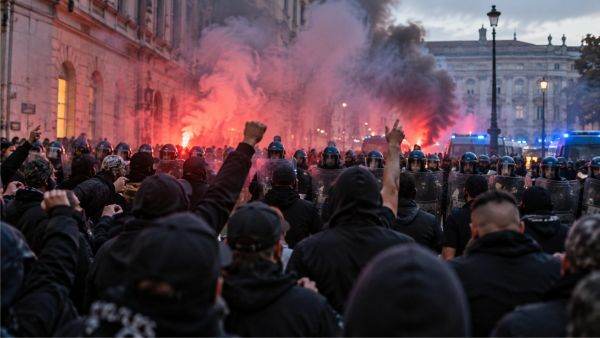
In recent years, the European public sphere has witnessed displays where racism, xenophobia, and extremist symbols have gone beyond mere propaganda - ranging from antisemitic chants by Croatian ultras and fascist salutes in Rome to anti-immigration riots in the United Kingdom and Spain. Acts of violence, intimidation, and campaigns fueled by disinformation demonstrate how hostility toward minorities can escalate from rhetoric to action.
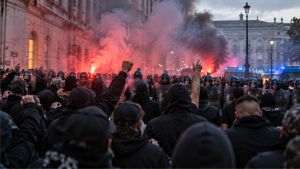
A coffin carried through the streets of a European city, songs about Auschwitz and Adolf Hitler, fascist salutes performed by hundreds in full view of the police, attacks on mosques, and hotels housing asylum seekers becoming targets for angry crowds - these are not scenes from World War II archives, but events that have taken place in present-day Europe. Such incidents do not stem from a single cause, nor can they be automatically attributed to all supporters of conservative or nationalist parties. In several countries, far-right groups, networks of radicalized sports fans, and anti-immigration activists have brought messages to the streets that stigmatize individuals based on their origin, religion, or ethnic identity. A recent episode - which occurred last week in Split, Croatia, ahead of a football match between Hajduk and Ajax - brings this reality back into focus: the history of fascism and the Holocaust is being repurposed as a tool for intimidation and public spectacle.
• Split: Auschwitz, Hitler, and a Coffin Bearing the Name "Ajax"
Ahead of the Conference League match between Hajduk Split and Ajax Amsterdam on October 15, 2026, members of the "Torcida" supporters' group organized a march. According to the Croatian outlet HRT, the event featured antisemitic chants, praise for Adolf Hitler, and references to Auschwitz. Supporters also shouted violent calls against Jewish people and sang lyrics that glorified Nazi atrocities. During the march, participants carried a coffin inscribed with the name "Ajax" - a reenactment of a similar gesture from 1995, when the two teams met in the Champions League. A report by the Croatian public broadcaster HRT on October 15 confirms the antisemitic nature of the demonstration, noting chants that praised the Usta¹e - a Croatian fascist movement allied with Nazi Germany during the Second World War. The Split police have announced the launch of a criminal investigation to establish the facts and identify those responsible, according to a statement cited by sports media. This incident carries significance that extends well beyond the realm of football rivalry. When symbols of the Holocaust are used to humiliate opponents, antisemitism ceases to be merely a stadium provocation and instead becomes a form of public normalization of hatred. This case should not be misconstrued as a collective accusation against the Hajduk club or the Croatian population; responsibility for such actions lies solely with those who organize and support them. Nevertheless, the fact that these events occur in the context of an international sporting occasion turns them into a security and reputational issue for European football as a whole.
• Rome: Hundreds of Fascist Salutes in the Middle of the Street
In early January 2024, a demonstration held in Rome to commemorate three young neo-fascists killed in 1978 sparked outrage in Italy. Footage published by the press shows hundreds of participants standing in formation, their right arms raised in the salute associated with fascism, responding to roll calls with the cry, "Present!" According to the Associated Press and Reuters, the demonstration took place near the former headquarters of the Italian Social Movement (MSI) - a post-war, far-right political group from which part of the political lineage of the current "Brothers of Italy" party, led by Prime Minister Giorgia Meloni, is derived. The Italian opposition has demanded an explanation from the government as to why the demonstration proceeded without police intervention, given that post-war legislation prohibits certain forms of glorifying fascism. Authorities subsequently opened an investigation, according to AP reports from January 8, 2024. The event carries particular significance in a country where the memory of Benito Mussolini's dictatorship remains a sensitive political issue. Meloni has publicly distanced herself from the dictatorship, and her party rejects being characterized as fascist. However, these stances do not alter the nature of the gestures captured at the demonstration, nor do they resolve questions regarding the enforcement of the law. In this context, the fascist salute is not merely a nostalgic gesture; it evokes an authoritarian regime responsible for political repression, war, and the persecution of Jews. Its reappearance in the public sphere, in the form of a collective demonstration, shows that the symbols of extremist regimes can be reactivated as signs of political affiliation and defiance.
• Great Britain: the disinformation that fueled anti-immigration riots
In the summer of 2024, Great Britain was shaken by violent riots following the killing of three young girls in a knife attack in Southport. In the hours and days after the attack, false information spread on social media claiming that the suspect was a Muslim asylum seeker. Reuters reported in early August that anti-immigration demonstrations escalated into attacks on mosques and hotels housing asylum seekers. In several cities, protesters clashed with police, set buildings on fire, and caused destruction. False information regarding the suspect's identity fueled public anger, even though he was born in Wales to parents originally from Rwanda. Authorities warned that online disinformation contributed to the escalation of violence. According to Reuters, the British government called on social media platforms to fulfill their legal obligations regarding incitement to violence, while the police made hundreds of arrests in the wake of the unrest. The British case illustrates how a real crime can become a pretext for attacking a broader community, particularly when unverified information is presented as fact and disseminated by individuals seeking to mobilize anger against migrants. Not everyone who criticizes immigration policies belongs to the far right, and the debate over border control is legitimate in a democracy. However, attacks on people who had no connection to the crime - targeted solely because they were Muslim or foreign - represent a clear shift from political disagreement to xenophobic violence.
• Germany: Mass Deportation Discussed in Far-Right Circles
In Germany, a major controversy regarding the radicalization of political discourse erupted in January 2024, following revelations by the investigative outlet „Correctiv” about a meeting held in November 2023 near Potsdam. The gathering was attended by members of the Alternative for Germany (AfD) party, far-right activists, and other individuals from conservative circles. According to the „Correctiv” investigation, participants discussed a "remigration" plan that included the expulsion of migrants, asylum seekers, and German citizens of foreign origin deemed insufficiently integrated. The term "remigration" is used in various contexts, including debates concerning the voluntary return of migrants. In the case of the Potsdam meeting, the controversy stemmed from the proposal for mass deportations and the inclusion of German citizens of foreign origin in the discussion. According to „The Guardian”, these revelations triggered large-scale protests against the far-right, drawing tens of thousands of participants across several German cities. The publication reported that approximately 30,000 people attended a demonstration in Cologne on January 16, 2024. The German case was not an episode of street violence comparable to the riots in Great Britain, but it did reveal another dimension of radicalization: the possibility that ideas of ethnic exclusion-previously promoted primarily within extremist circles -could enter discussions involving representatives of a parliamentary party. There is a fundamental difference between a restrictive immigration policy and a project that calls into question the belonging of certain citizens to their own country. The former is a matter of public policy choice; the latter concerns criteria for belonging that may conflict with the principle of equality before the law.
• Spain: Anti-immigration violence in Torre Pacheco
In July 2025, the town of Torre Pacheco in the Murcia region of southeastern Spain became the scene of confrontations between local groups and individuals of North African origin. Tensions flared following an assault on an elderly man -an incident that triggered anti-immigration mobilizations and the spread of hostile messages on social media. Far-right groups amplified the outrage, while information and images shared online helped fuel the conflict.
According to ACLED, an organization that monitors conflicts and political events, the following days saw attacks on individuals of migrant background, the destruction of vehicles, and clashes between rival groups. In the San Antonio neighborhood, home to a significant immigrant community, violent confrontations with the police were reported. ACLED also noted that messages from far-right users and local and regional politicians contributed to heightening tensions.
• Poland: Anti-immigration marches in over 80 cities
On July 19, 2025, anti-immigration demonstrations took place in more than 80 cities across Poland, including Warsaw, Krakow, Poznañ, and Wroc³aw. According to the Associated Press, the protests were organized by the nationalist party Confederation of Liberty and Independence, and participants called for the closure of borders with Lithuania, Ukraine, Belarus, and Slovakia. In May Counter-demonstrations also took place in many locations.
The mobilization occurred within a tense political climate, in which immigration and border security had become central themes of public debate. According to ACLED, a series of criminal incidents involving suspects of non-Polish origin fueled anti-immigration protests during the summer of that year.
Not every demonstration against immigration is racist or extremist. Demands regarding border control, law enforcement, and the state's capacity to integrate newcomers are part of democratic debate. The problem arises when discourse on public policy shifts into hostility toward individuals based on their origin, or when isolated incidents are used to justify collective stigmatization. In Poland, the geographical scope of the demonstrations showed that the issue of immigration can rapidly mobilize significant segments of the population.
• France: Threats and intimidation against elected officials who support refugees
In France, hostility toward migrants has also manifested through the intimidation of local elected officials who supported projects to host refugees. In February 2024, the Associated Press reported on the case of the mayor of Saint-Brevin-les-Pins, who resigned following months of threats related to a plan to relocate a refugee center near a school. His home and two of his cars had been set on fire. In the town of Callac, another mayor abandoned a project to host refugee families after becoming the target of threats and an intimidation campaign. According to the AP, those who opposed the project included far-right activists, among them individuals associated with the „Reconquête” movement.
These cases demonstrate that xenophobic pressure is not directed solely at migrants; it can also target local government officials, humanitarian organizations, or citizens who support integration initiatives.
When threats and violence compel an elected official to abandon a project or leave their town, the impact extends beyond personal harm. It undermines the ability of institutions to make decisions in a secure environment, free from the pressure of radical groups supplanting public debate.
• Football as a recruiting ground for radical groups
In some European countries, "ultras" groups have become a focal point for radical nationalism, racism, and, in certain instances, violent extremism. This does not imply that the ultras phenomenon as a whole is extremist; the majority of supporters back their teams without engaging in such behavior.
A Reuters investigation published in December 2024, focusing on supporter groups for Inter Milan and AC Milan, detailed links - currently under scrutiny by prosecutors - between leaders of certain ultras factions, organized crime, and neo-fascist circles. The investigation examined, among other issues, alleged illicit activities around the San Siro stadium, such as ticket scalping and extortion.
Reuters also reported that Italian authorities were concerned about the overlap between certain supporter groups and neo-Nazi or far-right networks. In the case in Split, Nazi symbols and antisemitic messages were brought directly onto the streets ahead of an international match. In other instances, radical groups may exploit the existing infrastructure and the sense of solidarity among supporters to consolidate their influence. Stadiums and organized away-travel arrangements provide visibility, a capacity for mobilization, and a strong collective identity. For this very reason, sports organizations and authorities are urged to treat racism and the glorification of fascism as issues distinct from the routine rivalries between teams.
• Symbolic gestures and direct violence
The episodes that occurred in Croatia, Italy, Great Britain, Germany, Spain, Poland, and France are not identical. Some involved physical violence, arson, and attacks on individuals; others consisted of the public glorification of fascism or the promotion of agendas centered on ethnic exclusion. In each case, the context and the question of responsibility must be determined based on documented facts.
Nevertheless, there are several common elements: the use of national identity to define who legitimately belongs to a community, the scapegoating of migrants or minorities, and the invocation of historical symbols associated with authoritarianism and persecution. Furthermore, social media can accelerate the transition from mere messaging to active mobilization.
Nationalism, conservatism, and criticism of immigration are not, by definition, synonymous with fascism or racism. In a democracy, citizens are free to debate issues such as border control, integration, security, and social policy without being automatically accused of extremism. The difference is evident in the content and consequences of the actions. When a political opponent is transformed into an ethnic enemy, when Jews are associated with Auschwitz in stadium chants - When an entire community is attacked because of the actions of an individual, or when the symbols of a dictatorship are collectively glorified, the issue goes beyond mere political preference. Europe possesses institutions, laws, and judicial mechanisms designed to protect fundamental rights. Their effectiveness, however, depends on the consistent application of these norms, the thorough investigation of incidents, and a refusal to dismiss racist intimidation as nothing more than an expression of collective temperament. The true test for European societies is whether such acts remain isolated and subject to sanction, or whether they come to be tolerated, emulated, and transformed into tools of political pressure.




















 Euro
Euro Dolar SUA
 Franc elveţian
 Liră sterlină
 Gram de aur































Reader's Opinion