 English


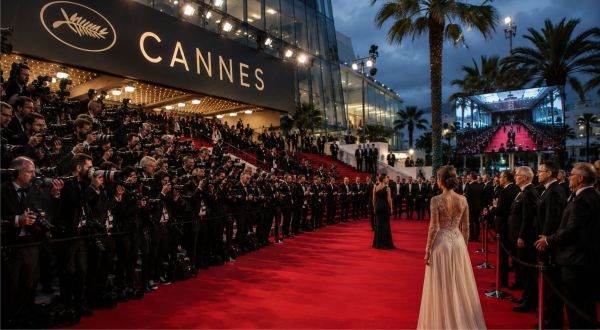
The Cannes Film Festival debuted yesterday without the usual pomp of the great American blockbusters. After a decade in which titles such as Star Wars, Indiana Jones or Top Gun brought stars and spectacular premieres to the Croisette, the 2026 edition is notable for the total absence of Hollywood blockbusters. The most prestigious film festival in the world, however, remains true to its vocation: that of highlighting auteur cinema and independent productions, even if the red carpet will be devoid of major releases from major American studios this year, AFP reports.
• American studios choose caution
The festival's general delegate, Thierry Fremaux, who has made promoting American films one of his priorities since taking office 25 years ago, explained that this year's selection reflects changes in the film industry. "Beyond studio cinema, there is still an independent cinema, a cinema beyond Los Angeles," he said when presenting the program. Two American independent productions are in the official competition: Paper Tiger, directed by James Gray and starring Adam Driver and Scarlett Johansson, and The Man I Love, signed by Ira Sachs and starring Rami Malek. In contrast, major studios such as Universal Pictures, The Walt Disney Company, Warner Bros, Sony Pictures and Paramount Pictures are not presenting any new films at this edition.
• Early criticism and commercial risks scare Hollywood
Industry experts explain this withdrawal by a growing aversion to risk. In the context of huge budgets and a difficult film market, studios prefer to strictly control the time and conditions in which new productions are presented. Berlinale director Tricia Tuttle noted in January that studios fear the reactions of critics many months before the official release. The most frequently cited example is Joker: Folie à Deux, which received a cold reception at the Venice Film Festival and was followed by a disappointing run at the box office, AFP also states. Critic J. Sperling Reich believes that studios are producing fewer and fewer films suitable for the demanding atmosphere of Cannes. If a blockbuster does not impress on the Croisette, the negative impact can affect the entire promotional campaign.
• Promotion on social networks, instead of the red carpet
Instead of taking on the risks of a European festival, studios prefer their own events, carefully controlled and supported by influencers and social platforms. Productions like Michael and The Devil Wears Prada 2 have chosen this strategy, relying on carefully orchestrated promotional campaigns. However, box-office specialist Éric Marti believes that the absence of blockbusters in 2026 does not signal a definitive break between Hollywood and Cannes. The relationship between the two worlds depends, to a large extent, on the synchronization of release calendars.
Even if it does not bring world premieres, Hollywood maintains a symbolic presence at the festival. A special screening dedicated to the Fast & Furious franchise is scheduled today, marking 25 years since the launch of the series produced by Universal. Vin Diesel, Michelle Rodriguez and Jordana Brewster are expected at the event. In other words, in 2026, the Croisette will not vibrate to the sound of explosions and special effects, but to the echo of a more discreet cinema. And if Hollywood has chosen to stay away, Cannes seems to convey that, sometimes, the greatest spectacle is the absence of spectacle.
• Festival director rejects "Quota Policy"
Cannes Film Festival Director Thierry Fremaux said that the selection of films is not based on gender quotas, but exclusively on the artistic value of the productions. The reaction comes in the context of criticism from the Collectif 50/50 collective, which promotes a more balanced representation of women in cinema, according to AFP. In this year's official competition, five of the 22 films are signed by female directors.
In a press conference, Thierry Fremaux rejected the idea that the choice of the official poster for the 2026 edition - inspired by the film Thelma & Louise - would represent an attempt to "whitewash feminism." The film, directed by Ridley Scott and starring Geena Davis and Susan Sarandon, has become a symbol of female independence over time. "I didn't choose this film to create a feminist image at a low price,” Fremaux said. He stressed that the agreement signed in 2018 between the festival and Collectif 50/50 does not require parity in the selection of films, but only in the composition of juries and management structures.
• More female directors, but no "normal” selection
Thierry Fremaux explained that when two films are considered of comparable value, one directed by a man and the other by a woman, preference can go to female directors. However, this practice does not amount, in his opinion, to a quota system. Data for the 2026 edition shows a significant increase in female presence: 34% of the features in the official selection and parallel sections are directed by women, compared to 26% in 2025; the proportion rises to 38% in the case of short films. "We are seeing more and more female directors in young cinema, and this is starting to be reflected in the competition,” said the festival director.
• Thierry Fremaux: "We need a more feminine cinema”
Fremaux acknowledged that progress is slow and insufficient, but believes that diversifying creative voices is essential for the evolution of cinema. "We need a more feminine cinema, so that female sensibilities and perspectives are more present, just as they are in literature or music,” he said, adding that the world of film should not be dominated exclusively by "westerns.” In his opinion, the debate on gender equality must be waged at the level of the entire industry, including in terms of admission to film schools and the granting of financing for scripts.
• Cannes, between artistic merit and pressure for representation
Thierry Fremaux's statements reflect the increasingly visible tension between two principles: selection solely on artistic criteria and the demand for more balanced representation in the industry. Although the festival director rejects the idea of an administratively imposed parity, the figures show that the presence of female directors at Cannes is steadily increasing. Paradoxically, precisely without officially adopting a "quota policy,” the festival seems to be gradually moving towards a greater balance between male and female voices.























 Euro
Euro Dolar SUA
 Franc elveţian
 Liră sterlină
 Gram de aur





























