 English

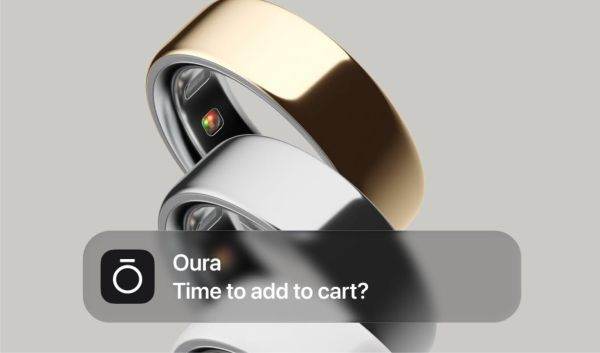
Oura Inc., the Finnish company that created the ring-shaped health monitoring device worn by millions of people around the world, filed a registration statement with the U.S. Securities and Exchange Commission (SEC) late last week for a proposed initial public offering (IPO) on the Nasdaq Global Select market under the ticker symbol "OURA,” according to siliconangle.com.
The number of shares to be sold and the price range were not set, and Bloomberg reported in August that the company was working on raising up to $3 billion.
SEC filings show Oura had revenue of $1.21 billion in the nine months ended June 30, up 74% from the same period in 2025, and net income of $60.8 million, up from $1.6 million a year earlier.
Early investors cashed in along the way, selling $1.09 billion worth of preferred stock back to Oura and retiring about 17% of the shares issued between the initial investment round and the Series C-1. Because this buyback is treated as a deemed dividend in accounting, the loss attributable to common shareholders was $924.3 million.
Membership revenue was $240.5 million in the nine months, up 121% from the previous year, on a gross margin of 89%. Paying members doubled to 5 million, the source said. Ring sales accounted for most of the rest, $974 million of the 3.1 million rings shipped.
Revenue in fiscal 2025 more than doubled to $907.9 million from $406.8 million. Net profit was $12,000. Defective batteries used in some Oura Ring 4 devices drove warranty expenses to $84.4 million in the same 12 months.
Goldman Sachs is leading the underwriters' syndicate in Oura's IPO, and Morgan Stanley, JPMorgan, Allen & Co. and Jefferies are also serving as joint lead managers for the public offering.
Oura started out in Finland before registering in Delaware in March and moving its headquarters to San Francisco. Before going public, Oura had raised more than $1.2 billion in private funding, including a $900 million-plus round that valued the company at about $11 billion, led by Fidelity Management & Research Co. last October. Most of the money was returned to original shareholders as part of the buyback.
Oura has become a household name in the fast-growing smart ring category, competing with smartwatch giants like Apple, Garmin and Samsung while carving out a niche for itself with a distinct piece of hardware that some consumers find less intrusive, according to euronews.com. Over the past two years, the company has aggressively expanded into software, subscriptions and AI-powered health analytics. Its wearable platform now focuses on long-term health signals, including sleep, heart rate, stress and recovery.
Analysts believe the transition from a device maker to a subscription-based health platform is essential for the IPO, with the company reaching 5 million paying members.
The Oura Ring 5 went on sale in May at $399, 40% less than the model it replaced.
























 Euro
Euro Dolar SUA
 Franc elveţian
 Liră sterlină
 Gram de aur





























