English
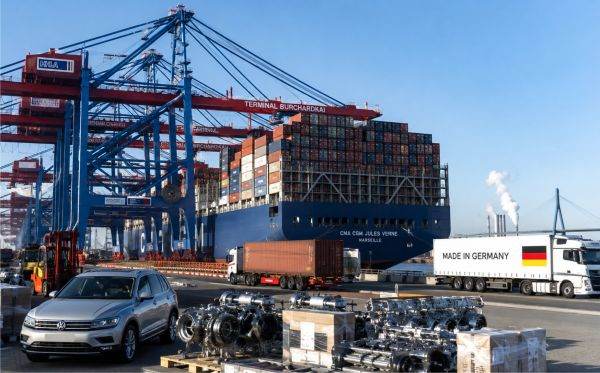
German authorities have revised upwards the figures for the evolution of the Gross Domestic Product (GDP) in the second quarter, mainly due to an increase in exports, an evolution that defied the energy crisis triggered by the war in the Middle East, AFP reports, according to Agerpres.
In the period April-June 2026, Germany's Gross Domestic Product increased by 0.3% compared to the previous quarter, according to the final figures published yesterday by the Federal Statistical Office (Destatis), a slightly better performance than the advance of 0.2% announced in the preliminary estimate, published at the end of July.
"The growth momentum of the German economy observed at the beginning of the year continues," said the president of the Federal Statistical Office, Ruth Brand.
Thus, Europe's largest economy seems to have absorbed the energy shock caused by the conflict between Iran and the United States and the closure of the Strait of Hormuz, crucial for hydrocarbon trade, better than expected. However, the second quarter ended before the resumption of hostilities in the Middle East in July, which relaunched energy price volatility and uncertainty.
As with the economic growth in the first quarter (0.4%), this advance in German GDP in the April-June period is "mainly explained by the strong performance of exports", especially after the upward revision of the figures for June. Turnover in wholesale and retail trade also contributed to the positive revision of GDP, notes the Destatis press release.
• Plus 3.7% for exports, at an annual rate
Compared to the first quarter, exports of goods and services increased by 2%. Compared to the previous year, the indicator rose by 3.7%. This pillar of the German economic model, shaken by US tariffs and fierce competition from China, is recovering after a disastrous year in 2025. Trade in goods with the EU has grown particularly strongly in the past year, especially in the fields of chemicals, data processing equipment, electrical and optical products and vehicles, the press release said.
At the same time, imports increased by 2.5%, especially in the sectors mentioned.
The period from April to June 2026 was the third consecutive quarter of growth for the German economy. However, the country's economic performance in the second quarter was below the eurozone average, which recorded quarterly growth of 0.5%.





















 Euro
Euro Dolar SUA
 Franc elveţian
 Liră sterlină
 Gram de aur