English

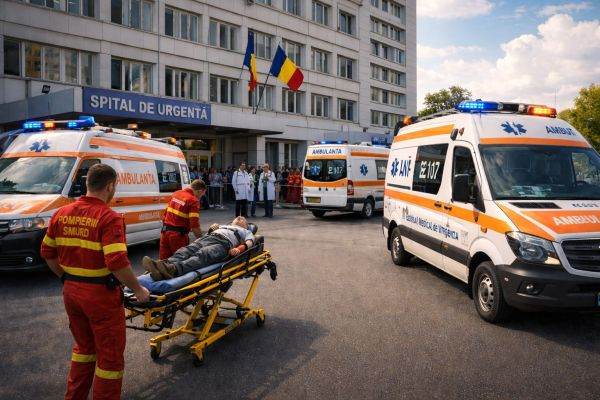
Public hospitals and ambulance services will not be affected by the 10% reduction in personnel costs provided for in the administration reform, announced the Minister of Health, Alexandru Rogobete, after the adoption of an emergency ordinance by the Romanian Government. The decision comes in the context of a broader package of budgetary efficiency measures and institutional reorganization, aimed at reducing costs in the public sector.
• A linear cut would have generated a crisis
According to the Minister of Health, the mechanical application of a personnel reduction in the medical field could have had serious effects on the functioning of the system. "The health system has its own peculiarities. A linear, accounting reduction of 10% in personnel expenses would not have helped the development of the system. On the contrary, it could have generated destabilization and a serious crisis in an area already in maximum demand," Rogobete said in a public post. He stressed that exempting medical units "protects the stability of the system and the safety of patients." In addition to public hospitals and ambulance services, the ministry decided that other essential structures would be excluded from the calculation of the cuts: forensic medicine institutes, blood transfusion centers, and the National Transplant Agency. The minister specified that the internal reorganization and efficiency measures applied in 2025 allow achieving the cost-cutting objectives without affecting these institutions.
• Continuing reform: performance criteria for the system
Exemption from cuts does not mean giving up on reform, according to health officials. The Ministry is working on a normative act that will introduce performance criteria for medical units and personnel, and consultations with the actors in the system are to begin in the immediate future. Discussions will be organized with: health unions, professional societies, the Romanian College of Physicians. Prime Minister Ilie Bolojan confirmed that the Executive has adopted two emergency ordinances: public administration reform, measures for economic recovery. These include budget spending cuts, institutional reorganizations and fiscal efficiency measures.
• The stakes of the decision: avoiding blockages in the medical system
Public policy specialists point out that the healthcare sector is one of the most vulnerable to staff reductions, due to: the chronic shortage of medical staff, the high volume of patients, the financial pressure on the system.
In this context, the health exemption is interpreted as a strategic protection measure, designed to avoid major dysfunctions.

























 Euro
Euro Dolar SUA
 Franc elveţian
 Liră sterlină
 Gram de aur