English

We urgently need investments in energy production, storage capacities, networks and building renovation, given that the price of electricity remains very high and the existing infrastructure cannot support all planned projects, said yesterday the participants in the conference dedicated to energy efficiency organized by the Romanian-German Chamber of Commerce - AHK Romania, which was attended by representatives of the authorities and the business environment.
Sebastian Metz, general manager of AHK Romania, drew attention to the fact that energy efficiency does not yet receive sufficient attention in our country, although the increase in bills makes it necessary to intensify information campaigns and train a larger number of specialists. He warned that the objectives regarding the renovation of buildings will not be achieved without experts and companies with adequate technical training.
"We can all discuss how we should increase energy efficiency in the existing building stock, but without the availability - in terms of quantity and quality - of experts, the objective will not be achieved. We really need to focus on creating the availability of experts, companies and technical specialists in Romania,” stressed Sebastian Merz.
The AHK representative believes that the development of the sector requires the involvement of both the economic environment and the authorities, including through support schemes for vocational training. "Most of the activities related to energy efficiency are very technical. It is something that we need to take more care of, both from the economic and political sectors, perhaps through support schemes, to create the expertise we need,” he said.
• Cristian Buşoi: "Hydro storage is part of the projects that the Ministry of Energy will implement”
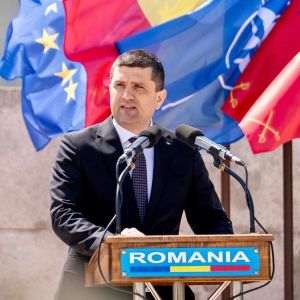
For his part, the Secretary of State in the Ministry of Energy, Cristian Buşoi, announced that Romania aims to install 10 Gigawatts (GW) of solar and wind capacity by the end of the decade. In the coming weeks and months, the authorities' attention will turn to energy storage, mainly in batteries, but also to hydro storage capacities.
"The direction is very clear: we are moving towards Net Zero, towards the Green Deal objectives. We have intermediate targets for 2030, and an important pillar of this transformation of the energy system, industry, transport and society is energy efficiency,” said Buşoi.
Cristian Buşoi also presented two financing programs for energy efficiency. The first, carried out through the National Recovery and Resilience Plan, included 40 projects for investments in equipment, totaling 64 million euros, including co-financing. The Ministry of Energy is now preparing a 150 million euro scheme, financed from the Modernization Fund and intended for companies included in the European Emissions Trading System - EU ETS.
In the field of renewable energy, the Ministry of Energy has carried out a program of over 200 million euros through the PNRR, through which 30 projects were co-financed. Buşoi also mentioned the Contracts for Difference scheme, with a value of over three billion euros for the next 15 years, which offers investors in renewables a guaranteed strike price.
According to the Secretary of State, Romania has committed over 10 billion euros in various energy programs, but only has a little over two billion euros left from the Modernization Fund. The last calls for projects should be launched in 2028 at the latest, so that investments can be completed by 2030.
"We will focus in the coming weeks and months on storage, mainly on batteries, but not only. Hydro storage is also part of the projects that the Ministry of Energy will implement in the coming months and years,” said Cristian Buşoi.
• Volker Raffel: "Romania has the highest electricity price in all of Europe”
The General Manager of E.ON Romania, Volker Raffel, who is also the President of the Board of Directors of AHK Romania, claimed that our country has, in terms of purchasing power, the highest electricity price in Europe, although its resources offer it the potential to be among the countries with the lowest prices in the region.
"Romania, although it currently has the best potential to be the country with the lowest energy price, unfortunately has the highest electricity price in all of Europe,” said Raffel Volker.
According to him, households in Romania pay a total price of approximately 30 eurocents/kWh, compared to 38-39 eurocents/kWh in Germany. The nominal difference is, however, offset by the much lower purchasing power of in Romania.
Volker Raffel indicated as priorities photovoltaic capacities, energy storage, building efficiency and increased electricity production. Nuclear energy can contribute in the long term, but it cannot solve the immediate problems of the market, said the head of E.On Romania
"The right investments mean photovoltaics, and storage, and buildings, and more production, maybe one day in nuclear, but this is a very long-term objective. At the very least, the gas-fired power plants under construction must be put into operation,” said Volker Raffel.
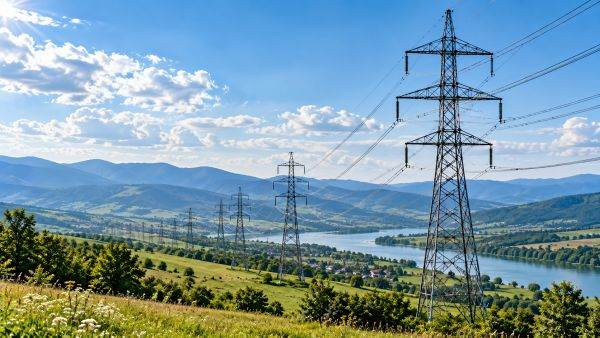
He warned that the transmission and distribution networks are starting to become a problem for the development of the economy, given that the infrastructure must simultaneously take on new production capacities, storage systems, data centers, electric car stations and a growing number of prosumers. Therefore, the main investments must be made in the development of networks.
In the field of natural gas, the E.ON director estimates that Romania could end up producing twice as much as its domestic consumption after the Neptun Deep project comes on stream. "Next year, most likely, Neptun Deep will go into production and then Romania's gas production will double its local needs, so the country will start exporting and, hopefully, using some of the gas for more economic activity in Romania,” he said.
However, Raffel also pointed out the imbalance created by the current regulatory scheme. According to him, gas is traded on the European market at around 70 euros/MWh, while suppliers deliver it to Romanian households at 24 euros/MWh. The current scheme is scheduled to expire in March 2027.
• Mayors forced to digitize general urban plans
For her part, Maria Orsolya Kover, Secretary of State in the Ministry of Development, Public Works and Administration, showed that network limitations have forced Romania to substantially reduce the target for electric mobility infrastructure. The objective set by the PNRR has dropped from approximately 16,000 to only 5,000 charging points.
"There is a huge discrepancy between what we want to do and what we can do,” said the representative of the Ministry of Development.
She announced that the new European directive on energy efficiency has been translated and transposed at a technical level, but the necessary regulatory acts must be approved. The ministry is also working on the new Urban Planning and Construction Code, which should bring major changes and extensive digitization of procedures.
Several hundred master plans have already received funding for digitization. An IT module, scheduled for completion by the end of 2027, would allow local authorities to issue urban planning certificates, building permits and permits digitally.
The ministry is also developing the National Building Register, which should become the single official database for real estate in Romania. Local authorities will have seven years to digitize master plans, and those that fail to meet the deadline will no longer be able to apply for funding.
Kover acknowledged that Romania currently does not have sufficiently accurate data to substantiate energy renovation programs. Estimates made in collaboration with the World Bank indicate the need to renovate approximately 50 million square meters of buildings, which would require investments of approximately 22 billion euros by 2035 or, at the latest, by 2050.
"This is impossible. We have renovated only approximately five million square meters through PNRR financing and received 2.2 billion euros for this,” said the Secretary of State. According to her, the realistic range in which Romania can act is between two and five billion euros.
The official stressed that the state cannot finance the entire process alone and needs the involvement of companies and public-private partnerships: "We need the private sector to initiate public-private partnerships and for there to be incentives on the market for this type of work, because the idea that the Romanian Government alone should make all buildings energy efficient is impossible,” warned Kover.
The common message of the participants at the AHK Romania conference was that energy and climate targets cannot be achieved by setting ambitious objectives alone. Romania simultaneously needs specialists, public and private financing, new production and storage capacities, as well as the accelerated expansion of networks, which already represent one of the main limits of the energy transition.












 Euro
Euro Dolar SUA
 Franc elveţian
 Liră sterlină
 Gram de aur