English
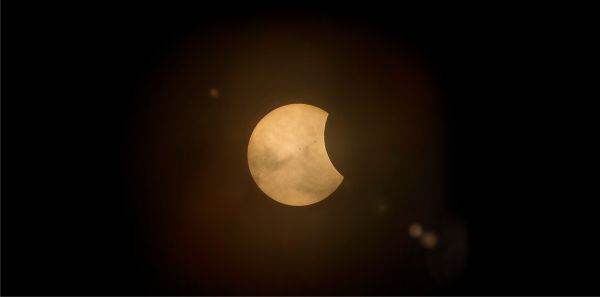
NASA will conduct a series of scientific experiments in Iceland and Spain during the total solar eclipse on August 12, using research aircraft and atmospheric balloons to collect data about the Sun and the effects of the phenomenon on the Earth's atmosphere, according to a statement from the American space agency, quoted by EFE. A team of researchers funded by NASA will follow the Moon's shadow aboard a WB-57 high-altitude research aircraft, with the aim of analyzing the dynamics of the solar corona during the totality phase of the eclipse.
• Students involved in an atmospheric research project
In parallel, as part of the Nationwide Eclipse Ballooning Project, supported by NASA, students from several American universities will launch scientific balloons in Iceland and Spain before, during and after the eclipse. According to NASA, the mission aims to analyze how the temporary darkening of the sky influences the Earth's atmosphere and to collect data that will contribute to understanding the effects of this astronomical phenomenon.
• Live broadcast on NASA platforms
The American space agency will broadcast the totality phase of the eclipse live through its digital platforms. The images will be broadcast initially from Iceland, and later from Spain, as the Moon's shadow crosses the two regions. According to NASA, the total solar eclipse on August 12 will be visible in certain areas of Greenland, Iceland, northern Russia, the Atlantic Ocean, Spain and a small part of Portugal. In other regions of the Northern Hemisphere, including some areas of the United States, Canada, Europe and northwestern Africa, the phenomenon will be observed in the form of a partial solar eclipse.


























 Euro
Euro Dolar SUA
 Franc elveţian
 Liră sterlină
 Gram de aur