English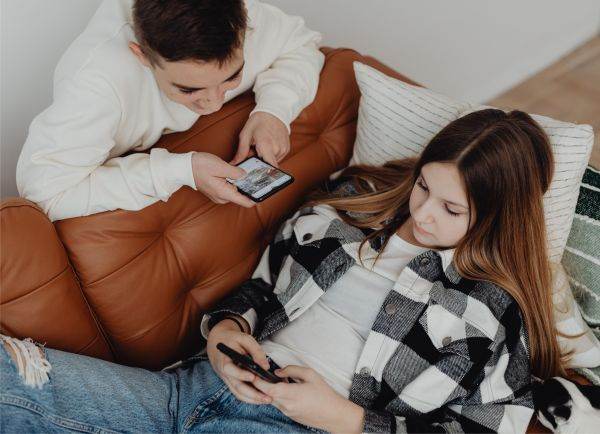
The British government plans to introduce restrictions on the use of social media at night for teenagers aged 16 and 17, as part of a wider package of measures aimed at protecting minors online. The plan includes limiting access to the main platforms between midnight and 6:00, but users will be able to disable this restriction in their account settings, according to the BBC. Under the proposal, apps such as Instagram, TikTok and YouTube will be configured by default so that they cannot be used between 00:00 and 06:00 by teenagers aged 16 and 17.
The British executive also wants features such as auto-play content and infinite scrolling to be disabled for this category of users. The authorities say the measures could help improve sleep quality, concentration at school and family relationships. "These measures will be essential to help young people get the sleep they need, focus on school and university and spend more time with family and friends,” said Technology Secretary Liz Kendall.
• Measures complement ban on under-16s
According to the BBC, the new restrictions follow the announcement in June of a ban on access to a number of social media platforms for under-16s. The government plans to introduce the bill to Parliament by the end of 2026, so that the new rules can come into force in spring next year, at the same time as the ban on under-16s. In addition, the executive proposes to introduce safeguards for the use of artificial intelligence-based chatbots, including requiring providers to introduce regular breaks for users under 18.
• Criticism of the effectiveness of the measures
The plan has been met with reservations from both the opposition and child protection organizations. The Conservative Education Secretary, Laura Trott, described the proposals as incoherent, arguing that the restrictions can be easily circumvented if users change their settings. In turn, Andy Burrows, chief executive of the Molly Rose Foundation, assessed that the measures represent "a new series of piecemeal initiatives”, instead of a comprehensive strategy on child safety in the digital environment. Professor Sonia Livingstone, a specialist in children's digital rights at the London School of Economics, warned that an automatic nighttime block could have unwanted effects for vulnerable teenagers, who use social networks to seek support or advice in difficult times.
• Government trials show benefits for sleep and family life
Before developing the proposal, the British Government tested several options for limiting access to social media among 300 teenagers. Participants had the apps either blocked completely, restricted at night or limited to one hour of daily use. According to the report published on Tuesday and cited by the BBC, nighttime restrictions had the best results, helping to improve sleep, increase family time and reduce the pressure felt by parents. However, Professor Pete Etchells, from Bath Spa University, warned that the study was small and that the results should be interpreted with caution. The BBC notes that the project follows the model adopted by Australia, where social media is banned for minors under 16. However, the Australian experience has shown that many teenagers continued to access the platforms, including by using virtual private networks (VPNs). The British government says there is not yet enough evidence to suggest that VPNs are being widely used by children to avoid age verification, according to a government-commissioned study, but the issue remains a key point of debate over the effectiveness of future restrictions.

























 Euro
Euro Dolar SUA
 Franc elveţian
 Liră sterlină
 Gram de aur