 English


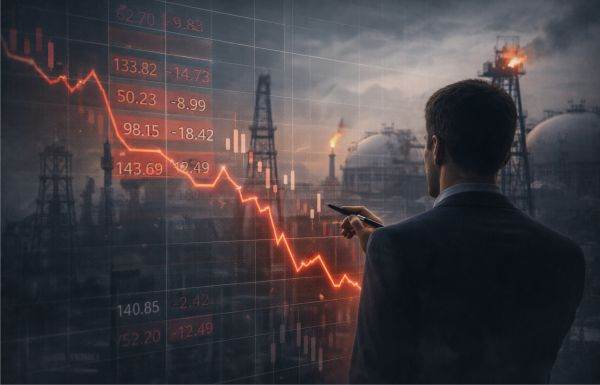
Oil and gas prices rose sharply on foreign markets yesterday, while stock indices fell after an Iranian official said his country would "set fire" to anyone trying to pass through the Strait of Hormuz sea route. Ebrahim Jabbari, an adviser to the commander-in-chief of Iran's Islamic Revolutionary Guard Corps (IRGC), told state television, according to the BBC: "The ships should not come to this region. They will definitely face a serious response from us."
As the conflict between Iran and the US - Israel continued yesterday, the futures quotation of the American West Texas Intermediate (WTI) crude oil for delivery in April was at 77.78 dollars a barrel on Nymex New York, at 09.20 local time, up 9.2% compared to the Monday session, and that of the European Brent crude oil for delivery in May reached 84.74 dollars/barrel, up 9%.
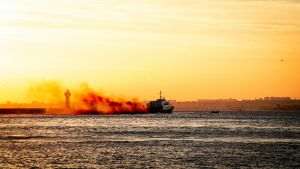
Maritime transport through the Strait of Hormuz is crucial to the global economy, with about 20% of the world's oil and gas passing through this waterway. But, it has stopped after several ships were attacked in recent days.
In addition to increasing prices on global energy markets, the conflict has triggered an increase in the cost of transporting oil. The cost of hiring a supertanker to transport oil from the Middle East to China hit a record high of more than $400,000 (£298,300) a day on Monday, almost double the cost last week, according to London Stock Exchange Group data.
Investors are weighing the impact of the conflict on the global economy, including what it could mean for inflation and interest rates. There are fears that the price hike could have a similar impact to that of Russia's full-scale invasion of Ukraine four years ago, which sent energy prices soaring, pushing up prices for businesses and consumers around the world.
If inflation picks up, it could make central banks less willing to cut interest rates in the coming months.
• Gas prices in Europe - at the highest level in 2023
Reference gas prices in Europe rose by 40% yesterday at noon, reaching the highest level in 2023 so far, amid uncertainties about the duration of the closure of the world's largest liquefied gas export facility, located in Qatar, and its effects on global energy supply, Bloomberg reports, according to Agerpres.
At around 12:09, at the TTF gas hub in Amsterdam, where reference prices in Europe are set, natural gas futures quotes were up by 40%, up to 62.10 euros per Megawatt-hour (MWh). Tuesday was the second consecutive day of increases in gas futures after China, the world's largest importer of liquefied natural gas, urged all parties involved in the Iran conflict to allow ships to pass safely through the Strait of Hormuz. According to Bloomberg, executives from Chinese gas companies revealed that Beijing is pressuring Iranian officials to avoid actions that would disrupt gas exports from Qatar.
The Ras Laffan facility in Qatar, which is responsible for a fifth of the world's liquefied natural gas supply, was shut down on Monday after an Iranian drone attack. On Tuesday, production was also halted in some downstream segments. Even before these decisions, the escalation of the Middle East war had effectively closed the Strait of Hormuz, a key export route for Qatar.
In total, since the close of trading on Friday, European gas prices have risen by about 90%, a volatility not seen since the 2022 energy crisis. Europe is entering the last period of winter with depleted gas storage facilities and will have to compete with other buyers to replenish stocks before the upcoming season.
However, despite the increases in recent days, reference prices are still far from the records reached during the energy crisis, when they exceeded 300 euros per megawatt-hour.
However, despite the increases in recent days, benchmark prices are still far from the highs reached during the energy crisis, when they exceeded 300 euros per megawatt-hour.
"We expect substantial price volatility in the coming days as market participants assess the impact of production losses on their supply portfolios,” said Ross Wyeno, director at S&P Global Energy, adding: "The buyers who will be the most aggressive in short-term spot purchases are likely to be those in Asia-Pacific markets.”
Goldman Sachs Group analysts raised their forecast for gas prices in Europe in April 2026 from 36 euros to 55 euros per megawatt-hour. Since most of Qatar's liquefied gas goes to Asia, analysts expect Asian spot prices to rise in line with European prices.
• Stock indices in decline
In the UK, the FTSE 100 stock index fell by 2.8% yesterday, around 2:00 p.m. local time, in France, the CAC 40 - by 3.1% at 2:43 p.m. local time, and in Germany, the DAX - by 3.8%. The FTSE MIB of the Italian market depreciated by 4.3% around 3:00 p.m., the Ibex 35 of the Spanish one, by 4.7%, the STOXX Europe 600, by more than 3%.
In the US, the S&P 500 fell by 1.6% at the opening of the session, at 9:40 a.m., the Dow Jones Industrial Average - by 1.9%, the Nasdaq Composite - by 1.7%.
In Asia, the Japanese stock market index, Nikkei 225, lost 3.1%, the Hang Seng of the Hong Kong market - 1.1%, the S&P/ASX 200 of the Australian one - 1.3%.
Investors in the stock markets were analyzing yesterday the impact of an increasingly acute conflict in the Middle East on inflation and global trade.
Pedro del Pozo, director of financial investments at Mutualidad, warned, according to EFE, that "as long as the Strait of Hormuz remains effectively closed, the pressure on the markets will continue. (...) In the current international financial context, one of the main fears of the market is a return to the forefront of inflationary pressures. Or more precisely, that central banks will not be able to act appropriately if these pressures reappear".
• Bond markets gripped by inflation fears
Government bond markets from the euro zone to the United States and Britain fell sharply yesterday as the Middle East war pushed up oil and gas prices and reignited inflation fears, Reuters reported.
Sustained higher inflation could force central banks to become more dovish, with traders cutting their bets on near-term interest rate cuts by the Bank of England and the Federal Reserve (Fed) and seeing little chance of a rate hike by the European Central Bank (ECB) before the end of the year.
ECB chief economist Philip Lane told the Financial Times that a prolonged war in the Middle East could cause a substantial rise in inflation in the euro zone and reduce economic growth.
The price of interest-sensitive two-year bonds has collapsed globally, sending their yields soaring (when bond markets fall, bond yields rise). Britain's two-year bond yield rose 15 basis points to 3.79 percent, taking its advance to nearly 27 basis points on Friday. That was the biggest two-day gain in nearly a year and a half, according to Reuters.
German two-year bond yields rose 10 basis points yesterday and are up 17 basis points on Friday - the biggest gain since July - while U.S. two-year bond yields rose 6 basis points on the day.
"Investors are basically going back to the 2022 energy shock model. That's very fresh in our minds. We've seen how big and persistent the inflationary shock was,” said Rohan Khanna, chief strategist at Barclays, referring to the initial impact of Russia's full-scale invasion of Ukraine. He said the bond market moves were driven by rising energy prices, but the sell-off was exacerbated by investors having previously positioned for a decline in short-term yields on concerns about economic turmoil.
Benchmark 10-year bond yields also rose yesterday, with Britain's up 16 basis points to 4.53%, Germany's up 9 basis points to 2.80% and the US up nearly 5 basis points to 4.10%. The 30-year U.S. Treasury note rose more than 2 basis points to a yield of 4.723%.
While stock markets have entered a firm risk-off mode, the bond market has had a strange reaction, analysts say. Normally, during geopolitical conflicts, bond prices rise and yields fall as investors flock to safe assets. But now the opposite has happened, with prices falling and yields rising as investors fear the impact of energy prices on inflation, according to CNBC.
The sell-off has been most severe in the U.K., where the Bank of England is due to meet later this month to decide on monetary policy. Traders now see only a 25% chance of a rate cut in England, down from 75% on Friday.
In the US, markets do not expect the Federal Reserve to cut interest rates until September. In the case of the ECB, traders expect a small probability of a hike until the end of the year.
Eurozone inflation rose more than expected last month, reaching 1.9%.
"It is too early to estimate the economic impact of the conflict now and this will be the official line for the next ECB meeting,” said Frederik Ducrozet, head of macroeconomic research at Pictet Wealth Management, adding: "But it is also true that ECB officials need to be careful in case they face a sustained oil shock.”
Gold Market Volatility
Precious metal prices have seen massive volatility in the first two days of the week as investors reacted to the escalation of military conflicts in the Middle East. On Monday, the price of gold exceeded $5,400 per ounce after US and Israeli forces carried out joint military operations. However, the precious metal price followed a downward trend yesterday, as the appreciation of the US dollar reduced demand for metals priced in US currency.
The price of gold futures for delivery in April was $5,032.10 per ounce on the Comex New York, yesterday at 10:20 local time, down 5.3% from the previous day. The spot price was $5,058.95/ounce, down 4.9%.
• Bogdan Maioreanu, eToro Analyst: "Investors are facing one of the most uncertain geopolitical contexts in recent years”
Markets hate uncertainty, and right now investors are facing one of the most uncertain geopolitical contexts in recent years, says Bogdan Maioreanu, eToro analyst, who states: "The escalation of the Middle East conflict over the weekend has sent shockwaves across asset classes. The conflict between the US and Iran has triggered a sharp increase in oil prices and a flight of capital to safe assets, such as gold and the US dollar. Now, the critical question for traders and investors is how long this disruption will last. Although far from the conflict, the situation in the Middle East could bring some risks to the Romanian economy, which is already facing high inflation. Oil immediately became a hot topic. The price of Brent crude oil rose to over $84, with the news of the closure The Strait of Hormuz. About 20% of the world's crude oil and liquefied natural gas passes through the strait every day, and tanker traffic on the waterway has almost completely stopped. European natural gas futures prices have reached 60 euros per MWh and are also under pressure after Qatar halted production. Last Friday, before the attacks, the price was around 32 euros per MWh.”
Bogdan Maioreanu also says: "Markets are trying to determine whether what is happening is a price problem induced by a temporary geopolitical risk premium or a quantity problem due to a possible sustained disruption that could affect energy supplies. Each possibility determines how the shock is transmitted through asset classes. If global oil supplies continue despite security risks and higher insurance costs, markets will likely treat the situation as temporary. Oil prices may rise sharply, but they are unlikely to remain high for long unless inventories fall significantly. Any impact on inflation would be limited and short-lived. However, if oil supplies are severely disrupted - due to major transit delays, contract cancellations or credible security threats - the impact becomes economic, not just psychological. In that case, oil prices could quickly rise to $80-110 and remain elevated. Inflationary expectations would rise as higher costs "The high energy prices are reflected in transportation, production and consumption prices." In his opinion, there are protection mechanisms that should immediately prevent the worst-case scenario from happening. The eToro analyst explains: "The global oil market entered this conflict in a position of relative oversupply. OPEC+ announced a production increase of 220,000 barrels per day for April, and major consuming countries such as the US and China hold significant strategic reserves. Saudi Arabia also has pipeline capacity to redirect some of its exports outside the Gulf. This offers a partial solution, but these are short-term protection measures rather than long-term solutions, and if tensions persist, the upward pressure on oil prices will be directly reflected in transportation costs and, ultimately, in inflation across the global economy." Regarding our country, Bogdan Maioreanu states: "Although it is relatively far from the conflict, Romania could feel the impact of rising oil and natural gas prices in different areas of the economy: from prices at the pump to an increase in inflation due to fuel and energy prices, which are reflected in transport costs and other categories of products and services. Currently in a technical recession, Romania is vulnerable to the risk of external shocks, including energy price volatility and trade policy disruptions affecting EU export channels, which could prolong the recession phase. In its latest report, the NBR already predicts that inflation in the second quarter of this year will exceed the initial projection, the main responsible factors being base effects in the energy segment, as well as the increase in the prices of certain basic goods and foods. The current effect of the Middle East crisis could further complicate the NBR's mission to keep inflation under control."




















 Euro
Euro Dolar SUA
 Franc elveţian
 Liră sterlină
 Gram de aur





























