 English


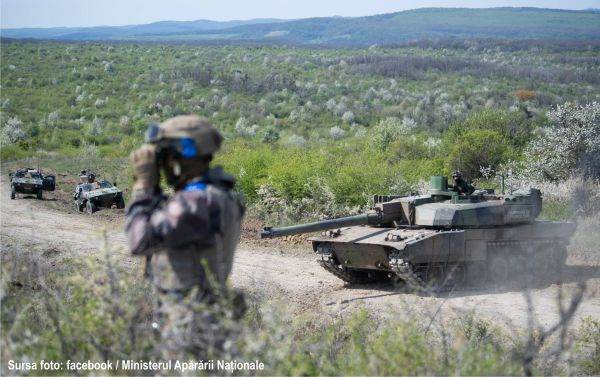
The challenge to GEO 38/2026 by the People's Advocate and the approach of the Senate Constitutionality Committee regarding the existence of a legal conflict of a constitutional nature between the Parliament and the Government risk blowing up Romania's entire allocation to the European SAFE program, at a critical moment when financing contracts must be signed by May 31, 2026, and any procedural blockage or legal suspension may compromise access to billions of euros intended for the endowment of the army and the national defense industry. The stakes are huge, because the procedure before the Constitutional Court does not have a predictable calendar, and the verdict seems, at first glance, difficult for the Bologna Government, given that the Executive did not even have a negative opinion from the Legislative Council when the emergency ordinance of May 4 was adopted, this being obtained after the fall of the Cabinet through a motion of censure, at which point the normative act could no longer be legally corrected or readopted by a dismissed government. In practice, our country risks entering a constitutional crisis precisely at the moment when Brussels is demanding maximum speed for accessing SAFE funds, the European program built to accelerate military and industrial investments in the context of the new European security architecture.
The situation worsened yesterday, after the Senate Constitutionality Committee, led by Nadia-Cosmina Cerva from the PACE-Întăi România group, found the existence of a legal conflict of a constitutional nature between Parliament and the Government regarding EGO 38/2026 and conveyed to the Permanent Bureau that the President of the Senate, Mircea Abrudean, "has the obligation to notify, pursuant to art. 146 letter e of the Constitution, the Constitutional Court of Romania". The initiative was initiated at the request of the PSD, and the Committee's report is due to reach the Senate leadership for the final decision on the notification to the CCR. In parallel, the People's Advocate, Renate Weber, confirmed that she will challenge the ordinance at the Constitutional Court, citing multiple grounds of unconstitutionality related to both the substance of the normative act and the adoption procedure. The legal crisis surrounding the SAFE ordinance is fueled by accusations regarding the legislative path of the normative act and the moment when the Government made the changes. Nadia-Cosmina Cerva stated that the ordinance "was adopted on May 8, but published in the Official Gazette on May 4,” claiming that there are "possible acts of a criminal nature as well.” "Even an uneducated civilian can see that we are in the presence of at least a forgery, if not an abuse of office. Because you cannot publish in the Official Gazette an ordinance adopted on May 8, dated May 4. On May 8, the Government no longer had full powers, the motion of censure had already been adopted, so they were no longer allowed to make such acts, deeds, to make such decisions that change several laws. You saw that they added 12 new points to the Ordinance. The President of the Senate is currently obliged to notify the Constitutional Court of this conflict,” she stated.
And the leader of the PSD senators, Daniel Zamfir, claimed that the ordinance was substantially modified during the Government meeting on May 4, when "12 items were added to the agenda, including facilities granted to some economic agents”, modifications that, in the PSD's opinion, required "a new opinion of the Legislative Council, given the fundamental change to the Ordinance”. This is precisely where the Executive's major vulnerability appears: the new opinion of the Legislative Council did not exist at the time of the initial adoption of the Emergency Ordinance, and it only came after the fall of the Government following the motion of censure. From that moment on, the Executive had already entered an interim regime and could no longer substantially intervene on a normative act of such magnitude without generating a major constitutional risk.
Renate Weber, the People's Advocate, went even further, stating that Romania is facing an unprecedented situation since the entry into force of the 1991 Constitution. "Here, for the first time, we have an issue that we have not faced since the entry into force of the Constitution itself, so since 1991, when it was adopted, the fact that it is an ordinance issued by a government that no longer had the capacity to adopt an ordinance, because it was already dismissed by a motion of censure," declared the People's Advocate. Weber also detailed the contested procedural route: "An initial form of ordinance was approved on Monday, that is, a week ago. For that, an opinion was requested from the Legislative Council. The next day, many amendments were made to that ordinance by many ministers, practically about 12 other normative acts were modified. A new opinion was requested from the Legislative Council, but immediately after that and before anything was obtained, the Government was dismissed”.
The Ombudsman also raised a possible issue regarding the chamber competent to receive the ordinance. "On Friday, the text of the ordinance was sent to Parliament. And here we have another reason for unconstitutionality. Normally, the text should have been sent to the Chamber of Deputies. According to the Constitution, that was the chamber that should have received it, given the regulatory object of the ordinance. However, it was sent to the Senate and then it was also sent to the Official Gazette”, stated Renate Weber. She insisted that "what happened is very serious” and that "in the Official Gazette it appears as an ordinance issued on Monday, on May 4, given that it was clearly modified on May 5”.
In contrast, the Government and the Senate leadership claim that the procedure was respected. Mircea Abrudean stated that "there is no procedural problem” and that the Executive acted "exactly according to the procedure provided for in Law 561/2009”. According to him, "The ordinance was adopted on time, that is, on May 4, and subsequently, as there were some changes during the Government meeting, which happens frequently, a new opinion from the Legislative Council was necessary, which came again during the term in which the Government was still in office, it was not dismissed on May 5. Subsequently, it was put back on the May 8 meeting to take note of that opinion, so there was no violation of any kind." The executive claims, in turn, that putting it back on the May 8 agenda did not mean a new adoption of the ordinance, but only a procedural formality for taking note of the negative opinion subsequently issued by the Legislative Council. "The resumption of the agenda was in accordance with Article 43, paragraph 1 of Government Decision 561/2009 in conjunction with Article 10 of Law no. 24/2000 and does not envisage an adoption/readoption of the normative act approved on May 4", the Government sent. At the same time, the Executive insists that GEO 38/2026 is essential for accessing SAFE funds and for protecting the state's strategic companies. "The Emergency Ordinance aims to adapt the legal framework for the rapid implementation of some of the investments in the defense industry, given the opportunities created by accessing the SAFE program, and to protect the assets of some companies declared strategic by Government Decision", the Government's press release shows.
But it is precisely this strategic stake that transforms the legal dispute into a political and economic bomb for Romania. If the CCR accepts the Ombudsman's referral or validates the existence of a constitutional conflict between Parliament and the Government, the entire legal architecture through which Romania was to enter the SAFE program may become non-functional before the deadline for signing the financing contracts expires. In that scenario, not only military equipment projects would be affected, but also the investments promised to the national defense industry, strategic companies and industrial facilities that the Government included in the ordinance. In addition, a verdict of unconstitutionality would further fuel the opposition's accusations of the forced use of the emergency ordinance mechanism at a time of political crisis, after the adoption of the censure motion that led to the fall of the Bolojan Cabinet.
AUR has already exploited the situation politically, claiming that the Ombudsman's decision confirms its accusations of "a government built on abuse, arrogance and contempt for the rules”. The party claimed that the rulers "ignored the law, bypassed Parliament and treated state institutions as party instruments”, insisting that "Romania cannot be governed through improvisations, pressures and violations of the Constitution”. However, beyond the internal political war, the real problem remains the risk that Romania will lose the critical window for accessing SAFE funds precisely at a time when Europe is massively accelerating rearmament and industrial consolidation programs in the defense sector.
























 Euro
Euro Dolar SUA
 Franc elveţian
 Liră sterlină
 Gram de aur





























