English

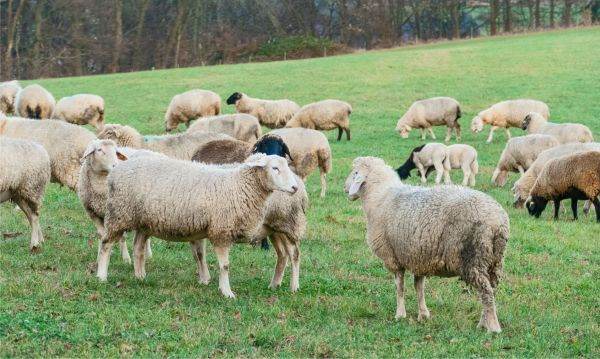
As global warming accelerates the retreat of glaciers in the Alps, Swiss researchers are testing an unusual solution to slow the loss of ice: blankets made of sheep wool. The first results of the experiment carried out on the Tsanfleuron glacier show that the biodegradable material can protect the ice surface as effectively as the synthetic coverings currently used.
• An alternative to plastic films
Every summer, certain areas of Swiss glaciers are covered with geotextile tarpaulins to reflect solar radiation and limit heat absorption. The method can reduce local melting, but synthetic materials are usually made of plastic and can generate polluting microfibers. The "Keep It Wool” project, coordinated by the Summit Foundation and the University of Lausanne, is trying to provide a biodegradable alternative. The researchers chose sheep wool, a local resource that is underutilized. According to the project team, between 40% and 70% of Swiss wool is thrown away every year. The idea came from a group of four master's students who wanted to see if the material could be used to protect ice. In June, the researchers placed two prototype wool blankets, produced by the Swiss company Fisolan, on an area of about 200 square meters of the Tsanfleuron glacier in western Switzerland. Over the summer, the material's performance was compared with that of a conventional geotextile cover. Preliminary results were better than the researchers had anticipated. Timothee Steiner, the project manager, said that measurements taken at two-week intervals indicated that the wool blankets limited ice melting to a level comparable to that achieved by using synthetic materials. Niklaus Saegesser, a representative of the company Fisolan, said he was surprised by the material's resistance to the conditions on the glacier. "We thought it wouldn't be stable enough," he said. In turn, student Elliot Gaffiot admitted that the team didn't know exactly what to expect. After the first months of testing, however, the conclusion was that the solution worked better than they had anticipated.
• Heat puts additional pressure on glaciers
The experiment is taking place in a difficult climate context for the Alps. High temperatures this summer have caused snow on the glaciers to melt several weeks earlier than usual, which favors additional loss of glacial mass. The retreat of glaciers is not just a landscape problem. Rapid loss of ice can contribute to the instability of slopes and the emergence of risks such as landslides and mudslides. Switzerland has already witnessed such phenomena. In 2025, the village of Blatten in the canton of Valais was devastated after a mass of rock and ice collapsed from the slope above the village.
• A local solution, not a response to climate change
However, the researchers emphasize that the wool experiment should not be confused with a solution to global warming. The area of Swiss glaciers currently protected by foils represents only about 0.02% of the total area. Therefore, such interventions can protect specific areas, but cannot change the overall evolution of the glaciers.
Reducing greenhouse gas emissions, mainly generated by the burning of fossil fuels, remains the essential measure for limiting ice loss in the long term. However, the Swiss experiment shows that while the world is looking for solutions to reduce emissions, there may also be less conventional ways to temporarily protect natural resources. In this case, one of these may come from sheep wool itself, which until now was largely considered waste.


























 Euro
Euro Dolar SUA
 Franc elveţian
 Liră sterlină
 Gram de aur