 English


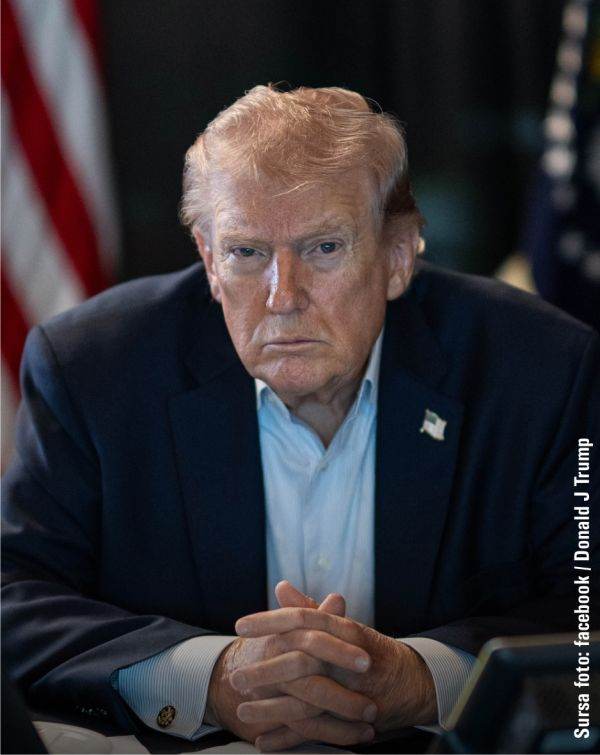
The Turnberry Agreement, initially presented as the great compromise of trade stabilization between Brussels and Washington, a solution to calm transatlantic tensions and a guarantee of predictability for the European business environment, seems to be gradually transforming into a mechanism through which the European Union accepts successive concessions, while the US reserves the freedom to change the rules of the game whenever it deems appropriate, shows an analysis published yesterday by Euractiv.
According to the cited source, the agreement was supposed, in theory, to put an end to the latent trade war between the two sides of the Atlantic and to offer European companies a minimum of strategic security at a time when the world economy is already shaken by geopolitical conflicts, trade fragmentation and huge industrial pressures. In practice, however, what Brussels presented as a diplomatic victory is starting to resemble more and more a slow capitulation, administered in successive installments. The fundamental problem is not just the level of tariffs or the extent of the concessions made by the Europeans, but the fact that the very idea of contractual stability is evaporating under the pressure of political impulses from Washington.
Donald Trump's new threat to impose tariffs of up to 25% on European cars has once again blown up the entire diplomatic structure. The threat came immediately after German Chancellor Friedrich Merz's criticism of the American intervention in Iran, and the political connection between the two episodes is impossible to ignore. Trump's message to the European Union is simple: any political divergence can become a pretext for economic retaliation. More serious for EU officials is the fact that such a measure directly violates the 15% cap negotiated in the Turnberry agreement for the auto sector, precisely the point that the European Commission had presented as one of its great achievements. The European car industry, vital to Germany, France, Italy and many Central European economies, was supposed to be protected by this compromise. In reality, the protection seems to exist only as long as the Trump administration decides it is convenient.
In fact, the current threat is not an isolated incident, but only the latest in a series of violations and reinterpretations of the agreement by the White House administration. Shortly after the agreement was signed, Washington reclassified hundreds of industrial products as steel derivatives, applying 50% tariffs to them, in a move that demonstrated that the United States does not intend to respect the spirit of the agreement except to the extent that it serves domestic political interests. Then came the Greenland episode, which further strained transatlantic relations and showed that Washington is willing to combine geopolitical pressure with economic instruments in an increasingly aggressive manner. Now, the offensive against the European car industry confirms what many European officials still refuse to admit publicly: the Turnberry agreement does not function as a stable treaty, but as a temporary arrangement, permanently dependent on Donald Trump's mood.
The source cited argues that, for European companies, the consequences are devastating, given that the modern economy operates on the basis of anticipation and long-term planning, and major industrial investments, supply chains and trade strategies need predictability. This was precisely the central promise of the agreement: reducing uncertainty. But an agreement that can be reinterpreted or unilaterally modified at any time loses all economic utility. The simple fact that tariffs can be increased overnight, even without immediate implementation of the measures, is already producing toxic effects on the investment environment. Companies are postponing projects, reassessing exposures and starting to treat the transatlantic trade relationship as a permanent political risk.
In this context, the question hanging over Brussels is becoming increasingly uncomfortable: what can Europe actually do? In theory, the European Union has significant economic instruments and is still one of the world's largest markets. In practice, however, its ability to exert comparable pressure on the United States is limited. Unlike China, which controls key strategic points such as rare earth exports and can quickly generate huge industrial costs for its adversaries, Europe does not have enough concentrated and easily activated political leverage. In addition, any aggressive European reaction risks causing major internal fractures among member states, many of which are economically and militarily dependent on their relationship with the Trump Administration.
The cited analysis also shows that, in this moment, European Union policymakers seem unable to accept the reality that the Trump Administration views international economic relations in a purely transactional logic, in which rules matter only as long as they serve the interests of the US at the moment. For Donald Trump, trade agreements are no longer rigid legal constraints, but flexible instruments of strategic pressure. In this type of balance of power, permanent concessions inevitably become signs of weakness.
And this is precisely where the greatest danger for Europe arises. Therefore, the cited source notes that, if the current dynamic continues, the Turnberry agreement risks institutionalizing a form of economic subordination of the European Union in relation to the United States. The transatlantic relationship would no longer function as a partnership between equals, but as a system in which the EU absorbs shocks, accepts compromises and continuously adapts to Washington's demands. With each new concession made to avoid an immediate crisis, Brussels is, in effect, sending a message that it is willing to endure almost anything to maintain the appearance of stability.
For Brussels, the real challenge is no longer just negotiating lower tariffs or obtaining temporary trade exemptions. The real stakes are the survival of its strategic autonomy in a world where even traditional allies are using the economy as a geopolitical weapon.






















 Euro
Euro Dolar SUA
 Franc elveţian
 Liră sterlină
 Gram de aur





























