English

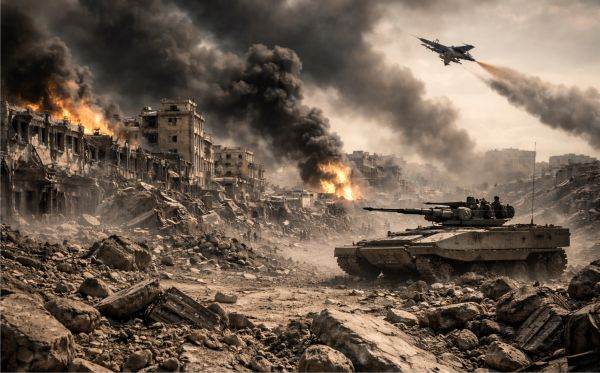
The effects of the armed conflict between the United States, Israel and Iran are rapidly spreading to the global economy, energy markets, food security and even environmental stability, shaping one of the most complex episodes of geopolitical crisis in recent decades. According to the international press, one of the most sensitive points of the world economy, the Strait of Hormuz, has become the epicenter of a disruption that threatens to redefine the energy and financial balance of the planet. Maurice Obstfeld, former chief economist of the IMF, quoted by Euronews, describes the situation as exactly the nightmare scenario that Washington has long tried to avoid: "For a long time, the nightmare scenario that prevented Americans from considering an attack on Iran was that the Iranians could close the Strait of Hormuz. Now we are in that nightmare scenario."
The economic impact was immediate, especially since Europe and Asia are much more dependent on energy imports from the Middle East than the US. IMF Managing Director Kristalina Georgieva, quoted by Euronews, warns that every 10% increase in oil prices, if sustained over a year, can increase global inflation by 0.4% and reduce world economic output by up to 0.2%. Economist Simon Johnson, from MIT, laureate of the Nobel Prize in Economics in 2024, mentioned the vital importance of the strait for the cited source: "The Strait of Hormuz must be reopened. We are talking about 20 million barrels of oil a day passing through there and there is no additional capacity anywhere in the world to cover this gap”.
American officials are of the same opinion. In a Pentagon briefing yesterday, Defense Secretary Pete Hegseth threatened Tehran that Iran would be hit "harder than ever” if it tried to stop the flow of oil through the Strait of Hormuz, according to CNN and Al Jazeera. CNN also reports that US General Dan Caine, chairman of the Joint Chiefs of Staff, said at the same press conference that the Trump administration is considering "a wide range of options” for escorting commercial ships through the Strait of Hormuz, if ordered to do so. In a statement also quoted by ARD/Tagesschau, Caine said: "If we are tasked with escorting ships, we will consider options to create the necessary military conditions.” According to CNN, he added that the plans would include assessing resources, command and control and the risks involved. In parallel, Al Jazeera records that the same Dan Caine stated that in the first ten days of the war, American forces targeted Iranian ships capable of laying maritime mines and that "more than 50 Iranian military vessels were sunk or destroyed".
In this context, the political rhetoric between the two conflicting camps has intensified. CNN reports that Ali Larijani, one of Iran's most influential political figures and head of the National Security Council, publicly warned US President Donald Trump to be careful "not to be eliminated", stating that "the Iranian nation is not afraid of the empty threats" of the head of the White House. The source said Larijani's statement followed Trump's warning that Iran would be hit "20 times harder" if it blocked oil flows through the Strait of Hormuz, and that the United States could destroy infrastructure that would make it "almost impossible to rebuild" the country. However, energy is not the only economic front affected. Euronews, citing the International Food Policy Research Institute, reports that about 30% of global fertilizer exports - including urea, ammonia, phosphates and sulfur - pass through the Strait of Hormuz. Logistical bottlenecks and rising costs have already begun to affect deliveries, and farmers are facing rising prices. Maurice Obstfeld, the former chief economist of the IMF, told the source that the impact on agriculture could be severe: "Any country with a significant agricultural sector, including the United States, is vulnerable. The effects will be most devastating in low-income countries, where agricultural productivity is already under pressure. If you add this additional cost, the prospect of significant food shortages arises.”
In parallel with the economic challenges, the conflict has generated a humanitarian and infrastructure crisis in Iran. According to ARD/Tagesschau, citing the Iranian Red Crescent, approximately 16,000 homes were destroyed or damaged in the US-Israeli attacks, and more than 3,300 commercial premises were affected. According to the same source, more than 60% of the damage is concentrated in just five provinces, including the capital Tehran, Alborz province, West and East Azerbaijan and the industrial region of Khuzestan.
ARD/Tagesschau notes that civilian buildings have been hit in 20 of Iran's 31 provinces, and 13 aid agency bases and 29 schools have been damaged. In the Iranian capital, the human toll is dramatic: Al Jazeera, citing the deputy head of Tehran's Emergency Department, Mehr Soroush, reports that at least 460 people have died and 4,309 have been injured since the start of the war, and nationwide the attacks have caused over 1,200 deaths and more than 10,000 injuries. Al Jazeera also states that 18 ambulances and 18 emergency response bases have been damaged in Tehran alone.
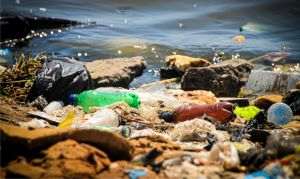
Beyond the economic and military impact, the conflict is also opening up an alarming ecological front. Euronews, in a material dedicated to environmental and water risks in the Middle East, shows that in Iran, after the bombing of oil depots, the appearance of a so-called "black rain" was reported, a phenomenon generated by clouds of pollutants formed following industrial fires. Gabriel da Silva, a professor at the University of Melbourne, stated, according to the cited source, that these clouds contain sulfur dioxide, nitrogen dioxide, hydrocarbons, PM2.5 fine particles and carcinogenic compounds, as well as heavy metals from the destroyed infrastructure.
Euronews notes that residents have reported breathing difficulties and eye and throat irritation, and long-term risks include cancer, neurological problems, birth complications and cardiovascular diseases. The publication also shows that pollutants can contaminate water and marine ecosystems long after the fires have been extinguished.
The strikes on desalination plants also raise the specter of a severe water crisis in the Middle East. Euronews points out that in many Gulf states, these facilities produce most of their drinking water from seawater. Historian Michael Christopher Low, of the University of Utah, said, according to the cited source, that the Gulf states are "saltwater kingdoms”, with artificial energy and hydrological systems that represent "a monumental achievement of the 20th century, but also a major vulnerability”.
According to Euronews, Iran accused the United States of setting a "precedent” after an air strike damaged a desalination plant supplying water to 30 villages, and Iran was in turn accused of damaging a similar facility in Bahrain.
In the context of a severe drought that has lasted for five years and the depletion of water reserves in rivers, lakes and aquifers, experts in the field tell the cited source that a major water crisis could become inevitable.






















 Euro
Euro Dolar SUA
 Franc elveţian
 Liră sterlină
 Gram de aur