English


The B9 summit, which is taking place today at the Cotroceni Palace, is taking place at a time when the war in Ukraine, tensions in the Middle East and the deterioration of the transatlantic relationship are forcing NATO and the European Union to quickly rethink their security architecture, in the context of the expansion of the format for the Nordic countries of NATO (Norway, Sweden, Finland), which would bring a consolidation of the Eastern Flank of the military alliance.
The official theme of the summit - "Delivering More for Transatlantic Security” - actually hides one of the most sensitive debates within NATO: how much Europe can and should contribute to its own defense at a time when Washington is asking its European allies for greater investments and a direct involvement in continental security. At the same time, the Bucharest summit will try to send a strong message of unity and solidarity ahead of the NATO meeting in Ankara, scheduled for early July.
The B9 summit in Bucharest is seen in diplomatic circles as a possible historic milestone for Romania. Behind the scenes of the meeting, there is intense discussion about expanding the B9 format to the Nordic countries, especially Finland. Such a move would profoundly change the geopolitical weight of the group launched by Romania and Poland and would create a continuous strategic and military corridor from the Baltic Sea to the Black Sea.
In reality, this is the strategic core of the Bucharest meeting. NATO is trying to transform its eastern flank into a much more coherent military and political structure, at a time when Russia continues to be perceived as the main threat to European security. From this perspective, Romania is trying to consolidate its status as a regional security pillar on the Black Sea and become one of the main actors in the new European strategic configuration.
In parallel, the leaders gathered in Cotroceni will also address the situation in the Strait of Hormuz, one of the most sensitive areas for global energy security. The inclusion of this topic on the summit agenda shows that the Bucharest meeting goes beyond the regional dimension and attempts to connect the security of NATO's eastern flank with major global crises.
The importance of the summit is given both by the explosive international context and by the level of participants arriving in Bucharest, including the President of Poland, Karol Nawrocki, NATO Secretary General Mark Rutte, the President of Ukraine, Volodymyr Zelenski, the leaders of the Baltic states, Finland, Denmark, the Czech Republic and Slovakia, high-ranking American officials and representatives of the Nordic countries, who are meeting at a time when Europe is seeking solutions to strengthen its own security and restore strategic balance with the United States.
According to information released before the summit, all participating states will sign the final joint declaration, a document that will become the group's official position before the NATO summit in Ankara. The text will focus on investments in defense, military interoperability, strengthening the eastern flank and supporting Ukraine.
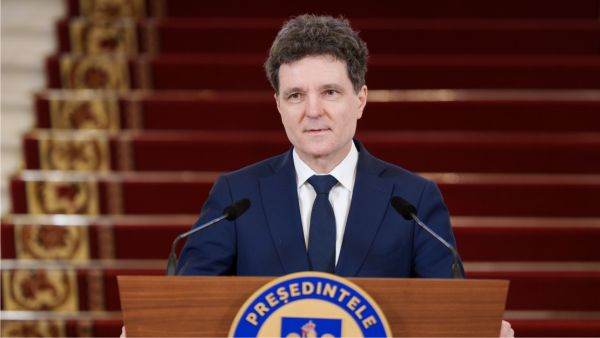
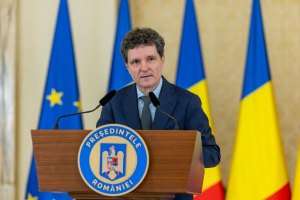
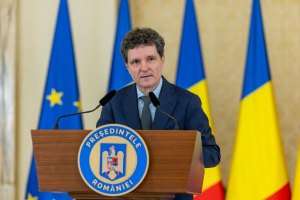
In this regard, in a speech delivered yesterday at the "Black Sea and Balkans Security Forum” event, President Nicuşor Dan stated that our country has not changed "absolutely anything” in its strategic orientation and that relations with the European Union, NATO and the United States remain the foundation of Romanian foreign policy.
Nicuşor Dan emphasized that "like-minded states must collaborate” in a period marked by multiple challenges and stated that this is the objective of both the B9 summit in Bucharest and the NATO meeting in Ankara. The message sent by the head of state is of major importance, as it comes in an extremely tense international context. On the one hand, the American administration insists that European states increase their defense investments and contribute more to continental security. On the other hand, Europe is trying to strengthen its strategic autonomy without affecting the transatlantic relationship.
The President explained that a stronger Europe automatically means a stronger NATO and insisted on the complementarity between European projects and those of the North Atlantic Alliance.
Referring to the projects in the defense industry area, Nicuşor Dan announced that Romania is "on schedule” with the SAFE program and that all contracts will be signed by the end of May. According to the President, approximately 60% of the production related to military contracts will be carried out in Romania, which means investments estimated at around 13 billion euros, which will remain in the Romanian economy out of a total of 17 billion euros. The President explained that the difference between the total value of the program and the military component is represented by investments in infrastructure, including highway and strategic infrastructure projects. According to him, the companies involved in the program have expressed their intention to continue their economic activity after 2030, so that the investments made now generate long-term industrial development in Romania.
Nicuşor Dan: "If we refer to Europe as an icon, we will not get anywhere"
President Nicuşor Dan referred yesterday to the statements made on May 9, after his speech on Europe sparked reactions and interpretations of the most diverse, from criticism of "euroscepticism" to accusations that the head of state had discovered, overnight, the virtues of continental polemics. The president felt the need to clarify that, in fact, he did not criticize Europe, but only tried to love it more realistically, although the new statements showed that, in fact, he maintains his initial criticisms of the European Union.
Thus, when asked about the passages considered critical of the European Union, Nicuşor Dan explained: "What I tried to say in that Europe Day speech is that Europe is a living organism, with very strong debates, with which Romanian society is not connected. And I did not criticize. If you look at the structure of the speech, I said yes, Europe made mistakes, but Europe is a living, democratic organism, in which all these things are debated with the cards on the table, directly, and you can find those elements of criticism, for example, in Mrs. von der Leyen's speech a week ago, in Yerevan. So my interest was precisely to stimulate the debate, not, God forbid, to position myself against Europe." In other words, the problem would not have been the criticism itself, but the fact that the Romanian public would not have understood that a criticism automatically becomes European and democratic when it is formulated within the family. And if the same observations appear in a speech by President Ursula von der Leyen, then they probably gain an additional certificate of Europeanness.
The head of state also offered a concrete example of a "lively debate” within the European Union, stating: "I think that the environmental approach was more ideological than pragmatic. I am referring to the policy on greenhouse gases. It was much too aggressive and I have said this within the Union as well.”
The observation comes at a time when even within the EU there is discussion about the economic costs of the accelerated green transition, but the Romanian president's formulation seems to have needed a second round of explanations, so as not to be confused with a deviation from the European climate liturgy. After all, in current European politics, you can criticize anything, provided you immediately specify that you are doing it out of sincere love for the European project.
And this is exactly what Nicuşor Dan tried to convey in the final justification of his speech on May 9: "It seemed to me that when I conceived it and immediately after I delivered it, it seemed to me that it was a kind of declaration of affection towards Europe. That is, Romania, we, the Romanian society, must truly relate to Europe. And this connected to the problems that Europe discusses. If we refer to Europe as an icon, we will not get anywhere”.
However, it remains to be seen whether Europe can be loved without being placed on the iconostasis of Romanian public discourse or whether any attempt to lower the European project from the solemn register of veneration to that of debate risks being immediately interpreted as political heresy. For the moment, the president seems to have chosen the compromise solution: Europe is wrong, but democratic; it is ideological, but out of affection; and criticism is not criticism, but just a more sincere form of Europeanism.










 Euro
Euro Dolar SUA
 Franc elveţian
 Liră sterlină
 Gram de aur