 English

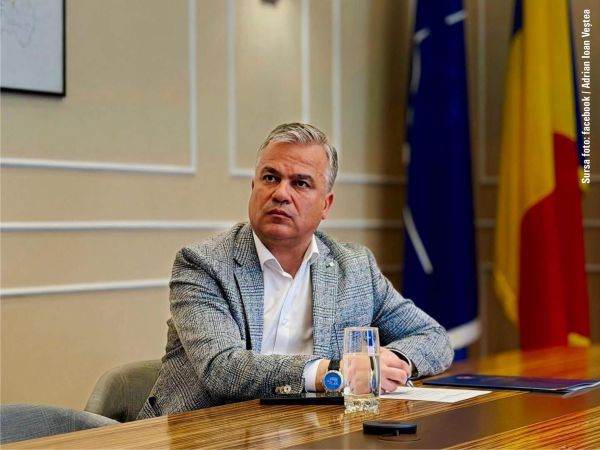
The Veştea government is having a hard time, although the PSD seemed to be moving with weapons and baggage to the camp of the liberal first vice-president, as long as it sent Marian Neacşu as a mediator with the sovereignist parties to obtain the number of votes needed in Parliament for the future Executive. However, yesterday, Sorin Grindeanu, the president of the PSD, announced that only on Sunday the social democrats would decide whether they would be part of the Veştea Cabinet, a fact that led the prime minister appointed by Nicuşor Dan to postpone the submission of the list of ministers to Parliament until Monday. It is curious that the Extraordinary Congress of the PNL will also take place on Sunday, where the new party leadership will be elected, after President Ilie Bolojan decided to get rid of Adrian Veştea and the other 12 prominent members of the political party who decided to support him for the position of Prime Minister.
We will see at the end of this week what the PNL and PSD decisions will be and whether on Monday the designated Prime Minister Adrian Veştea will present himself to Parliament with the list of ministers and the government program. A program that has already been published by the mass media in our country, because it seems that it was finalized before the formation of the future Government, but which seems to be a poor quality copy-paste after the Bolojan government program and the program prepared previously for Veştea by Eugen Tomac.
From reading the 68 pages of the 2026-2028 government program proposed by the designated Prime Minister Adrian Veştea, we note that the text seems written as if its authors had a functional country, an efficient administration and two more years of preparation before starting the implementation. In reality, Romania in 2026 is more like a patient entering the operating room after postponing consultations for years.
Right from the preamble, the document talks about political stability and restoring order in public finances. The diagnosis is correct. The deficit is huge, financing costs are high, and the state spends more than it produces. However, after dozens of pages of explanations, we discover that the miraculous solution remains the same that all governments have invoked in the last twenty years: combating tax evasion, digitizing ANAF and eliminating waste. If all these promises had produced the results announced each time they were made, Romania would have a budget surplus and a reduced number of tax inspectors today.
Although in the program Adrian Veştea talks about reducing the budget deficit, he does not provide any explanation as to who will bear the costs of this reduction. Everyone must contribute, but no one knows exactly how much. Everyone must accept the reform, but no one discovers where the discourse on efficiency ends and where the bill begins.
• PNRR, implemented in two months?
The chapter on administrative reform is a veritable collection of terms: depoliticization, professionalization, performance evaluation, reduction of bureaucracy, auditing of state assets. The problem is that exactly the same promises appear in almost all government programs of the last fifteen years. The difference is that, in the meantime, bureaucracy has grown, politicization has survived, and state-owned companies have remained a safe haven for the clientele of each party that has come to power.
One of the most fascinating parts of the government program proposed by Veştea is dedicated to the National Recovery and Resilience Plan. Here the authors' optimism reaches almost therapeutic levels. The government aims for the full and responsible implementation of the plan, the completion of investments and the complete absorption of funds. It sounds excellent until someone looks at the calendar. It is June 19, 2026, we do not have a government with full powers, the deadline for completing projects in the PNRR is the end of August, and the last payment request must be submitted by the end of the year. In other words, the program talks about the full implementation of the PNRR at a time when the clock is ticking faster than an inter-ministerial meeting can be convened. Theoretically, the plan is impeccable. In practice, time has already become the main adversary of the future government.
Regarding accession to the OECD, the document leaves the impression that this achievement will solve almost everything. Investors will have more confidence, the administration will become more efficient, public policies will be better, and the economy will function more efficiently. In reality, OECD membership is the consequence of reforms, not their substitute. Treating the international organization as a magic wand is one of the subtle exaggerations of the entire program.
In the defense chapter, the SAFE Program is presented simultaneously as a security project, an industrial strategy, an economic engine, and an regional accelerator of development. The reader is left with the impression that each armored personnel carrier purchased will automatically produce highways, jobs and economic growth. The concept is seductive, but the experience of the latest military equipment programs shows that Romania has a special talent for buying Western technology without always obtaining the promised industrial benefits.
In Health, the document promises efficiency, prevention and the orientation of the system towards the patient. All the objectives are correct. Curiously, there is a lot of talk about the reorganization of services and very little about the lack of doctors, the exodus of medical personnel and the territorial imbalances that make access to health often depend on the patient's postal code.
• 15% for Education, a utopia?
The government program grants Education an almost strategic status, going as far as the objective that, by 2030, education spending will reach 15% of total public spending. The problem is not that the target is too high. The problem is that the document talks about 2030 at a time when the proposed government is facing emergencies that are measured in weeks, not years. Proposing a financing of 15% of total public spending, given that for almost ten years no government has implemented the cross-party pact on financing Education with 6% of Gross Domestic Product, seems utopian.
Moreover, there is talk of increasing funding, reducing school dropout, expanding access and long-term investments. But the document avoids the essential question: where will the money come from? If the entire program is built on reducing the deficit, restricting spending and eliminating waste, then a consistent increase in the share of education in the budget implies either increases in revenues or cuts in other areas. And here the text suddenly becomes discreet.
The irony is that education is probably the area in which the diagnosis is most correct. Romania has serious structural problems: high school dropout rates, functional illiteracy, urban-rural disparities, and a labor market that increasingly complains about the lack of necessary skills. Even the business community warns that the lack of investment in education risks pushing Romania into the "middle income trap,” affecting long-term competitiveness. But this is exactly where the paradox appears. The government program drawn up by the team around Adrian Veştea treats education as a priority for 2030, while the problems affecting Romanian schools are already present in 2026. In other words, the document promises that in four years we will have more money for education, while the generations now entering the school system will complete entire cycles of studies before this promise becomes verifiable. Special pensions inevitably appear as the favorite antagonist. The program promises to limit privileges and eliminate inequities. This is probably the fifteenth time that Romanian politics has promised the same thing with the same conviction. The problem is that every previous attempt has encountered legal, constitutional and political obstacles solid enough to turn the reform into a series without a final episode.
Beyond the solemn formulations and declared ambitions, the truth is simple: the future government, whether led by Adrian Veştea or another prime minister, is not taking over a country in the construction phase, but one in a race against time. The deficit must be reduced, reforms must be implemented, European funds must be saved, and the time left is dramatically shorter than any government program suggests.












 Euro
Euro Dolar SUA
 Franc elveţian
 Liră sterlină
 Gram de aur





























