 English

The suspicious death of prosecutor Luminiţa Şega has not been fully elucidated by the Prosecutor's Office attached to the Bucharest Tribunal, as we recall from the responses provided by the public institution following the request for information we sent it regarding this case. According to the response received to our request, the criminal file regarding the death of the magistrate, reopened in 2015 by the Bucharest Tribunal for an effective investigation into the crime of murder, was closed again by the Prosecutor's Office attached to the Bucharest Tribunal on May 29, 2020.
The Prosecutor's Office claims that it carried out the activities ordered by the court, that it interviewed hundreds of people and that a new forensic examination did not identify elements that would support aluminum poisoning or other substances. However, the institution refuses to make the filing order available to the BURSA newspaper, including in a form from which personal data and confidential medical information could be removed, which makes it impossible to fully verify the journalistic arguments based on which the prosecutor definitively closed, at least at the level of the information communicated to us, one of the most controversial files regarding the death of a Romanian magistrate. Luminiţa Şega was not just any prosecutor. Before her dramatic illness in March 2005, she had worked on some of the most sensitive economic and financial files of the period, her name being linked in particular to the investigation regarding the National Investment Fund (FNI) and the investigations concerning Sorin Ovidiu Vîntu. After more than a year of suffering, the prosecutor died on July 31, 2006. Her family contested the explanations regarding the cause of death and claimed the existence of indications regarding a possible poisoning, invoking also analyses carried out in Italy that would have indicated high levels of aluminum.
The criminal case opened to elucidate her death was, however, closed by the Prosecutor's Office attached to the Bucharest Tribunal on August 11, 2014. The prosecutor's brother, Mircea Slăvilă, challenged the solution, and on January 28, 2015 the Bucharest Tribunal made a decision of unusual severity compared to the investigation conducted until then: it admitted the complaint, abolished the closing and sent the case back to the Prosecutor's Office to start the criminal investigation in rem for murder.
Judge Mihail Udroiu did not limit himself to generically resending the file to the prosecutors, but specifically established what an "effective investigation" should contain. Among the measures expressly indicated were the performance of a toxicological examination in a specialized laboratory or institute in the country or abroad, which would hold the necessary accreditations and certifications, to establish the existence or non-existence of a poisoning with heavy metals or metalloids and especially with alumina; the hearing of brother Mircea Slăvilă and husband Marius Şega; the hearing of the prosecutor's former colleagues from the Prosecutor General's Office and the DNA; the hearing of Ioana Maria Vlas; the obtaining of all medical documents in the country and abroad and the authorized translation of those written in other languages; as well as the hearing of the doctors and nurses who had directly dealt with the patient.
• 262 people interviewed, with the same result: the criminal case was closed
On June 29, 2026, BURSA requested the Prosecutor's Office attached to the Bucharest Tribunal to specify whether these provisions were executed, whether the case was reopened for murder, whether the persons indicated by the Tribunal were interviewed, whether the toxicological examination was carried out and whether there is a new closure order. We requested, if it exists, an electronic copy of the order, with its motivation.
The Prosecutor's Office's response, dated July 14, 2026, unequivocally confirms the first element: "Based on the provisions of the decision of the Bucharest Tribunal of 28.01.2015 [...] the investigations were resumed. The in rem criminal prosecution was initiated regarding the crime of murder [...] and the activities ordered by the court were carried out".
This is the first important piece of the answer: the investigation was not formally abandoned after the Tribunal's ruling of January 28, 2015, as the public silence of over a decade might have left the impression.
The prosecutor's office also provides impressive figures. The institution states that Luminiţa Şega's husband, son and brother were questioned, as well as the witness named by the court, and the investigators questioned "the majority of medical personnel” from healthcare facilities in Romania who came into contact with the prosecutor - approximately 202 people - and approximately 60 former colleagues and police officers from the Prosecutor General's Office and the DNA.
The answer is substantial, but it is not identical to a demonstration that each of the Tribunal's provisions was fully implemented. The wording "the majority of medical personnel” does not mean "all medical personnel” who directly dealt with the patient - as it is written in the Tribunal's Bucharest, and the Prosecutor's Office does not specify who was not heard and for what reasons. In the case of colleagues, the approximately 60 represent a considerable number, but the response does not provide the list of people or the criteria according to which they were selected.
Regarding medical documents, the Prosecutor's Office says that it obtained documents from approximately six health units in Romania and three from abroad. However, the court had requested the obtaining of "all documents" from hospitals and clinics in the country or abroad where Luminiţa Şega had been hospitalized or investigated. From the response, we cannot verify whether the nine units represent all of them or whether the documents in foreign languages were officially translated, as the court had requested.
The most important information, however, concerns the toxicological expertise. The Prosecutor's Office states that, by the ordinance of September 29, 2016, the prosecutor ordered a new forensic expertise to be carried out by the National Institute of Forensic Medicine "Mina Minovici" and that this "also included the toxicological analyses requested by the court". According to the Prosecutor's Office, the report concluded that the toxicological examinations did not provide evidence to support the existence of aluminum or other substances poisoning.
• Prosecutors: Aluminum poisoning, result of burial
Moreover, the Prosecutor's Office offers for the first time an official explanation for the high levels of aluminum identified in certain samples: they would have appeared only in the samples collected during the exhumation and would have been the result of contamination from the burial environment - the soil and the materials of the coffin. The institution adds that the toxicological analyses carried out before the prosecutor's death would have shown aluminum levels within normal limits. However, according to the data from the file in which the Bucharest Court ruled in 2015, the decision would have also been based on the toxicological expertise carried out in Italy by Luminiţa Şega's brother, based on some strands of her hair, which he probably took before the burial. The fact that the laboratory in Italy says that they contained too much aluminum, and the INML says that before the burial there was no such intoxication represents a blatant contradiction of the two toxicological expertises, which we do not know if the prosecutors of the Prosecutor's Office attached to the Bucharest Tribunal have clarified, as long as they do not give us access to the filing order.
Especially since the prosecutors' explanation substantially changes the public data known about the case, but also raises a problem that cannot be resolved only from the Prosecutor's Office's response. The Tribunal had explicitly requested a "toxicological expertise" carried out in a specialized laboratory or institute in the country or abroad, holder of the necessary accreditations and certifications in the field of toxicological investigations. The Prosecutor's Office tells us that a "new forensic expertise" was carried out at the INML, which "included" the requested toxicological analyzes. It is very possible that this procedure satisfied the court's requirement, but the response does not provide sufficient elements to verify this precisely: it does not indicate the specific laboratory that carried out the determinations, its accreditations, the methodology, the samples analyzed, the measured values, the reference values, nor the expert report. Based on the Prosecutor's Office's letter alone, we cannot state that the Tribunal's order was executed in all its details because it would mean going beyond the information that the institution itself provided us.
Even more important is the information that was almost completely missing from the public space: the file was closed again.
"By the ordinance of 29.05.2020, the case prosecutor ordered the closure of the case," the Prosecutor's Office informs us, invoking art. 315 in relation to art. 16 para. (1) lit. b) of the Code of Criminal Procedure and specifying that, according to the evidence administered, the death of Luminiţa Şega was non-violent and determined by the evolution of pre-existing medical conditions.
We therefore have a remarkable situation: a murder investigation reopened by a final decision of the Bucharest Court in January 2015, hundreds of hearings, medical documents from Romania and abroad, a new forensic examination and, finally, a closure pronounced on May 29, 2020. However, for six years, the existence and arguments of this solution did not become, from what we could identify, part of a detailed public information.
• Lack of transparency regarding the Şega case
This is precisely where the problem of transparency arises.
The BURSA newspaper requested a copy of the closure order. The prosecutor's office refused. The institution's argument is that the document contains extensive personal data of witnesses and other persons, detailed medical information about Luminiţa Şega, statements and analysis of other evidence. For this reason, the Prosecutor's Office considers that it cannot communicate the document. The refusal is categorical: "the request for communication of a copy of the filing order cannot be granted", the institution considering that the information of sufficient public interest is that summarized in the response sent to the newspaper.
The protection of personal data, private life and, especially, medical information is legitimate and mandatory. But this does not exhaust the legal discussion regarding the press's access to information of public interest. Law no. 544/2001 starts from the principle of free access to information concerning or resulting from the activity of a public authority and expressly guarantees the media's access to information of public interest. At the same time, the law establishes exceptions for personal data and for certain information from criminal investigations and judicial proceedings.
Neither does the Guide to Good Practices on the relationship between the judicial system and the media, invoked by the Prosecutor's Office, enshrine a principle of opacity. On the contrary, the SCM document proposes a "predictable, transparent, accessible, coherent and unitary" communication and states that courts and prosecutors' offices must allow the media to fulfill their role of informing public opinion. The principle of transparency is described by the very idea of facilitating the greatest possible access for journalists, the limits having to be reasonable and well-founded.
However, there is an essential legal nuance: Article 30 of the Guide, invoked by the Prosecutor's Office, does not expressly grant the press a general right to receive a full copy of any filing order. The text lists certain acts from which extracts may be issued and establishes mechanisms for protecting personal data and eliminating passages that affect private life or concern evidence and its analysis. The filing order does not appear in the list of acts for which Article 30 expressly establishes this method of communication.
Therefore, it would be excessive to state that the mere quality of journalist automatically obliges the Prosecutor's Office to transmit the order to us in full. But the opposite conclusion does not automatically follow from this: that the existence of protected data inevitably justifies the refusal to communicate any verifiable part of the act. This is the legitimate question that the Prosecutor's Office's response leaves open. If the document contains medical information and personal data that cannot be made public, why can't an anonymized version be communicated or, at least, a larger excerpt from the considerations, from which such information is removed? The CSM Guide itself uses, for the documents it expressly lists, the technique of removing personal data and protected passages, which demonstrates that protecting privacy and informing the public are not, in the conception of the document, incompatible objectives.
The problem is all the more serious as the investigation has been completed since the pandemic, that is, since 2020. The risk of compromising an ongoing criminal investigation can no longer be invoked, at least in the usual form. The public interest is, on the other hand, obvious: we are talking about the death of a prosecutor who had worked on highly sensitive files, about a first classification abolished by a judge precisely so that the state could conduct an effective investigation for murder, and about a second classification pronounced after five years of additional research.
The response received by the BURSA newspaper allows for a more nuanced conclusion than a simple "The Prosecutor's Office responded” or "The Prosecutor's Office did not respond.” When asked whether the investigation was resumed, the answer is clear: yes. When asked whether hearings were conducted, the answer is yes, with figures and categories of people, but without the possibility of verifying whether absolutely all hearings indicated by the court were conducted. When asked whether there is a new classification, the answer is categorical: yes, as of May 29, 2020. When asked about the toxicological expertise, the Prosecutor's Office responds that it was included in a new forensic expertise ordered in 2016 and communicates its result, but does not provide the report and sufficient technical details to be able to independently verify whether the procedure corresponded in all respects to the parameters established by the Court. When requesting a copy of the classification order, the answer is also categorical: no.
So, the Prosecutor's Office has given us answers to the five points, but it has not given us all the information necessary for an independent verification of its answers.
And the difference is fundamental. After an investigation that lasted years, the question is no longer whether the prosecutor claims to have done what the judge asked him to do. The question is whether the public, through the press, can learn enough about how he did it to understand why the suspicion of murder was removed. A dismissal order is precisely the act in which the prosecutor must link the evidence to the legal conclusion. The summary provided by the press department tells us what the conclusion was. But it does not allow us to examine the full reasoning that led to it.
In the case of Luminiţa Şega, after two decades of suspicion, controversy and questions, the Prosecutor's Office offers now an important part of the answer: the investigation was resumed, hundreds of people were interviewed, a new expert report was conducted, the intoxication hypothesis was rejected by the expert report, and the file was closed in 2020.
But the document that should show why all this evidence leads to the conclusion that the prosecutor's death was non-violent remains inaccessible to the press. In a file in which even the Bucharest Court considered, in 2015, that the first investigation was not sufficient and requested an effective investigation for murder, transparency on the reasons for the second filing is not a journalistic curiosity. It is a matter of public interest.
Who was Luminiţa Şega
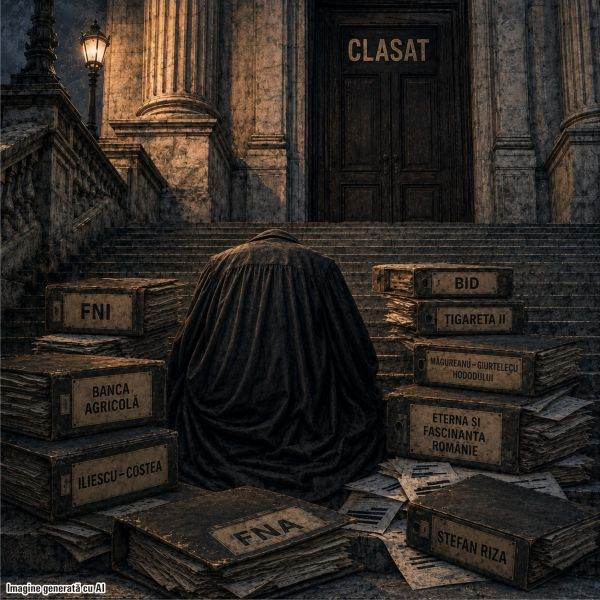
Luminiţa Şega was a prosecutor at the General Prosecutor's Office, and later at the National Anticorruption Directorate (DNA), being involved, in the late 1990s and early 2000s, in the handling of some of the most important economic and financial cases of the period. According to data published at the time by the media, among the cases she worked on are the FNI (National Investment Fund) - the case with which her name remained most strongly associated, the FNA (National Accumulation Fund), the Agricultural Bank, the IDB (International Bank of Religions), "Ţigareta II", "Măgureanu - Giurtelecu Hododului", "Iliescu-Costea", "Eternal and Fascinating Romania" and the Ştefan Riza case.
In the period before her illness, Luminiţa Şega continued to be associated with the investigations regarding the FNI and Sorin Ovidiu Vîntu. After her forced retirement from the profession, some of these cases were redistributed, disjoined or continued by other prosecutors. However, there is no official list published by the Public Ministry showing all the files actually being worked on by Prosecutor Şega at the time of her illness.
On March 16, 2005, Luminiţa Şega fell ill at work, complaining of severe headaches. She was urgently hospitalized and subsequently went through several hospitals in Bucharest, being treated at a clinic in Vienna. According to public reports, establishing a clear diagnosis posed difficulties from the onset of the illness. After approximately one year and four months of suffering, Luminiţa Şega died on July 31, 2006. The circumstances of her illness and death subsequently generated suspicions from her family and the criminal investigation which, after an initial closure, would be reopened in 2015 by the Bucharest Tribunal as a murder crime.




















 Euro
Euro Dolar SUA
 Franc elveţian
 Liră sterlină
 Gram de aur





























