English

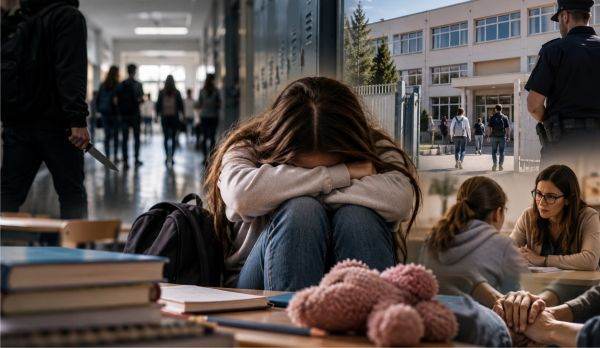
The attacks in Bistriţa and Piteşti have brought the vulnerabilities of the education system back into the spotlight. The government is promising prevention, rapid intervention, and firm sanctions, while Nicuşor Dan draws attention to the need for psychological counseling and addresses issues such as bullying and online aggression. School safety has become an urgent priority on the government's agenda following two serious incidents in less than a week, which left students and a teacher injured. Beyond the authorities' reactions, these events have reignited a discussion about the capacity of educational institutions to prevent violence, identify dangerous behaviors early on, and ensure an environment where students and teachers do not feel threatened. At the start of an extraordinary government meeting, Prime Minister Luca Niculescu announced the development of an integrated plan to enhance school safety-a plan that will include preventive measures, rapid response protocols, and strict penalties for acts of violence. According to the Prime Minister, the plan must establish clear responsibilities for all involved institutions. "No child should have to leave home for school feeling afraid, and no parent should have to wonder whether their child will return home safely," the Prime Minister stated, emphasizing that the authorities' response must go beyond merely intervening after serious incidents have already occurred. In the view of the head of the Executive, the safety of children is a fundamental responsibility of the state. It remains essential, however, that the announced plan translates into concrete measures implemented within schools, rather than serving merely as an administrative reaction prompted by the public emotion stirred up by recent events.
• A wake-up call for the education system
The first incident occurred at the "Ştefan cel Mare" Middle School in Bistriţa, where a 13-year-old student attacked a teacher with a knife and injured a 12-year-old classmate. The second took place at the "Armand Călinescu" Technical College in Piteşti, where a ninth-grade student entered the school premises carrying a machete and injured two fellow students. The occurrence of these two events has heightened concerns among parents and teachers, prompting authorities to announce urgent measures. However, the gravity of these incidents cannot be reduced solely to the issue of weapons being brought into schools. This is merely one aspect of a broader problem that encompasses conflicts between students, intimidation, harassment, emotional difficulties, and the ability of adults to intervene before a situation escalates. Nicuşor Dan described the two incidents as "two warning signs we can no longer afford to ignore." In a post on the platform X, he emphasized that while anti-bullying legislation is necessary, it is insufficient if the rules are not applied in everyday life. According to the President, preventing violence requires greater attention to what happens among children, intervention at the first signs, and a focus on the root causes of aggressive behavior-not just its consequences.
• Security measures cannot replace prevention
One of the questions raised by recent attacks concerns the effectiveness of security measures in educational institutions. Increasing security personnel and controlling access can help reduce certain risks, but these measures alone cannot resolve conflicts that arise within or outside the school community. According to media reports, the new Minister of Education, Sorin Costreie, has announced plans to request an increase in the number of school security guards, with the possibility of allocating approximately 1,000 such positions nationwide. The Minister also emphasized the need to increase the number of school counselors and support teachers. These measures point toward two distinct yet complementary approaches: the physical protection of educational institutions and the strengthening of their capacity to identify and manage students' problems.
A stronger presence of security personnel can help prevent unauthorized access and facilitate intervention in high-risk situations. Conversely, identifying conflicts, threats, and escalating behavioral issues requires teachers trained to recognize warning signs, accessible counselors, and clear procedures for reporting and intervention. The issue is whether schools have sufficient human resources to carry out these responsibilities, given that a safety plan entails not only rules but also people to enforce them.
• Psychological counseling: from promise to actual access
President Nicuşor Dan emphasized the role of homeroom teachers, school counselors, and all teaching staff in identifying and reporting problematic behaviors. At the same time, he underscored the imp the importance of a relationship built on trust among teachers, parents, and children.
"Open dialogue, trust, and a willingness to take what children tell us seriously can make all the difference before things reach a point of no return," the President stated. This message highlights an aspect that cannot be addressed solely through security measures: the school's capacity to listen to its students and intervene when the first signs of conflict or vulnerability emerge.
Psychological counseling should not be merely a resource called upon after a tragedy has occurred. To be effective in prevention, it must be accessible, and students must know that they can seek help without fear of retaliation, stigmatization, or further victimization. At the same time, teachers cannot be left to handle situations that fall outside their standard professional duties on their own. They require specialized support, functional procedures, and collaboration with families and relevant institutions. An integrated plan should, therefore, specify not only who intervenes following an incident, but also how threats are reported, who assesses the risks, what support is provided to victims, and what mechanisms are in place to follow up on reported issues.
• Violence does not stop at the school gate
Another dimension of the problem lies in the online environment, where harassment, threats, and aggression can persist even after the school day ends, further intensifying tensions among students. Nicuşor Dan pointed out that, for many children, the boundary between the real world and the virtual world has all but vanished. In this context, the protection of minors cannot be limited to supervising the physical spaces where school activities take place. He believes that a dialogue among authorities, specialists, teachers, parents, and students is essential to identify solutions for ensuring children's safety online. This approach is also relevant to the prevention of school-based conflicts: bullying can begin or continue on digital platforms, with its effects spilling over into the classroom, school hallways, or relationships among peers. Without mechanisms for children to report such situations, conflicts risk remaining hidden until they escalate. Prevention, therefore, entails digital literacy and fostering user responsibility, as well as cooperation between the school and the family. Furthermore, students must understand the consequences of harassment and have access to safe channels through which they can seek help.
School safety is not merely about the absence of weapons or the presence of a security guard at the entrance. It also encompasses the ability to prevent conflicts from escalating, to identify bullying, to provide counseling, and to protect children who reach out for help. The stakes go beyond managing isolated incidents. Schools must be spaces where students can learn and grow without fear, and where teachers can practice their profession in a safe environment. For this objective to become a reality, state intervention must begin before the next serious incident, not after it.




















 Euro
 Dolar SUA
 Franc elveţian
 Liră sterlină
 Gram de aur