English


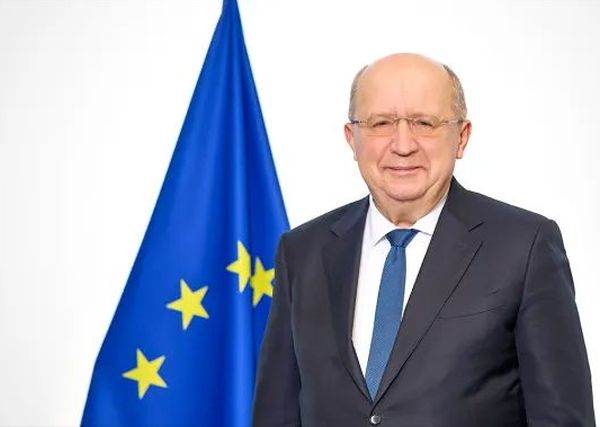
The European Union is dangerously late in adopting defense legislative packages, and this slowness could have major strategic consequences in an increasingly tense geopolitical context, said European Defense Commissioner Andrius Kubilius, quoted by Euractiv.
According to the cited source, Andrius Kubilius expressed this dissatisfaction to MEPs on the European Parliament's Security and Defense Committee and explicitly warned that "Putin will not wait for us to finish the last trilogue to test us."
The statement, made at a time when pressures on European security are constantly increasing, reflects an uncomfortable reality: the EU's institutional mechanisms are being overwhelmed by the accelerating dynamics of external threats. Kubilius called for an urgent acceleration of legislative procedures, insisting that key programmes, such as the euro115 million AGILE initiative for defence startups, must be adopted quickly to become operational before the current multiannual financial framework expires at the end of 2027.
"In my opinion, this qualifies for a fast-track procedure,” said the European Commissioner for Defence, suggesting that the standard eight-week period for national parliaments to scrutinise draft legislation be scrapped. At the same time, Andrius Kubilius called on the Parliament and the Council to reach an agreement on the three key files in the defence preparedness package, expressing hope that a compromise could be reached "in the coming weeks”.
But beyond the legislative deadlocks, the major problem remains Europe's industrial capacity, which Kubilius considers insufficient and inadequate for current realities. Although arms production has increased amid increased defense budgets, the pace is far from being able to compete with Russia's war economy or reduce critical dependence on American equipment. "We need to learn to produce massively and much more cheaply, at a good enough level,” said the European Defense Commissioner, criticizing the orientation of European industry towards cutting-edge technologies comparable to "haute couture” instead of scalable and affordable solutions.
The contrast with Ukraine is, in his opinion, revealing and even humiliating for Europe. "I am depressed by our slow pace of production. But I am absolutely amazed by the way the Ukrainians are building their production capabilities,” said Andrius Kubilius, who pointed out that while Ukraine has managed to accelerate missile production and become a pioneer in the manufacture of cheap drones capable of changing the dynamics of the battlefield, European industry seems stuck in an expensive and rigid model.
The situation is also amplified by recent developments on the global stage, where the use of American Patriot systems in other theaters of conflict has reduced their availability, and tensions in the Middle East have exposed major vulnerabilities of Europe in terms of long-range defense capabilities. In this context, alternative initiatives, including collaborations between European and Ukrainian companies to develop cheaper systems, are gaining increasing strategic relevance.
In light of the above, Kubilius' warning can no longer be ignored: Europe risks being left behind not only because of its adversaries, but also because of its own bureaucratic delays and the inability to adapt quickly to a rapidly changing security environment. Without quick decisions and without a profound transformation of the way it produces and acquires military equipment, the European Union risks being caught unprepared just when the real test will begin.




















 Euro
Euro Dolar SUA
 Franc elveţian
 Liră sterlină
 Gram de aur