English


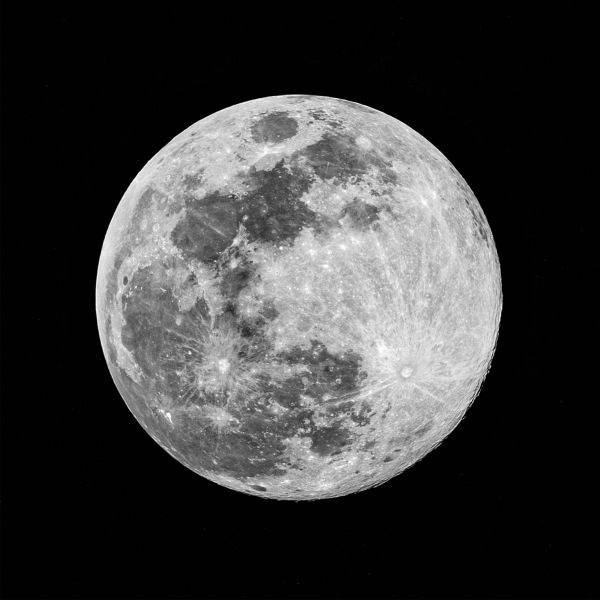
An international team of researchers announced the discovery of a more efficient method for calculating trajectories between the Earth and the Moon, capable of significantly reducing the fuel consumption of space missions, according to a study published in the journal Astrodynamics and cited by Space.com. The new approach could have a major impact on future lunar missions, including NASA's Artemis program, in a context in which reducing costs remains one of the great challenges of space exploration.
• 30 million simulated routes
Planning space routes is one of the most complex stages of a cosmic mission. Even a small fuel saving can mean savings of millions of dollars. For the new study, the researchers used a mathematical method based on the theory of "functional connections", which allows reducing the computing power required to simulate complex systems. Using advanced computer modeling, the team analyzed about 30 million possible trajectories between Earth and the Moon, of which 280,000 were included in the final analysis presented in the study.
• Gravity, the "free fuel” of space
The new route identified takes greater advantage of the gravitational fields of the Earth and Moon, reducing the need for fuel. In space exploration, many ships only partially use their own engines, relying on the so-called "gravity highways” of the Solar System - networks of natural trajectories generated by gravitational interactions between celestial bodies. This system is known as the Interplanetary Transport Network. The researchers found that, instead of using the orbital branch closest to Earth for insertion into lunar orbit, a more efficient approach is to use the opposite side of this gravitational trajectory. "Instead of assuming that it is easier to choose the side of the variable closest to Earth, we can use systematic analysis with faster methods to try to find nontrivial solutions,” explained Vitor Martins de Oliveira, a postdoctoral researcher at the University of Săo Paulo.
• Uninterrupted communications with Earth
In addition to saving fuel, the new trajectory also offers an important operational advantage: maintaining permanent communications with Earth. In many lunar missions, spacecraft temporarily lose radio contact when passing behind the Moon. The researchers say the new route could avoid this problem. "The Artemis 2 mission, for example, lost communication with Earth for a period of time because it was directly behind the Moon. The trajectory we propose is a solution that maintains uninterrupted communication,” Oliveira said. The authors of the study emphasize, however, that the new route is not the definitive solution for the most efficient trips to the Moon. The models used only took into account the gravitational influences of the Earth and the Moon. In the future, the researchers plan to include the gravitational effects of the Sun or other celestial bodies, which could lead to even more economical trajectories. "The systematic analysis we applied in our work is something that could be adopted on a larger scale in the future,” said Allan Kardec de Almeida Junior, lead author of the study and researcher at the University of Coimbra.
• A huge stake for the future space economy
The discovery comes at a time when the competition to explore and exploit the Moon is intensifying. The US, China, Europe and private companies such as SpaceX are investing heavily in lunar infrastructure, permanent bases and commercial missions. In this context, optimizing the costs of transportation between the Earth and the Moon becomes essential for the development of the future space economy and for transforming lunar exploration into a sustainable activity in the long term.






















 Euro
Euro Dolar SUA
 Franc elveţian
 Liră sterlină
 Gram de aur