English

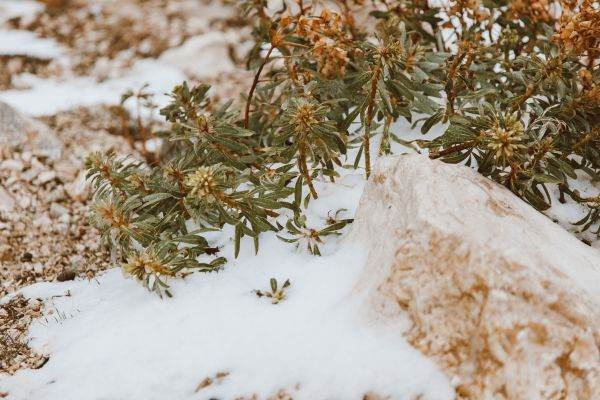
An international team led by researchers in Chile has produced the most complete genetic map yet of one of the two species of flowering plants that grow naturally in Antarctica. The study could contribute, in the future, to the development of agricultural crops capable of withstanding extreme climatic conditions, Reuters reports.
• Genome of a plant adapted to extreme conditions
Colobanthus quitensis is of particular interest to researchers due to its ability to survive in the difficult conditions of Antarctica, characterized by very low temperatures, water scarcity and high levels of ultraviolet radiation. Amid record temperatures and prolonged periods of drought in several regions of the world, adapting agriculture to changing climate conditions has become an increasingly important concern for researchers. In this context, scientists want to analyze whether the mechanisms by which Colobanthus quitensis resists the Antarctic environment could be used to improve agricultural crops. The study, published in the journal "Genome Biology and Evolution”, edited by Oxford University Press, brings together 40 chromosomal arrays that make up the plant's genetic blueprint, within the Polarix project.
• Researchers aim to identify genes responsible for resistance
"We have managed to sequence and assemble the entire genome,” said Eduardo Castro, an associate researcher at the International Center in Cape Horn, Chile, and lead author of the study, along with Claudio Meneses, of the Pontifical Catholic University of Chile.
Mapping the genome facilitates the identification of individual genes, but the process of analyzing and developing practical applications can be a long one. "The idea is not to create transgenic plants. The idea is to edit the genome of a plant with nutritional value,” explained Eduardo Castro. According to the researcher, once the relevant genes are identified, the development of commercial applications could take between five and ten years.
• International research
The project also benefited from the support of a team in California. The Chilean researchers said their work was also based on previous research carried out by the Polar Research Institute in South Korea. The work of the South Korean institute led to the obtaining of a partial version of the plant's genome, but the results have not been published. The new mapping gives researchers a more complete genetic picture of Colobanthus quitensis and may form the basis for research into the mechanisms that allow the plant to withstand the extreme temperatures, lack of water and ultraviolet radiation characteristic of the Antarctic environment.


























 Euro
Euro Dolar SUA
 Franc elveţian
 Liră sterlină
 Gram de aur