 English

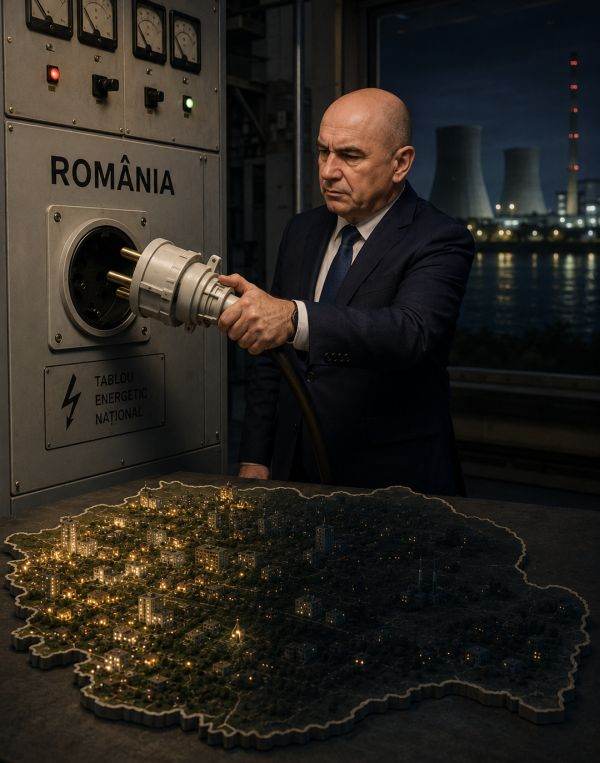
The national energy system is on the brink of failure due to the drought, while the authorities' response has been to call on consumers to reduce their electricity consumption and on prosumers to voluntarily feed electricity into the national grid. Renewable energy production is unable to cover the entire demand, while battery storage appears to have become little more than the subject of endless political discussions.
For the first time in the history of the Cernavodă Nuclearelectrica Power Plant, both reactors were shut down simultaneously due to the extremely low level of the Danube, according to the press release published by SNN Nuclearelectrica on the Bucharest Stock Exchange website, and our country temporarily lost approximately 1,400 Megawatts (MW) of constant production, equivalent to almost 20% of the electricity normally generated at national level.
This is not a nuclear accident, nor is it about the loss of cooling capacity of the reactors that are in a safe state, but about the preventive application of safety procedures. But the shutdown of the two units represents a historic incident for the energy policy of the Romanian state: the drought managed to put out of operation, in the middle of summer, the country's most stable source of electricity, exactly at the moment when the same drought reduces hydropower production at the Iron Gates, blocks navigation, limits irrigation and increases pressure on the water supply. The central authorities are thus discovering that diversifying energy sources does not necessarily mean diversifying risks, when the nuclear power plant, the largest hydroelectric power plant, agriculture, river transport and part of the industry all depend on the same declining resource: the water of the Danube.
Nuclearelectrica shut down Unit 1 in a controlled manner on the morning of July 28, and later decided to shut down Unit 2, after river level parameters approached the permitted operating limits. The company stated that the measures are preventive in nature and aim to maintain nuclear safety margins and the reliability of the installations. At Baziaş, the Danube flow had dropped to 1,650 cubic meters per second, compared to the multi-annual average of 4,700 cubic meters per second for July, and the forecast of the National Institute of Hydrology and Water Management indicated a decrease to 1,500-1,600 cubic meters per second at the beginning of August. In other words, the Danube is only carrying about a third of the amount of water characteristic of the period, approaching the historical minimum of 1,400 cubic meters per second recorded in 1985. The report submitted by Nuclearelectrica to the Bucharest Stock Exchange explicitly confirms that both shutdowns were determined by the extremely low level of the Danube and by hydrological forecasts.
We note that in August 2003, Unit 1 was shut down also due to the low level of the Danube, and since then there have been warnings and recommendations regarding the work necessary to maintain the capacity of the water supply infrastructure. Moreover, in 2011, Nuclearelectrica publicly announced the thresholds at which it would shut down one unit and then the second unit, if the water level continued to drop. The state had therefore known for at least two decades that a severe drought could reach the plant's control room.
• Hard situation at the Iron Gates too
The energy effect is not limited to the temporary disappearance of the approximately 1,400 MW of nuclear power. The same Danube that can no longer support the technological supply of the Cernavodă power plant under normal conditions first reaches the Iron Gates, where the reduced flow cuts off the production of the largest hydroelectric power plant in Romania. The Romanian part of the Iron Gates I has an installed capacity of 1,166.4 MW and an annual design production of 5.241 million MWh in an average hydrological year, i.e. approximately 10% of the national electricity production. The power plant also provides almost half of Romania's technological system services, indispensable for maintaining the frequency, voltage and balance of the network. The Iron Gates II adds over 250 MW on the Romanian side. However, the installed capacity recorded in the documents does not mean the power available when there is no water.
Hidroelectrica has not yet published a separate official figure for the current production of Portile de Fier I and II at a flow rate of 1,650 cubic meters per second, so an exact estimate would be risky. The relationship between flow and energy produced is not perfectly linear, being influenced by the water fall, upstream and downstream levels, the joint exploitation regime with Serbia, the number of available aggregates and obligations regarding navigation and downstream flows. However, the comparison with the drought in 2022 shows the proportions of the pressure: at a flow rate of about 2,900 cubic meters per second, employee representatives from Portile de Fier indicated a production of approximately 630-640 MW, compared to about 1,000 MW under normal conditions. The current flow is approximately 43% lower than at that time and almost 65% below the multi-annual average of July. It cannot be mechanically deduced that production has decreased by the same proportion, but it is clear that the Iron Gates are operating below potential exactly when the system would need its full capacity.
• Energy crises could be overcome more easily if we had adequate energy storage capacity.
Situations of this kind could be overcome more easily if we had an appropriate capacity to store the energy produced during the day by photovoltaic and wind capacities.
According to data on the ANRE website, yesterday, our country had approximately 878 MW installed in batteries - insufficient storage to cover the difference in consumption during the evening at a national level -, while the operational energy capacity exceeded 1,430 MWh and was approaching, according to individually confirmed projects, 1,600 MWh.
Among the largest operational installations are the Nova Power & Gas project in Floreşti, Cluj County, with 200 MW/400 MWh, the first phase of the Aukera system in Gura Ialomiţei, with 150 MW/300 MWh, and the approximately 100 MW/200 MWh installation built by Simtel for Energy Capital Group. Most Romanian systems operate for approximately two hours, enough to take over the photovoltaic surplus at noon and deliver it during the expensive evening hours, but insufficient to cover nights or long periods without sun and wind.
Investments in preparation could radically change the market. Aukera will expand the Gura Ialomiţei project to 250 MW/500 MWh and announces a portfolio of 800 MW/1,600 MWh. R.Power is building a 127 MW/254 MWh facility in Scorniceşti, Premier Energy is preparing a project of approximately 200 MW/400 MWh, and Nova Power & Gas plans to add another 600 MW/1,200 MWh by 2028. Hidroelectrica is developing three projects in Retezat, Ruieni and Tudor Vladimirescu, with a total of 170 MW/680 MWh, and PPC Renewables will install almost 90 MW/181 MWh near the Fântânele-Vest and Corugea wind farms and the Colibaşi photovoltaic park.
ANRE indicates 143 projects in advanced stages that include storage systems and total an approved capacity for evacuation of 9,147 MW, of which 36 projects, totaling 2,050 MW, are expected to be completed in 2026. However, the figures should be viewed with caution: they include the power of associated renewable projects and do not represent exclusively the capacity of batteries.
The state supports development through the PNRR and the Modernization Fund, and a new 150 million euro scheme aims to achieve at least 2,174 MWh in autonomous installations. Although at the national level, the authorities have assumed a target of only 1,200 MW/2,400 MWh for 2030, Transelectrica estimates a real need of 2,000-4,000 MW and 10,000-20,000 MWh.
Romania may exceed 1 GW operational in 2026-2027 and may reach 2-3 GW before 2030, but the decisive issue is no longer just the number of MW, but the duration of storage. Without 8-12 hour batteries, pumped hydropower plants and modernized networks, Romania will continue to export cheap green energy produced at noon and import expensive electricity in the evening hours.
• Importing energy, the only solution to cover daily consumption
Our country is thus simultaneously losing nuclear band energy and flexible hydro energy. The first constantly covers consumption, regardless of day or night; the second intervenes quickly to balance the system and cover peaks. Photovoltaics can compensate for an important part of the deficit during sunny hours, and wind energy can help when weather conditions are favorable, but without sufficient storage capacities, the surplus from noon cannot be fully moved into the evening hours. After sunset, Romania remains dependent on gas and coal-fired power plants, available hydropower and imports.
For the week of the Cernavoda outages, Transelectrica estimated a peak consumption of approximately 7,300 MW, while the domestic production available before the shutdown of the second reactor had dropped to 4,300 MW at certain intervals. The difference shows why the technical safety of the system does not mean the absence of an economic cost: interconnections can prevent a generalized outage, but the energy purchased during the hours of deficit can be much more expensive, and the price is subsequently transferred to the industry, suppliers and consumers. Imports are also not an absolute guarantee in a regional climate crisis. The drought does not stop at the border. Hungary was forced to shut down a reactor of the Paks nuclear power plant, and reduced flows affect hydroelectric power plants, thermal power plants and river transport in several Danube states. In Serbia, the water level has drastically reduced the quantities of fuel transported by barges. If several countries simultaneously lose production and increase their consumption due to the heat wave, Romania competes for the same energy available on regional markets. Interconnection distributes resources, but it can also distribute the deficit, especially during the hours when the sun sets across the region, wind produces little, and the demand for air conditioning remains high. The Cernavodă-Porţile de Fier case demonstrates a structural vulnerability that energy strategies have treated fragmentarily. Nuclear was presented as a stable source, and hydropower as a flexible and renewable source, but both depend on the availability of water. This common dependence turns drought into a disaster with a multiplier effect. In a severe hydrological year, not only does the production of reservoirs on inland rivers decrease, but the power of Danube hydroelectric power plants is also affected, while the capacity of thermoelectric and nuclear power plants to evacuate heat can be limited by the water level and temperature. The heatwave acts in both directions: it reduces cooling resources and production, but simultaneously increases electricity consumption.
• The effects of climate change on infrastructure
OECD data show that Romania has warmed by more than two degrees Celsius compared to the average for the 1981-2010 period, above the average advance of 1.4 degrees recorded in the organization's states. During the period 2020-2024, the country had more than 18 days of heat stress annually more than in the reference interval, reaching approximately 48 days of heat stress per year, and the number of tropical nights almost doubled. Agricultural soil moisture decreased by 7% compared to the historical benchmark, the most severe deterioration among OECD countries. The organization explicitly warns that the drought threatens both hydropower, which in normal years provides almost a third of Romania's electricity, and nuclear energy, with a share of approximately 20%. Losses caused by weather and climate events in Romania reached 19.6 billion euros between 1980 and 2023, equivalent to about 6% of GDP in 2023. The OECD analysis from 2026 shows, in fact, that the current episode is not an isolated anomaly, but the materialization of an already quantified risk. In the severe drought of 2022, Romania's hydropower production fell by about a third, according to the World Bank's regional water security assessment. The same year brought navigation restrictions, difficulties for irrigation and water supply problems. In July 2026, sandbanks reappeared on the Danube reduced barge loads, stopped some ferries and affected grain transport. The cost of drought is, therefore, paid for many times over: through less and more expensive electricity, through more expensive transportation, through agricultural losses, through limited irrigation, through the impact on industry, and through emergency investments that invariably end up being more expensive than prevention.
The real conflict is not between Romania and the climate, but between the infrastructure built for the climate regime of the last century and the conditions in which it must operate today. Power plants, dams, ports, dikes, railway lines and water supply networks were designed based on historical series considered relatively stable. However, this stability has disappeared. Rails expand in heat waves, asphalt deforms, Danube ports become inaccessible to loaded ships, dams must alternately manage water shortages and violent floods, and localities connected to vulnerable sources enter restrictions exactly when consumption increases. This does not mean that the entire infrastructure must be abandoned, but that design, maintenance and operation standards must be recalculated for extremes that can no longer be considered improbable.
• Maintaining the functioning of the current energy infrastructure, the real problem of the Government
Romania has climate adaptation strategies, energy plans, water management programs and modernization projects, but responsibility is divided between so many institutions that they risk disappearing among themselves. Nuclearelectrica operates the plant, Hidroelectrica manages the production at Portile de Fier, INHGA makes the forecasts, Apele Române manages water resources, the Administration of Navigable Canals is responsible for the canal infrastructure, Transelectrica must maintain the balance of the system, and the Ministries of Energy, Environment and Transport establish policies and investments. When the water level drops, each institution carries out its procedure, but no one seems to be publicly accountable for the resilience of the entire chain.
The shutdown of the Cernavodă reactors does not show that nuclear energy must be abandoned, just as the decrease in production at Portile de Fier does not demonstrate the uselessness of hydropower. On the contrary, both remain strategic components of the system. The lesson is that investment in a power plant does not end with the reactor, turbine or generator. It includes the adduct canal, water intakes, dredging, pumps, power stations, discharge lines, hydrological forecast, energy storage and reserve capacity. Romania is preparing the re-engineering of Unit 1, the construction of Units 3 and 4, the modular reactor project at Doiceşti and is analyzing, together with Serbia, the Iron Gates III project, estimated at over 2.6 billion euros. Before adding new capacities on paper, the state must demonstrate that it can maintain the capacities it has functional in the climatic conditions of the coming decades.
This year's drought will not lead to the collapse of the National Energy System, but it presents us with a brutal radiography of Romanian energy security. Two 706 MW reactors were shut down, the country's largest hydroelectric power plant remained well below potential, navigation and agriculture were affected, and imports became the main safety net. Nature did not surprise Romania with an unknown risk. It brought back a risk documented for over two decades and found in front of it an infrastructure still dependent on the climatic parameters of the past.
• Prime Minister Ilie Bolojan: Industrial consumers to reduce evening consumption for two weeks
In the context of the shutdown of the two reactors of the Cernavoda Nuclear Power Plant, interim Prime Minister Ilie Bolojan asked large industrial consumers to reduce their electricity consumption for two weeks, especially in the critical period of 20:00-23:00. "I appeal to large industrial investors to consider reducing consumption, especially in the evening, when we have an energy deficit," said Ilie Bolojan. The Prime Minister explained: "Combined, the two groups produced around 1,300 MW, which represents almost 20% of our consumption in a day during this period. As such, we will be put in a situation where, on the one hand, we will have to start everything that can be started in terms of gas, photovoltaic, storage, wind power production, and also resort to imports."
• Prosumers, called to support the energy system during critical hours
The Association of Prosumers and Energy Communities of Romania (APCE) is calling on prosumers who own storage systems and have the technical ability to inject energy into the grid to voluntarily support the National Energy System during the critical period of 20:00-23:00, after the simultaneous shutdown of both nuclear reactors at Cernavodă. The call is addressed exclusively to those who can deliver energy from batteries without affecting their comfort or security of supply.
"In recent years, prosumers have proven that they represent an essential element of the Romanian energy system. At a time when every available kilowatt counts, the energy stored in prosumers' batteries can contribute to reducing the pressure on the system and reducing the need for energy imports,” said Dan Pîrşan, president of APCE. He added: "Romania needs our energy. Not for suppliers, not for politicians, but for the stability of the National Energy System of which we are all part.”
• AEI: Imports can save Romania only in a favorable regional scenario
The shutdown of both reactors at Cernavoda removes approximately 1,400 MW of continuous and predictable production from the system, and Romania may have to operate without these capacities for approximately three weeks, warns the Smart Energy Association (AEI). At the evening peak, domestic production is estimated at 3,500-4,700 MW, while the necessary import may reach 2,600-3,500 MW by August 3 and 3,300-3,500 MW during the heat wave period August 4-9. With available imports estimated at only 2,400-3,000 MW, the deficit could rise to 1,100 MW.
"The import of approximately 3,300 MWh is technically possible, but not commercially guaranteed. Romania is not yet in an inevitable scenario of interruptions, but it has reached a situation in which the loss of another 500-1,000 MW of production in Bulgaria or Hungary can transform a price issue into an issue of adequacy and energy security,” says Dumitru Chisăliţă, president of AEI. According to him, avoiding interruptions depends on the operation of the Bulgarian Kozloduy power plant, the situation of the Hungarian reactors at Paks, maintaining consumption at a maximum of 7,000-7,300 MWh and making maximum use of gas, coal, hydro and battery capacities.
• Răzvan Nicolescu: Shutting down the Cernavodă reactors may push up bills
The shutdown of both reactors of the Cernavodă Nuclear Power Plant, determined by the extreme drop in the Danube level and the impossibility of using water under normal conditions to cool the facilities, will reduce national electricity production and may exert additional pressure on prices, warns Răzvan Nicolescu, former Minister of Energy.
"We will have lower production at the national level. When supply, when production decreases, if demand remains constant or if demand increases, prices are affected in the direction we do not want, that is, we will have higher bills. It is, I repeat, a lower supply and, with equal demand, prices, as a rule, if we refer to the laws of economics, go up”, Răzvan Nicolescu declared for Digi 24.
According to him, the energy deficit can be covered by increasing production from other sources, but each solution involves additional difficulties and costs: "This lack of energy can be compensated by a higher production in photovoltaics or, if not, we take from other sources: we start gas-fired power plants, we start coal-fired power plants or we import from neighbors."
• Silvia Vlăsceanu, executive director of HENRO: "It is a situation that can be managed calmly and without panicking"
For now, there are no problems that justify alarming the population, and the situation in the National Energy System can be managed calmly, through a prudent exploitation of the available resources, says Silvia Vlăsceanu, the executive director of the Electricity Producers Association - HENRO. She believes that public messages regarding consumption reduction were untimely and caused unjustified fear among household consumers, who are the last to be disconnected in the event of extensive damage or exceptional situations.
"It is a situation that can be managed calmly and without panicking. It must be managed very correctly from a technical point of view and without excesses, without inducing panic, like "we turn off the lights” and so on. It is not a timely message. The population does not even feel the impact on the bills for now. However, household consumers must be careful about what they sign, what contracts they conclude and which supplier they have. Suppliers, in a proportion of over 90-95%, have contracts with household consumers with fixed prices for at least six months or a year, so they are not affected by these fluctuations”, Silvia Vlăsceanu declared for the BURSA newspaper.
The executive director of HENRO specifies that the reduction in hydro production should not be automatically interpreted as a signal of crisis, because the operation of the plants is permanently adapted to the structure of production and consumption. During the day, photovoltaic energy covers a considerable part of the need, which allows the conservation of water in the reservoirs for the intervals in which solar production disappears.
"At the moment, being lunchtime and sunny everywhere, 50% of the energy comes from photovoltaics. You always have to have the most balanced mix. The water is in the lakes, and the degree of filling the lakes is satisfactory. Despite all the existing drought, water is collected in the lakes, including from precipitation. We are doing very well in terms of the water level in the lakes, but it must be managed carefully. I want this to be understood: water must be managed carefully. If you have so much sun now, there is no point in producing energy from hydro. In the evening, if you look, you will see that hydro production will increase”, explains Silvia Vlăsceanu.
The main problem occurs at the peak of consumption in the evening, when photovoltaic production disappears, wind energy is almost non-existent, and one of the nuclear groups is unavailable. In these conditions, the system relies on hydropower, coal and natural gas.
"Hydropower production will increase in the evening, but it cannot cover everything, because a nuclear group is out of service and the wind is not blowing at all. Wind production is now 12 MW, or 0.2%, so it is non-existent. Coal is operating at its maximum with what is left, providing approximately 15%, or 800 MW, and then we have natural gas, as much as it can produce, because this is also a period of major overhauls. However, water must be managed with the utmost caution. There is no point in producing now, during the day, when you have photovoltaic energy”, says Silvia Vlăsceanu.
He acknowledged that the flow of the Danube is very low, telling us that yesterday at noon it was around 1,900 cubic meters per second, well below the multiannual average for July, but added that Romania has also experienced severe droughts in 1985, 2002 and 2022.
"It is not the lowest flow ever recorded. There have been drought years, because this is not the first year in which there has been a drought. In good years, when production was also high, the flow exceeded 4,500 cubic meters per second at the entrance to the country, at Baziaş. Now it is lower. It rained in vain here if it did not rain where it should and a little water comes from upstream, from Germany and from the other countries crossed by the Danube", Mrs. Vlăsceanu told us.
• Laurentiu Urluescu, AFEER: Energy prices will not increase for consumers
The price of electricity will not increase for consumers who have long-term contracts, at a fixed price, because the shutdown of production at the Cernavoda Nuclear Power Plant mainly influences short-term transactions, claims Laurenentiu Urluescu, president of the Romanian Electricity Suppliers Association (AFEER).
He told us: "Suppliers who have a cautious portfolio management and have closed their positions, that is, they have purchased energy on a long-term basis and already have purchase contracts, are not affected. The production changes do not affect long-term contracts, because these remain in place at the contracted prices. For long-term contracts, for which the supplier has purchase contracts at a fixed price, there should be no changes. Basically, there are no problems for either the supplier or the consumer during this period, taking into account the existence of long-term contracts.”
The AFEER President stated, however, that the shutdown of nuclear production causes the price of energy traded on the Day-Ahead Market (DAM) to increase, which can increase suppliers' costs when they have to quickly cover additional consumption: "The problem arises in the case of consumers who change their supplier or when consumption is higher and the supplier is forced to buy additional energy in the short term, from PZU or from other sources. When Cernavodă production is missing, PZU prices and, in general, short-term prices increase. Consequently, the energy purchased in the short term will have a higher price. There is always a need to buy from the PZU, and when the price in this market is high, costs automatically increase”.
Laurenţiu Urluescu warned that the impact could also be transmitted to the final consumers' bills if the shutdown of the plant were to be prolonged: "If the Cernavodă shutdown period is prolonged a lot, indeed, it will also influence the prices for the final consumer. If it reaches a month, there will certainly be an influence. At the moment, consumers need to know that a large part of the energy consumed is already contracted long-term, and these purchase contracts, with a fixed price, remain in force. Everything that is covered by hedging, in the long term does not change”.

















 Euro
Euro Dolar SUA
 Franc elveţian
 Liră sterlină
 Gram de aur































1. fără titlu
(message sent by anonim on 31.07.2026, 12:59)
Why don't parliamentarians sacrifice too, but want to increase their salaries?