English


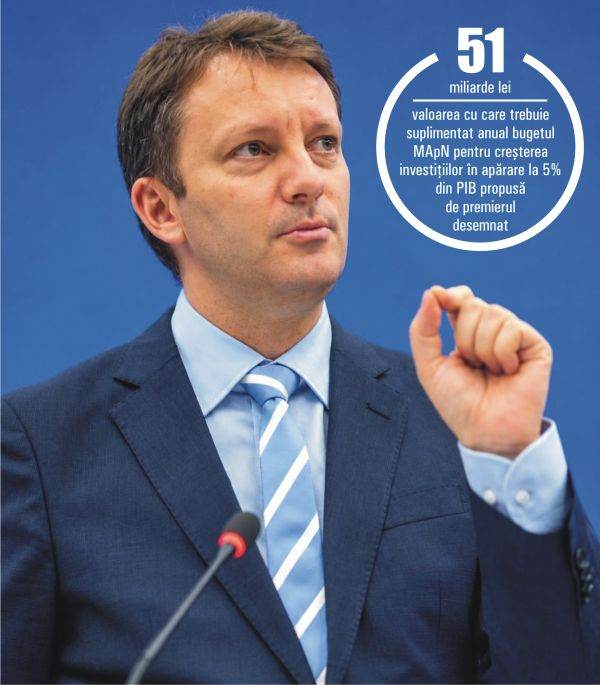
A leaner state apparatus, lower taxes on wages, indexed pensions, VAT restored to 19%, better-funded hospitals, completed motorways, and defense investments gradually reaching 5% of GDP-these are the measures proposed by Prime Minister-designate Siegfried Mureşan in the 28 guiding principles of his governing program. While many of these measures are necessary when viewed individually, looking at them collectively raises questions regarding their financing. Should it be invested by Parliament, how will the future Mureşan government simultaneously pay for expanded services and investments while collecting less revenue from certain taxes-and all while reducing a budget deficit projected at approximately 127.7 billion lei for 2026 alone?
This is the real challenge posed by Siegfried Mureşan's proposed program. The incoming administration will not start with a balanced budget from which a surplus can be distributed. The 2026 budget was drafted by the Bolojan government with a deficit of around 6.2% of GDP. According to the trajectory analyzed by the Fiscal Council, this figure is expected to drop to 5.1% of GDP in 2027 and to 4.2% in 2028. In other words, the future government will have to find funds for new promises while narrowing the gap between expenditure and revenue. Furthermore, the Fiscal Council warns that public debt interest payments could weigh more heavily on the budget than current projections indicate. The document proposed by the designated prime minister seeks to provide answers through state reform: fewer MPs and state secretaries, the merger of institutions following an audit, and-starting in July 2027-directing half of the resulting savings toward reducing payroll taxes. This is one of the program's most appealing promises, yet also one most vulnerable to a simple test: exactly how much-in lei-would the reform proposed by Siegfried Mureşan save? If, for instance, cutting payroll taxes were to cost 5 billion lei annually, the rule set out in the document would require recurring savings of 10 billion lei. This is merely a sample calculation, not an official estimate of the measure. Without a list of the institutions to be reorganized, the number of positions to be eliminated, and the transition costs, the "reform dividend" remains a compelling concept but one that lacks a budget.
This is where Mureşan's program aligns with the proposals of his rivals. State reform is one of the ten priorities published by the PSD following its recent meeting in Sinaia. AUR is more explicit in calling for 300 MPs, a government with ten ministries, and a maximum of 50 state secretaries. The political resemblance is obvious; the budgetary savings, less so. Abolishing a ministry can only cut spending if actual costs disappear, not merely if personnel and responsibilities are shifted under a different banner. In this regard, all three approaches must be judged by the same standard: proven savings, not just impressive-looking organizational charts.
• VAT reduction: a budgetary loss that would need to be offset by improved tax collection
An even tougher test involves the reduction of Value Added Tax (VAT). Siegfried Mureşan promises a return to the 19% rate "when the budgetary situation allows"; AUR also calls for lowering the standard rate from 21% to 19%. The PSD emphasizes improving tax collection before the state introduces new taxes. The conditional wording in Mureşan's program avoids promising a date that cannot be guaranteed, yet allows him to present a reduction-which might not actually occur in the coming years-as a governing objective.
The magnitude of the stakes is evident in the budget: VAT revenues for 2026 are projected at approximately 136 billion lei. If all transactions were taxed at 21%, a two-percentage-point cut in VAT would result in a budgetary loss of roughly 13 billion lei. The actual cost would be lower, however, because reduced VAT rates still apply in certain sectors and because the economy might react to the tax change.
Nevertheless, VAT primarily represents revenue that the state ought to collect but fails to do so. In 2023, the European Commission estimated Romania's VAT compliance gap at 30%. Against this backdrop, Siegfried Mureşan proposes combating tax evasion, implementing pre-filled tax returns, and simplifying payment processes. Meanwhile, the PSD calls for proper tax collection and fraud prevention, while AUR proposes, among other measures, expanding the reverse-charge mechanism.
• Pension Indexing: A Litmus Test for the Future Government
The same tension is visible regarding pensions. Mureşan's program promises the indexation of pensions and child allowances in 2027; AUR demands pension indexation plus compensatory payments for missed adjustments; and the PSD lists income protection among its priorities. It is a significant social issue, yet it carries a heavy budgetary cost. Public pension system expenditures are set at approximately 158.7 billion lei in the 2026 budget. A hypothetical 5% increase applied to this base would amount to nearly 8 billion lei for a full year. This is not the actual indexation calculation starting in 2027, which will depend on the applicable rules and the pension values at that time. It is a permanent increase that must be covered by permanent revenue or savings.
Regarding healthcare and education, the Prime Minister-designate speaks of support for vulnerable children, better-funded medical prevention, and faster access to treatments. The PSD has included education and healthcare among its ten priorities, while AUR calls for the expansion of the hot meal program, outpatient services, and new hospitals. However, "expansion" can entail projects with vastly different costs. The "Healthy Meal" national program has an allocation of 1.531 billion lei for 2026, covering over 540,000 beneficiaries. If another 500,000 children were added at a similar average cost, an additional 1.4 billion lei annually would-roughly speaking-be required. This is an extrapolation, not an official cost estimate from the Ministry of Education; yet, it illustrates why prioritizing communities with the highest school dropout rates can make the difference between a financially viable measure and a vague promise lacking a timeline.
The pledge to double funding for medical prevention sounds impressive. However, the program does not specify the baseline figure from which this doubling would start. For the average citizen, the difference between a mere goal and a concrete measure could mean the difference between having a family doctor with the time and resources for check-ups and tests available throughout the month, versus facing another year of waiting. For the state budget, it means knowing exactly which program receives funding, how many patients access services, and what additional costs arise. Without this connection, the figure of "twice as much" is striking but unverifiable.
• Investments using European funds
Energy and infrastructure could provide the economy with precisely the production capacity and connectivity it needs. Siegfried Mureşan proposes investments in hydropower, the Cernavodă reactors, Black Sea gas, grids, storage, and district heating; meanwhile, the PSD calls for the overhaul of the energy system and the utilization of domestic resources, while AUR advocates for specific energy projects and a halt to decarbonization until new capacities come online.
In agriculture, the PNL's designated prime minister, as well as the PSD and AUR, all speak of investments in irrigation and support for producers. The same applies to transport, where the focus is on completing major road, rail, maritime, and air infrastructure projects. While there is a political consensus regarding certain needs, there is no guarantee that all projects can simultaneously secure funding, permits, and contractors, as the investment list does not yet constitute a payment schedule. At this stage, the most credible aspect of Mureşan's program is the pledge to prioritize ongoing projects and to publish the cost, timeline, and status of each one. If rigorously implemented, this transparency will reveal which of the other promises fit within the budget.
Mureşan's program presents European funds as the engine that could make all these measures possible. The designated prime minister cites the mobilization of at least ten billion euros annually starting in 2027 and the shifting of projects that could not be completed under the PNRR to other funding sources. What Mr. Mureşan does not specify is that the ten billion "mobilized" could consist of either grants or loans, which have vastly different impacts on the deficit. Changing a project's funding source requires identifying an eligible program and, typically, securing the national contribution.
• Defense funding - a true financial Gordian knot
There is another area that shifts the entire discussion: defense. Designated Prime Minister Siegfried Mureşan proposes a gradual increase in investment to 5% of GDP, involving equipment, manufacturing facilities, technology, and jobs within the country. The PSD lists the defense industry among its priorities, while AUR demands that major military contracts bring production and maintenance operations to the country. However, the Ministry of National Defense budget for 2026 stands at 49.426 billion lei, approximately 2.45% of GDP. If we calculate the gap between this figure and the 5% target based on the projected 2026 GDP, we arrive at an annual budget increase of roughly 51 billion lei. Therefore, any government promising such an increase must outline its pace in the same table where it lists pensions, healthcare, and tax cuts.
In light of the above, the 28 guidelines of the program proposed by Siegfried Mureşan are far from insubstantial. The digitalization of public services, the publication of investment costs, the competent selection of state-owned enterprise leadership, targeted support for vulnerable families, and more efficient revenue collection are all directions that can improve people's lives. The program overlaps significantly with the PSD's ten priorities and, on specific points, with proposals from AUR. Precisely for this reason, the decisive battle regarding the investiture of the Mureşan Cabinet will not be about who was the first to utter the words "reform," "energy," or "investment," but rather the designated Prime Minister can present a budget that accurately and transparently reflects all funding sources for the respective measures.
In its current form, the Mureşan program could serve as the starting point for a realistic administration, yet it does not yet demonstrate that all its promises can be fulfilled. The real test will come with the 2027 budget, which will reveal the actual extent of the deficit reduction, the savings generated by state reform, the additional revenue collected through combating tax evasion, and which measures have secured funding.











 Euro
Euro Dolar SUA
 Franc elveţian
 Liră sterlină
 Gram de aur