English


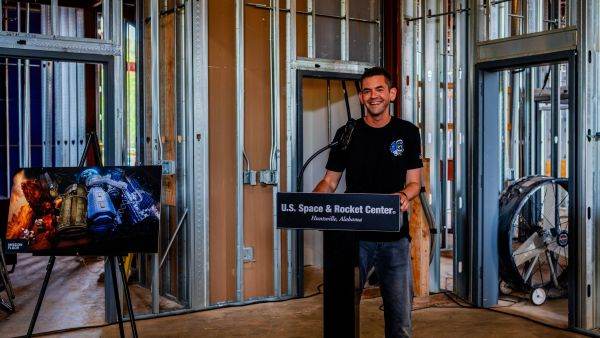
Billionaire Jared Isaacman, an entrepreneur in the field of online payments and close to Elon Musk, reiterated in a tense hearing in the US Senate that the absolute priority of the United States must be to return to the moon before China. The statements come at a delicate political moment, after a series of sudden changes of position by President Donald Trump regarding his appointment to lead NASA, reports AFP.
Wednesday's hearing was the second to which Isaacman is subjected, a rare fact for the confirmation process as NASA administrator. President Trump first nominated him in December 2024, then withdrew his support at the last minute in April 2025, before renominating him in November 2025. Meanwhile, tensions between Trump and Elon Musk, with whom Isaacman has a close working relationship, marked the spring of 2025. Only recently did the two appear to have reached a truce. To ensure continuity of leadership at the agency, Sean Duffy, an official in the Department of Transportation, was named acting administrator in July 2025. "I am honored and grateful to be before you again,” Isaacman said, as one senator joked that the hearing "feels like a rerun.” Isaacman delivered a strong message to senators: The United States must return to the Moon before China gets there first, and then establish a stable human presence.
"The United States will return to the Moon before our arch-rival and establish a sustainable human presence there.” The statements come at a critical time for the Artemis Program, NASA's central project for human missions. It has accumulated significant delays in recent years, in particular due to the slow pace of development of the lunar module provided by Musk's company SpaceX. Space industry experts warned this fall that the module might not be ready on time, which would create the risk of Beijing overtaking Washington, given that China aims to land a manned moon mission by 2030. "A failure would call into question the exceptional character of American science and our leadership in space.” In the past, including in his own statements in April, Isaacman has been a fervent supporter of sending astronauts to Mars quickly, betting on Elon Musk's vision of colonizing the "Red Planet.” Now, however, the candidate is adjusting his priorities: Moon first, Mars second. The Trump administration briefly showed willingness to reevaluate Artemis in favor of an accelerated program to Mars. After the prolonged conflict between Trump and Musk, however, the official discourse has reoriented: the immediate objective is to overtake China, in a symbolic confrontation increasingly described as the "second space race.”
As a close collaborator of Elon Musk and the first private astronaut to perform an extravehicular spacewalk (in 2024, as part of a SpaceX mission), Isaacman was asked if his relationship with the NASA supplier company did not represent a conflict of interest. The candidate categorically rejected these suspicions: "I am not here to favor or enrich entrepreneurs for personal gain.”
He assured that, if he takes over the leadership of the American Space Agency, he will impose the same standards on all contractors, including SpaceX.
Despite political criticism, Jared Isaacman, 42, is considered by many experts to be a capable leader and deeply committed to space exploration. The billionaire founder of a major online payments company is an experienced pilot and an investor in aeronautical technologies. The support he enjoys in the industry is real, even if his appointment remains, inevitably, a highly politicized decision. His confirmation as NASA administrator could come in early 2026, if the Republican-majority Senate votes in his favor.


























 Euro
Euro Dolar SUA
 Franc elveţian
 Liră sterlină
 Gram de aur